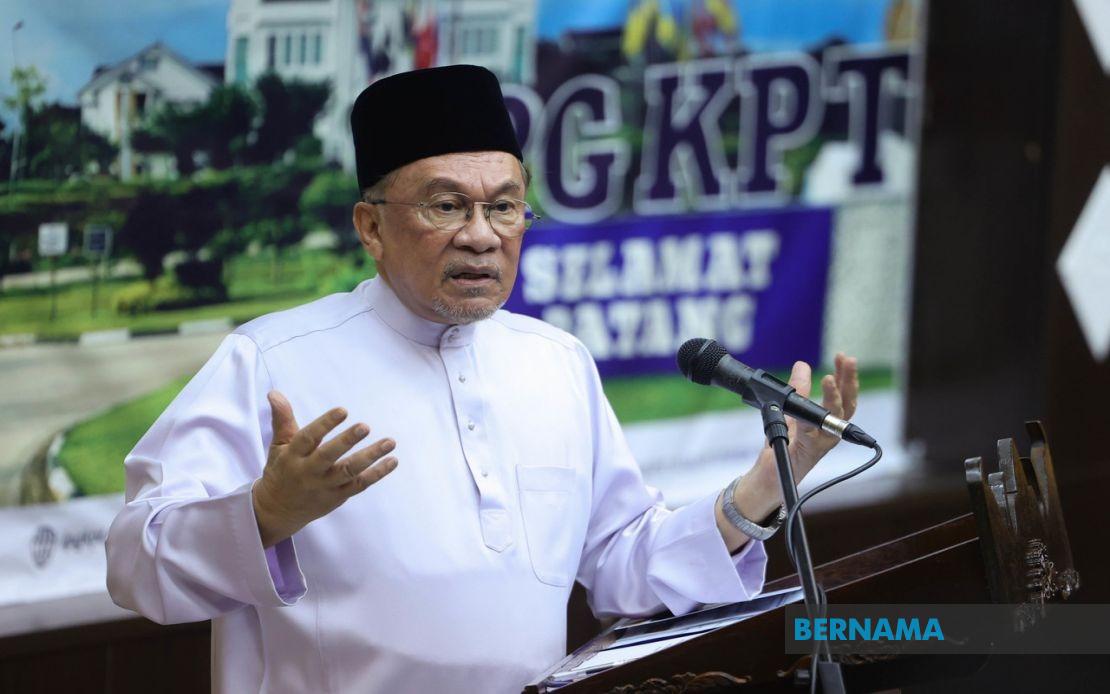
Prime Minister Datuk Seri Anwar Ibrahim has delivered a strong message to Malaysian schools: concealing bullying incidents to protect institutional reputation is fundamentally wrong and undermines efforts to safeguard vulnerable students. Speaking in Nilai on July 17, Anwar underscored that while some may dismiss bullying as a trivial concern, the psychological and emotional toll on victims demands serious attention and transparent handling within the education system.
Anwar drew a clear distinction between accountability and blame in his remarks, arguing that schools performing their duty by reporting bullying cases should not face institutional criticism. He illustrated this point by suggesting that a school with 1,000 students reporting two bullying incidents demonstrates responsible governance rather than failure. The real failure, he contended, occurs when administrators become aware of such problems yet choose silence over action, prioritising institutional reputation over student welfare.
The Prime Minister's intervention reflects growing concern about how bullying is managed within Malaysian schools. His statement signals that the government expects transparency at all levels of the education system, from individual schools to state and federal authorities. This emphasis on openness potentially marks a shift in how educational leadership should approach discipline and pastoral care, moving away from a culture where negative publicity is feared more than unaddressed harm to children.
Beyond the immediate issue of reporting protocols, Anwar identified a broader educational deficiency that permits bullying to persist. He attributed the continuation of such incidents to inadequate success in developing students' character and moral foundations, a shortcoming that appears despite Malaysia's expanded provision of religious education compared to previous decades. This observation suggests that formal religious instruction alone is insufficient to cultivate the empathy and mutual respect necessary to prevent peer victimisation.
Central to Anwar's vision is a reconceptualisation of education's core purpose. He rejected the notion that schools should measure success primarily through academic achievement or technical competence, whether in information technology or other specialised fields. This perspective challenges a widespread assumption in Malaysian society that educational advancement is synonymous with producing high-achieving graduates destined for prestigious careers. Instead, Anwar argued that credentials and expertise mean little if graduates lack understanding of human dignity and fail to respect their peers.
The Prime Minister's remarks underscore a tension within modern education systems: the drive for measurable academic outcomes often overshadows the development of moral reasoning and interpersonal skills. In Malaysia's context, where competitive academic performance has historically been emphasised, Anwar's intervention introduces a counterweight by explicitly elevating character formation as an educational objective of comparable importance. This framing has implications for how schools allocate resources, design curricula, and evaluate teacher performance.
Anwar assigned substantial responsibility to teachers as custodians of institutional culture and moral development. He expects educators to ensure that schools function as genuine learning communities capable of producing graduates with strong faith, sound ethical principles, and compassion for others. This expectation positions teachers not merely as content deliverers but as moral educators responsible for shaping how students treat one another within and beyond the classroom.
Education Minister Fadhlina Sidek's presence at the event signals ministerial endorsement of these priorities, suggesting that the government may soon translate Anwar's rhetoric into policy directives affecting how schools handle discipline, pastoral care, and institutional accountability. The attendance of the Education Ministry leadership indicates this is not merely a prime ministerial observation but a directive that will likely flow through official channels to schools nationwide.
Anwar acknowledged that Malaysia's teaching profession operates at a high standard and expressed confidence that performance would continue improving as the government pursues its broader agenda to elevate national education quality. This recognition serves two purposes: it acknowledges teachers' professional contributions while simultaneously placing responsibility on them to advance the moral agenda outlined in his speech. The statement balances appreciation with expectation, effectively saying that professional excellence must now encompass more than academic and technical outcomes.
The implications for Malaysian schools are substantial. Institutions will face pressure to establish transparent bullying reporting mechanisms and responsive intervention systems rather than attempting to manage incidents quietly. Parents will likely become more aware of their rights to expect institutional transparency, potentially increasing pressure on school leadership. Moreover, the emphasis on character development and moral education may reshape how schools structure extracurricular programmes and student conduct policies.
For Southeast Asian regional context, Anwar's position aligns with growing international attention to student wellbeing and mental health in schools. Countries across the region increasingly recognise that bullying has lasting psychological consequences and that transparent handling protects both victims and institutional integrity. Malaysia's Prime Minister thus echoes a global trend while rooting it in local concerns about character formation and respect for human dignity.
The underlying message extends beyond school management to broader societal values. By insisting that technical competence divorced from moral grounding is hollow, Anwar challenges Malaysia to examine whether its competitive, achievement-oriented educational culture adequately prepares young people for responsible citizenship. His call for transparency in handling bullying serves as a proxy for demanding more genuine accountability across institutions, suggesting that protecting reputation through concealment ultimately corrodes the foundations of trust and integrity that quality institutions require.

