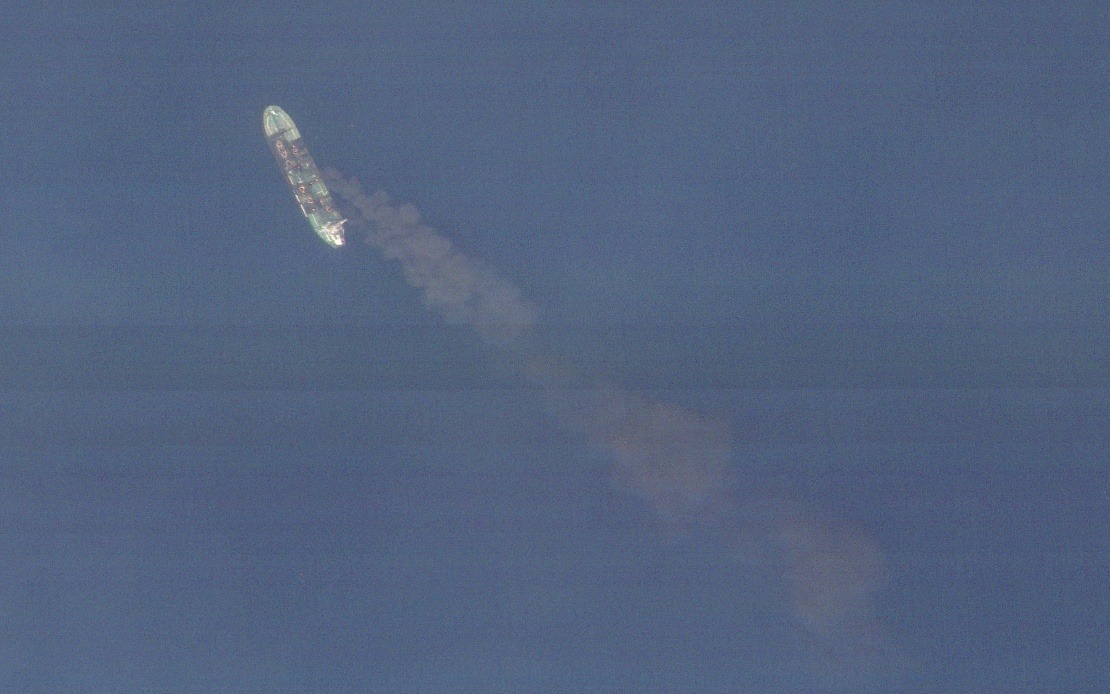
The Saudi-led military coalition operating in Yemen has declared its commitment to ensuring safe passage for commercial vessels traversing one of the world's most critical maritime corridors, following an announcement by the Houthi group that it would impose restrictions on Saudi shipping. Coalition spokesperson Turki Al-Malki issued the statement on social media, emphasizing that the Joint Forces Command would implement all required operational measures consistent with international legal frameworks to guarantee the security of coalition vessels moving through the Bab al-Mandab Strait, a vital waterway connecting the Red Sea to the Indian Ocean.
The Houthi maritime ban represents an escalation in rhetorical confrontation between the Iranian-aligned militant group and the Saudi-led alliance, though the practical implications for regional commerce remain unclear. The Houthis framed their announcement as a "blockade for blockade" response, referencing what they characterize as nearly twelve years of Saudi-imposed siege conditions on territories under their control. This tit-for-tat positioning reflects the deep entrenchment of positions that has defined the Yemeni conflict, where both sides routinely accuse each other of violations and humanitarian obstruction.
Meanwhile, Saudi Arabia's Foreign Ministry moved swiftly to counter Houthi claims, releasing a statement that rejected allegations of any comprehensive blockade. The ministry asserted that the kingdom has consistently pursued humanitarian mitigation through various development initiatives and financial support directed toward alleviating Yemeni civilian hardship. This diplomatic response underscores how each protagonist in the conflict operates within competing narrative frameworks, each claiming legitimacy for their actions while delegitimizing their opponents' justifications.
The coalition's spokesperson pointed to concrete shipping statistics as evidence undermining Houthi arguments. Al-Malki noted that more than three hundred commercial vessels had accessed ports under Houthi administration during the first six months of the year alone, carrying essential commodities including foodstuffs and fuel supplies. This data suggests that whatever restrictions the Houthis now threaten, significant commercial activity has continued to flow into their territories, complicating their portrayal of themselves as victims of an absolute embargo.
The escalatory cycle gained momentum following a significant incident the previous week, when Saudi-backed Yemeni government forces targeted Sanaa International Airport with military strikes. The operation aimed to prevent a high-ranking Houthi delegation from disembarking from an Iranian aircraft, an action that intensified perceptions of Saudi interference in Houthi leadership movement. In response, the Houthis launched volleys of missiles and armed drones toward Saudi territory, demonstrating their capacity and willingness to project force beyond Yemen's borders.
These recent developments threaten to undermine the fragile stabilization that has characterized regional dynamics since 2022, when the United Nations brokered a ceasefire agreement between the warring parties. That truce, while frequently violated in minor ways, had managed to prevent the large-scale conventional military operations and aerial bombardments that defined the preceding years of conflict. Any substantial breakdown in that arrangement would likely trigger humanitarian consequences affecting Yemen's already devastated civilian population.
The underlying conflict remains rooted in Yemen's political fragmentation following the Houthis' seizure of the capital Sanaa in late 2014, an action that prompted the Saudi-led coalition's military intervention in March 2015. What began as a civil dispute evolved into a regional proxy confrontation, with the Houthis receiving support from Iran while the Saudi-led coalition backed the internationally recognized government based in Aden and other southern territories. This framework has persisted for nearly a decade, creating entrenched positions resistant to political compromise.
For Malaysia and Southeast Asian nations dependent on Red Sea shipping for commercial operations and energy supplies, escalating tensions carry tangible implications. The Bab al-Mandab Strait represents a critical chokepoint through which approximately twelve percent of global maritime trade passes annually, connecting Asian markets to European and African destinations. Any disruption to shipping predictability through conflict-related attacks or uncertainty would impose costs throughout regional supply chains.
The maritime dimension of the Yemen conflict has consistently attracted international attention precisely because of this commercial vulnerability. Insurance premiums for vessels transiting contested waters have historically spiked during periods of elevated hostilities, effectively raising costs for all shippers regardless of their nationality or cargo origin. Regional trading nations with substantial maritime commerce face economic headwinds whenever credible threats to shipping security emerge in critical waterways.
The Saudi coalition's emphasis on operating within international legal parameters suggests awareness of the reputational costs associated with perceived violations of maritime law. By framing their protective measures as defensive and lawful, coalition leadership attempts to maintain legitimacy within the international system, distinguishing their actions from what they characterize as Houthi escalation. This rhetorical positioning matters for coalition cohesion and international diplomatic support.
The UN-brokered ceasefire framework, despite its vulnerability to violations, represents the primary mechanism preventing a return to full-scale conventional warfare. Any breakdown would likely trigger humanitarian consequences given Yemen's existing severe deprivation, where millions already face acute food insecurity and collapsed health infrastructure. The international community, including major powers with regional interests, maintains investment in maintaining at least the appearance of stability however tenuous.
Moving forward, whether this latest cycle of accusations and counter-accusations represents temporary posturing or the beginning of a substantive deterioration will depend on whether either side takes military action that the other perceives as crossing established red lines. The history of the Yemen conflict suggests that such confrontations can rapidly escalate beyond rhetorical boundaries, triggering the escalatory dynamics that previously characterized the conflict and imposing costs throughout the region.

