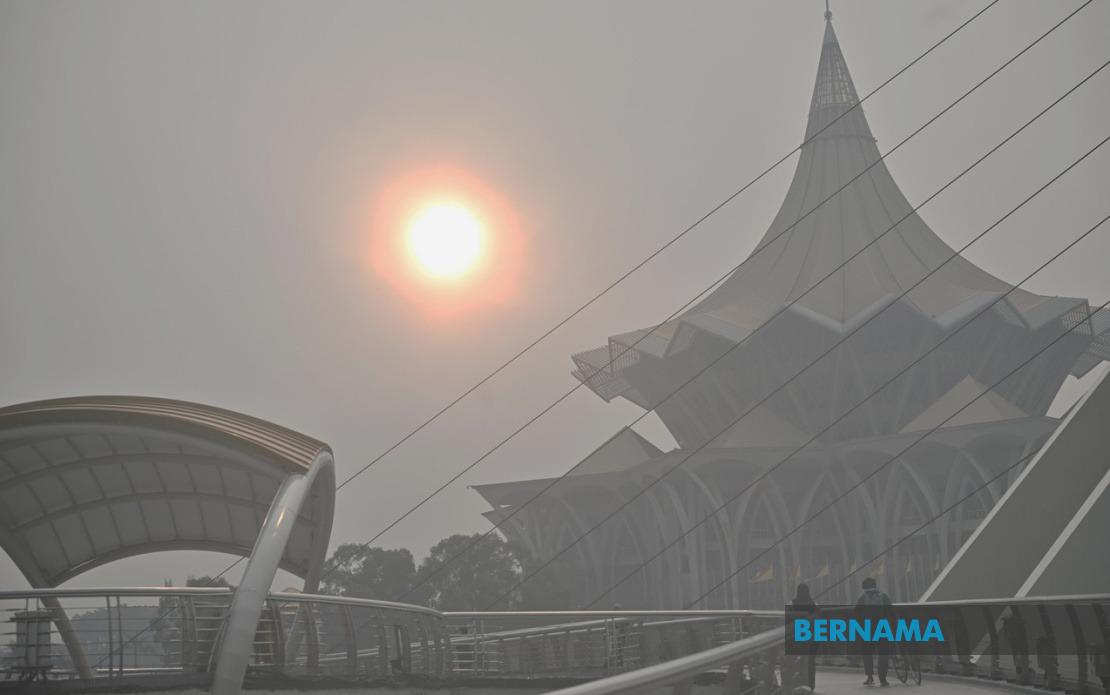
Nearly 600 schools across Sarawak have been forced to suspend classes due to the persistence of exceptionally hot and arid weather sweeping the state, marking a significant disruption to the education calendar affecting over 197,000 pupils and students. The Sarawak Education Department announced on August 20 that the temporary closures would remain in effect through the following day, with 509 primary institutions serving 107,590 children and 82 secondary schools enrolling 89,733 adolescents all shuttering their doors as a precautionary measure against the hazardous climatic conditions.
The geographic scope of the disruption underscores the widespread nature of the weather phenomenon across the Malaysian state. Ten District Education Offices coordinated the school suspensions, spanning regions including Kuching, Padawan, Bau, Lundu, Samarahan, Simunjan, Serian, Sri Aman, Lubok Antu and Betong. This distribution across such a vast area indicates that the meteorological challenge transcends localized pockets, instead representing a systemic climatic stress affecting multiple population centres and rural communities simultaneously.
The decision to close educational facilities reflects official concern about the broader health implications of extended exposure to extreme heat and poor air quality. School administrators and government authorities evidently determined that the risk calculus had shifted to prioritize student and staff welfare over maintaining regular academic schedules. This represents a heightened threshold of concern, as Malaysian schools typically remain open through periods of heat stress, suggesting that current conditions have reached levels deemed genuinely hazardous.
Beyond the immediate classroom impact, the heat and drought conditions have prompted aggressive monitoring and preparedness activities from the Sarawak State Disaster Management Committee. This inter-agency response reflects recognition that prolonged dry spells in tropical Southeast Asia can cascade into multiple simultaneous crises. The committee flagged specific vulnerabilities: the accelerating risk of uncontrolled forest and peatland fires, the depletion of water reserves despite the region's typically abundant rainfall, and the degradation of air quality to unhealthy thresholds across multiple population centres.
The air quality snapshot captured on the afternoon of August 20 revealed the severity of atmospheric degradation across affected zones. Nine locations recorded unhealthy Air Pollutant Index readings, with Serian posting the highest measurement at 195, followed closely by Lundu at 180 and Lubok Antu at 191. Kuching, the state capital, registered 191, while Samarahan logged 175 and Sri Aman reached 178. Even secondary urban centres like Sarikei documented elevated levels at 154, and Sibu at 108, indicating that air quality deterioration was neither isolated nor marginal but rather a pervasive phenomenon.
For Malaysian readers, the Sarawak situation carries particular resonance given the region's recurring struggles with transboundary air pollution. When peatland and forest fires ignite during extended dry periods, smoke routinely drifts across maritime boundaries, affecting air quality in Peninsula Malaysia and neighbouring regions. The environmental interconnectedness of Southeast Asia means that Sarawak's current crisis could presage broader air quality challenges across the region within days or weeks if precipitation does not arrive promptly.
The water supply dimension adds another layer of concern specific to Sarawak's development trajectory. Despite abundant annual rainfall, the state's rapid urbanization and industrial expansion have made water systems more vulnerable to seasonal fluctuations. Prolonged drought periods strain reservoirs and treatment facilities, potentially constraining supply to growing urban populations dependent on centralized water infrastructure. This dynamic differs markedly from rural communities with alternative water access, creating differentiated vulnerability across the state.
The disaster management committee's emphasis on "high-risk areas" suggests that spatial vulnerability mapping has informed resource allocation strategies. Authorities recognize that certain districts face elevated fire risk due to forest composition, peatland extent, or historical fire patterns. This targeted approach acknowledges that generalized warnings prove less effective than site-specific preparedness efforts calibrated to local environmental conditions and settlement patterns.
For educators and parents, the school closures represent not merely an inconvenience but a recognition that climate variability increasingly intrudes upon institutional calendars in ways previously uncommon. If such disruptions multiply, they carry implications for educational continuity, examination schedules, and academic achievement gaps. Students lacking reliable home internet or parental supervision face particular disadvantage during unscheduled closures, potentially exacerbating existing inequities.
The Sarawak experience illuminates a broader Malaysian vulnerability as climate patterns grow more erratic. Extreme heat waves interspersed with intense precipitation represent the emerging normal rather than exceptional anomalies, challenging infrastructure and institutional frameworks designed for historical climate parameters. School closures in Sarawak today may prefigure more frequent disruptions elsewhere in the country, prompting broader policy reconsideration about educational resilience and climate adaptation.
Looking ahead, the success of disaster management interventions hinges on whether weather patterns break within days or persist over weeks. Short-term relief through rainfall would ease immediate pressures across fire risk, air quality, and water supply domains simultaneously. Conversely, prolonged drought would test the reserve capacity of authorities and the patience of residents facing compounding environmental stress. The next weather forecast update may prove as significant as the institutional responses unfolding in real time.

