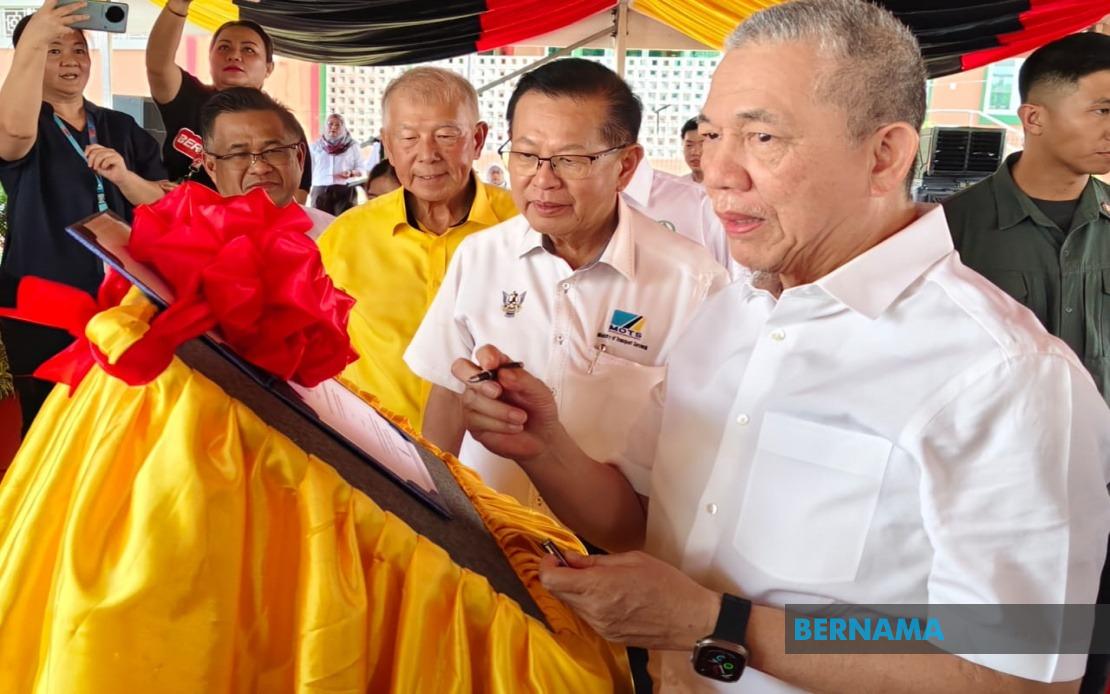
Deputy Prime Minister Datuk Seri Fadillah Yusof has announced a significant environmental protection initiative for Sarawak, with 52 projects approved under the Cakna MADANI Programme this year aimed at mitigating coastal and riverbank erosion while reducing flood vulnerability. The projects, collectively valued at RM9.46 million, represent the federal government's commitment to addressing natural disasters that have increasingly threatened communities across the state. Speaking during a site visit in Miri on July 4, Fadillah outlined the current status of implementation, noting that approximately a quarter of the projects have already reached completion, while others remain in planning or active construction phases.
The distribution of project stages reflects a phased approach to infrastructure development across Sarawak's diverse geography. Of the 52 initiatives, 12 have been finished, 13 are actively under construction, and 27 remain in preliminary stages awaiting commencement. This staggered timeline allows for sustained government investment and resource allocation while enabling local communities to benefit from completed works. Fadillah, who also holds the Energy Transition and Water Transformation portfolio, emphasised during his visit that the interventions target both immediate erosion problems and longer-term structural solutions to flooding.
Miri District has become a focal point for these erosion management efforts, with three Cakna MADANI projects designated for the area. Fadillah inspected the Riverbank Stabilisation Project at Tab Cinaq Cemetery, which commenced in May and targets completion by November. The RM134,682 initiative involves constructing a 50-metre retaining wall designed to prevent further riverbank deterioration, thereby protecting not only the cemetery itself but also adjacent infrastructure and residential zones that depend on stable riverbanks. This project exemplifies how targeted interventions in vulnerable locations can simultaneously serve cultural heritage preservation and public safety objectives.
Beyond these immediate stabilisation efforts, the Malaysian government has committed substantial resources to comprehensive flood mitigation planning across Sarawak. A portfolio of 29 major flood prevention projects, incorporating the Flood Mitigation Plan (RTB), High Priority Flood Mitigation (TBBT) initiatives, coastal erosion controls, and river conservation programmes, carries a combined estimated cost of RM3.834 billion. This significantly larger commitment demonstrates the scale at which authorities are addressing environmental vulnerabilities in the state, reflecting recognition that isolated interventions must be complemented by systematic regional water management strategies.
The composition of these 29 major projects indicates a balance between addressing existing problems and investing in new preventive infrastructure. Of the total, 18 projects represent continuations of previously initiated programmes with a collective budget of RM3.567 billion, while 11 constitute newly approved undertakings costing RM267 million. This framework allows for momentum in long-standing initiatives while simultaneously introducing enhanced protections in areas where recent assessments have identified emerging risks. The prevalence of continuation projects suggests that initial phase completions have validated their effectiveness, justifying sustained government backing.
Among the continuation projects, the RTB Sungai Miri stands as a substantial undertaking with a RM31 million budget spanning multiple fiscal years. Construction commenced in October 2023, and progress tracking indicates the project has achieved 58.11 per cent physical completion, positioning it for November 2026 finalisation. This extended timeframe reflects the engineering complexity of riverine management, particularly in regions with Sarawak's rainfall patterns and geographical characteristics. Extended implementation schedules also allow for adaptive management approaches, enabling project teams to incorporate lessons learned during earlier phases into subsequent construction stages.
For Malaysian policymakers and regional development planners, these initiatives carry significance extending beyond Sarawak's borders. The state's experience with integrated erosion and flood management provides a template for other flood-vulnerable regions throughout Southeast Asia and within Malaysia's peninsular and eastern territories. Sarawak's terrain—characterised by significant rainfall, complex drainage patterns, and vulnerable riverine ecosystems—presents technical challenges common to tropical maritime regions across the broader Asian landscape. Successful implementation and outcomes monitoring could inform best practice guidelines for similar developing regions confronting climate variability and environmental degradation.
The Cakna MADANI Programme itself represents a structured approach to disaster risk reduction embedded within Malaysia's broader development framework. By channelling resources specifically toward erosion and flood mitigation while maintaining transparent project categorisation and progress reporting, the initiative demonstrates governmental accountability in environmental stewardship. The programme's visibility in public announcements also serves to communicate to affected communities that their vulnerabilities have been formally recognised and that allocated budgets will translate into tangible protective infrastructure.
Economic implications of these investments warrant consideration alongside environmental benefits. Communities currently experiencing erosion or flood damage suffer interrupted productivity, infrastructure destruction, and displacement costs. By stabilising riverbanks and implementing flood controls, these projects create conditions for sustainable economic development, agricultural productivity, and population stability. For Sarawak specifically, protecting critical infrastructure and populated areas reduces disaster-related economic losses while enabling communities to undertake longer-term development planning without constant disruption from seasonal flooding.
The timeframes projected for major initiatives like RTB Sungai Miri underscore the long-term commitment required for environmental remediation in regions with entrenched flooding patterns. November 2026 completion dates extend well beyond typical political cycles, suggesting institutional continuity and technical persistence in addressing structural vulnerabilities. This extended horizon also permits integrated monitoring of project effectiveness, allowing managers to document outcomes and adjust subsequent phases based on measured performance.
Stakeholders including local governments, affected communities, and environmental organisations will monitor implementation progress across both the immediate Cakna MADANI projects and the broader 29-project mitigation portfolio. Transparent reporting on expenditure, timeline adherence, and actual erosion or flood reduction outcomes will be essential for demonstrating whether these substantial financial commitments translate into the intended protective benefits. For Malaysians contemplating climate resilience and natural disaster preparedness more broadly, Sarawak's comprehensive approach to integrated water management offers instructive precedent in mobilising government resources toward sustained environmental stabilisation.

