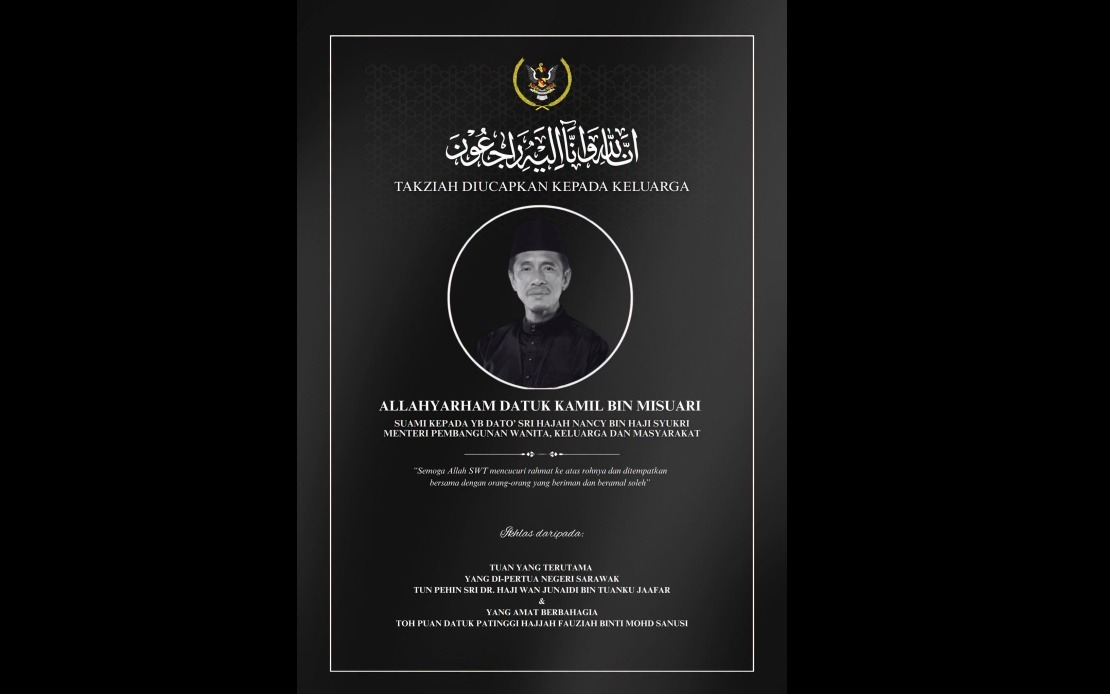
The Yang Dipertua Negeri Sarawak, Tun Dr Wan Junaidi Tuanku Jaafar, has expressed his sympathies to Women, Family and Community Development Minister Datuk Seri Nancy Shukri following the passing of her spouse, Datuk Kamil Misuari, who died at a Kuala Lumpur hospital on June 18.
Through a formal statement released by Astana Sarawak, the state's ceremonial head acknowledged the loss and conveyed prayers for the departed. Tun Wan Junaidi and his wife, Toh Puan Fauziah Mohd Sanusi, requested divine mercy for Kamil's soul, invoking Allah's blessings upon his deeds and praying that he would be counted among the righteous.
The statement further emphasised the leadership's wishes that Nancy and her immediate family would receive the spiritual strength and emotional resilience required to navigate this period of bereavement. Such gestures from Malaysia's state leadership reflect the customary protocols observed within government circles when senior ministers experience personal tragedy, underscoring the importance placed on public recognition of grief within the federal system.
The late Kamil, aged 65, had been married to Nancy for nearly four decades, having wed in 1985. Their union produced three children, establishing a family connection spanning multiple generations within Malaysia's professional and political networks. His death marks a significant personal loss for a minister who has held considerable influence over social policy matters affecting Malaysian families and community development initiatives.
Arrangements have been made to transport Kamil's remains to Kuching, the capital of Sarawak, where final rites will be conducted according to Islamic tradition. He will be laid to rest at the Samariang Muslim Cemetery, a burial ground in the state where numerous prominent figures have been interred. This decision to return the deceased to his home state for funeral proceedings reflects the family's ties to Sarawak and honours the region's significance in their personal history.
Nancy Shukri's tenure as Women, Family and Community Development Minister places her among Malaysia's cabinet-level administrators responsible for formulating national policies affecting women's welfare, family structure support, and community cohesion programmes. The ministry oversees diverse portfolios ranging from domestic violence prevention to women's economic participation and social welfare schemes, making the minister's role crucial in addressing demographic and social challenges across the nation.
The timing of this loss coincides with ongoing government initiatives aimed at strengthening family institutions and community resilience, areas that remain central to Malaysia's social policy agenda. As a high-ranking female minister, Nancy's position has represented progress in women's representation within Malaysia's cabinet, a milestone achieved through political appointments spanning recent electoral cycles.
Condolences from senior state officials serve not merely as personal sympathy but also as institutional acknowledgment of loss within Malaysia's political establishment. Such expressions carry weight in a nation where hierarchical structures and ceremonial protocols remain integral to governance, particularly regarding matters affecting senior government servants and their families. The involvement of Sarawak's Yang Dipertua Negeri in offering formal condolences demonstrates how personal tragedies within the federal government receive recognition across state boundaries.
The loss of a spouse during active ministerial service presents both personal hardship and practical challenges, as Nancy continues fulfilling her cabinet responsibilities while managing grief and family arrangements. Malaysian public figures frequently maintain their official duties while addressing private tragedies, a practice reflecting both professional obligation and cultural expectations regarding resilience among government leaders.
For the broader Malaysian public, particularly those benefiting from women's welfare and community development programmes, this period may prompt reflection on the human dimensions underlying policy implementation. Ministers and senior officials, despite their public prominence, navigate the same family losses and personal challenges affecting ordinary Malaysians, a reality that occasionally emerges when tragedy intersects with high office.

