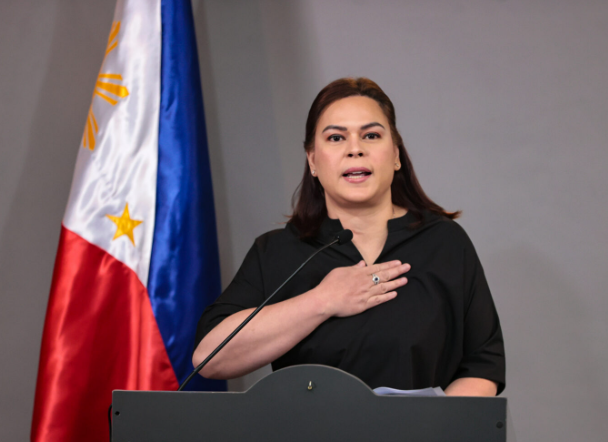
Vice President Sara Duterte seized on Tuesday's massive gathering along Epifanio de los Santos Avenue to renew her assault on President Ferdinand Marcos Jr's administration, characterizing the rally as evidence of deep public discontent with how the government has performed. Speaking on June 30, Duterte argued that the crowds reflected what she termed a "growing sentiment" of frustration—a view she has repeatedly articulated throughout 2024. The timing of her remarks, coinciding with a demonstration organised by the Iglesia ni Cristo religious movement, allowed the embattled vice president to project her grievances onto a far larger and more visible platform than her own institutional position might otherwise command.
The Iglesia ni Cristo contingent that filled Edsa had gathered specifically to protest what they characterised as "selective justice" and legal distortion, their public complaint centred on the announced filing of a plunder complaint against Senator Rodante Marcoleta. For Duterte, however, the underlying discontent represented something broader—a population exhausted by an administration she described as fundamentally defined by governance failures. Her statement suggested that beyond the religious group's specific concerns lay a generalised malaise affecting ordinary Filipinos across multiple dimensions of daily life.
Duterte's critique focused heavily on economic suffering as the core failure of presidential leadership. She highlighted the impact of rising consumer prices, persistent job insecurity, and the deteriorating purchasing power that has squeezed Filipino households across income levels. By anchoring her attack to tangible economic hardship rather than abstract political grievance, Duterte positioned herself as the voice articulating the frustrations that citizens encounter in their most immediate material circumstances. For Malaysian observers, this economic dimension carries particular resonance, as regional economies face comparable inflationary pressures and employment uncertainties that political leaders across Southeast Asia must navigate.
Central to Duterte's indictment was her characterisation of Marcos as personally detached from the lived reality of struggling citizens. Rather than responding to these challenges with concrete policy solutions, she contended, the administration had opted for what she depicted as a campaign of silencing critics. This framing distinguished between legitimate policy disagreement and what Duterte portrayed as an authoritarian reflex—using state power to punish rather than persuade. She specifically referenced those who raise questions about alleged Malacañang corruption, evaluate the administration's record, or lodge accusations against the President himself, arguing that official responses to such criticism revealed something fundamentally troubling about the political environment.
The vice president's language escalated her critique beyond mere policy disagreement into constitutional terrain. She invoked concepts of free expression, democratic accountability, and the right to political dissent as values imperilled by presidential overreach. According to her account, a government responding to criticism through intimidation rather than engagement contradicts the foundational principles that democratic institutions are supposed to embody and protect. This rhetorical move transformed the dispute from one about competing policy visions into one about regime legitimacy itself—whether the Marcos administration remained committed to democratic norms or had abandoned them in pursuit of power consolidation.
Duterte's language grew increasingly stark as she developed her argument. She portrayed the political environment as becoming progressively oppressive, shaped by presidential character flaws and leadership deficiencies that had poisoned the broader system. The phrase "oppressive political environment" carries weight in the Philippine context, where historical memory of martial law and authoritarian rule remains potent in public consciousness. By deploying such language, Duterte positioned her critique within a historical narrative about democratic erosion and the dangers of concentrated executive power.
Significantly, Duterte attempted to reframe the entire dispute by divorcing it from conventional partisan politics. She insisted the issue transcended ordinary electoral competition and instead touched upon matters of state honour and national destiny. This rhetorical move sought to elevate her opposition beyond personal grievance or factional rivalry into a question about the nation's fundamental integrity and the welfare of its population. Citizens enduring economic hardship while watching their dissent met with repression, she suggested, faced something more serious than policy disagreement—they confronted a betrayal of the social contract itself.
The timing of Duterte's statements held additional significance given her own precarious institutional position. The House of Representatives had impeached her on grounds including alleged threats toward Marcos and his wife, unexplained accumulation of wealth, and misappropriation of confidential funds. The Senate Impeachment Court was scheduled to commence her trial on July 6, placing Duterte in the extraordinary position of simultaneously facing removal while denouncing the President. This circumstance raises questions about whether observers should interpret her current statements as principled opposition or as defensive political maneuvring by an official under existential threat.
For regional analysts observing Philippine politics, Duterte's campaign reveals enduring tensions within the Marcos administration's governing coalition. The vice president's willingness to speak so forthrightly against the President—and to exploit public demonstrations for her political purposes—suggests that elite unity around Ferdinand Jr. may be fragmenting. Unlike many vice presidents who remain relatively constrained by party loyalty or constitutional deference, Duterte has demonstrated consistent willingness to challenge the President publicly and aggressively. The Edsa rally incident illustrates how Philippine politics continues to revolve substantially around powerful personalities and their rivalries rather than institutionalised political parties with coherent platforms.
The Iglesia ni Cristo's decision to stage a major public demonstration provides Duterte with what amounts to a ready-made opposition movement. The religious bloc, commanding substantial membership and organisational capacity, serves as a vehicle for anti-administration sentiment regardless of whether its primary grievances align perfectly with Duterte's political agenda. This alliance of convenience between the vice president and the religious movement demonstrates how opposition in the Philippines frequently coalesces around shared enemies rather than shared visions of positive governance.
For Philippine democracy, these developments present a paradox. Duterte criticises the administration for suppressing dissent, yet she herself was removed from the presidential succession through an impeachment process initiated by legislative allies of Marcos. Both sides can claim victimhood in an escalating cycle of recrimination. Whether the Senate trial will proceed toward removal or conclude with acquittal remains uncertain, but the process itself has contributed to the poisoned political atmosphere that Duterte describes. The administration faces genuine criticism about governance performance and economic management, yet attempts to address concerns about potential abuse of power simultaneously generate charges of political persecution.
For Malaysian readers accustomed to different political cultures and institutional arrangements, the Philippine situation illustrates how presidential systems combined with powerful personal machines can generate zero-sum political competition disconnected from institutional norms or policy substance. The contrast with Malaysia's parliamentary tradition—where prime ministers depend on legislative confidence and coalitional stability—becomes apparent when observing how Philippine presidents and vice presidents can pursue such openly adversarial courses regardless of their formal governing responsibilities together.
Looking forward, Duterte's calculated deployment of the Edsa rally signals her intention to mount sustained pressure against the Marcos administration regardless of her trial outcome. Whether through constitutional removal or political rehabilitation, she appears positioned as a major disruptive force in Philippine politics over the coming months. The real question may not be whether her criticisms contain valid points about governance and economic management—the public's evident discontent suggests they resonate—but rather whether her opposition offers alternative vision or merely constitutes another iteration of the personality-driven factional competition that has long characterised Philippine political life.

