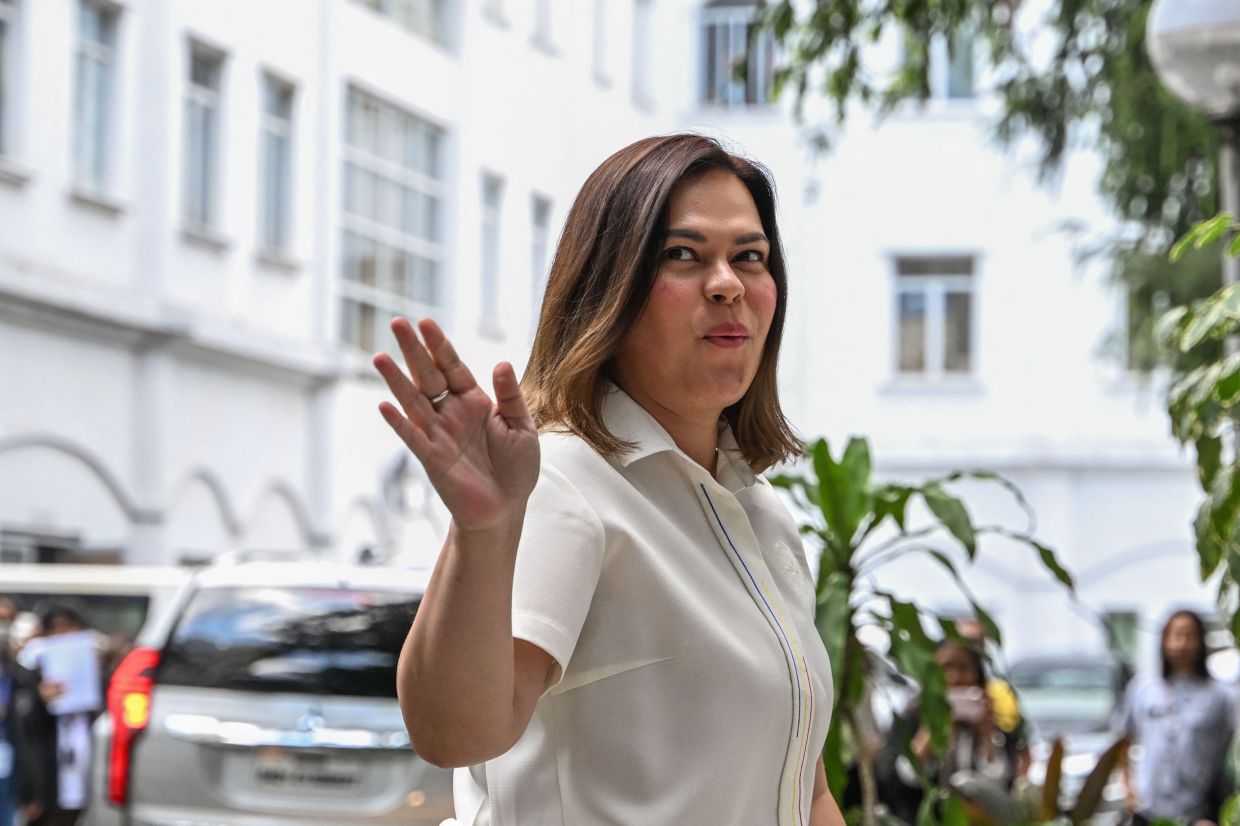
Vice President Sara Duterte is currently traveling abroad with official sanction from President Ferdinand Marcos Jr, according to confirmation from Malacanang on Tuesday. The Palace office disclosed that the Executive Secretary had approved the vice president's international journey, which commenced on July 16 and extends through July 31. Palace press officer Claire Castro disclosed the details at a media briefing, characterising the excursion as a personal undertaking rather than an official state mission.
The approved itinerary encompasses five nations across Europe and the Middle East. Duterte's route takes her through Qatar, Germany, the United Kingdom, Northern Ireland, and the Netherlands. She is presently located in The Hague, according to information provided by defence counsel during concurrent proceedings. The specific purpose of visits to each country was not elaborated by the Palace during the public announcement.
The timing of Duterte's departure carries significant implications, as her absence coincides with an active impeachment trial proceeding in her absence. The vice president departed the Philippines just as the formal trial hearings were commencing, raising questions about the coordination between her legal defence and the ongoing legislative process. Her defence team has indicated she intends to return before the trial concludes, though no specific date was provided for her domestic return.
Duterte's presence in The Hague appears directly connected to developments affecting her immediate family. Her father, former President Rodrigo Duterte, has been held in detention since March 2024 following a warrant issued by the International Criminal Court. The elder Duterte faces accusations of crimes against humanity in connection with the thousands of deaths documented during the Philippines' anti-drug campaign, which he championed during his tenure as Davao City mayor from 2011 onwards and continued throughout his six-year presidency from 2016 to 2022. The ICC proceedings against him are scheduled for November 30, 2024.
The detention and international prosecution of the former president represents a watershed moment in Philippine politics and judicial accountability. Authorities arrested Rodrigo Duterte in March 2025 following an ICC order, marking an unprecedented action against a sitting former head of state in the country's modern history. The charges allege his indirect co-perpetration in extrajudicial killings spanning the drug war years, with prosecutors arguing systematic patterns of unlawful executions rather than isolated incidents. The case has drawn scrutiny from international human rights organizations and triggered complex discussions within Philippine political circles regarding sovereignty, accountability, and the reach of international criminal law.
The legal consequences of the drug war have escalated significantly in recent years. Official estimates place the death toll at over 6,000 individuals during the three-year campaign, though human rights groups contend the actual figure exceeds 20,000. Families of the deceased have pursued cases through various channels, including domestic courts and international bodies. The ICC's assumption of jurisdiction follows the Philippines' withdrawal from the Rome Statute in 2019, creating legal complexities regarding the court's authority to prosecute a non-member state's former leader.
Sara Duterte's impeachment trial addresses separate charges brought by opposition lawmakers and civil society groups. The proceedings centre on accusations including culpable violation of the Constitution, betrayal of public trust, and other administrative misconduct allegations. The vice president has consistently denied the charges and characterized them as politically motivated. Her legal team has mounted vigorous defences and filed various motions during preliminary stages of the trial.
The approval of foreign travel during active impeachment proceedings, while not unprecedented in Philippine constitutional practice, nonetheless underscores the formal nature of the charges. The Constitution permits the vice president to travel internationally without specific legislative approval, though the Palace's explicit confirmation indicates coordination between executive branches. The absence itself does not suspend or interrupt trial proceedings, which continue with or without the accused's physical presence.
For regional observers, the case illustrates broader tensions within Southeast Asian politics between domestic governance priorities and international human rights frameworks. The Philippines has become a focal point for discussions on accountability for mass casualties during security operations. Neighbouring countries grappling with their own historical grievances and contemporary security challenges monitor these developments closely, as outcomes may influence approaches to transitional justice across the region.
The intersection of Sara Duterte's personal circumstances, her father's international legal battles, and her concurrent impeachment trial creates a complex political landscape in Manila. The vice president occupies a constitutionally powerful position while simultaneously managing significant legal vulnerabilities. Her tenure as Vice President, independent from presidential succession, technically allows her to continue executive functions despite the trial's progression, though the accumulated pressures and international dimensions of her family's legal troubles present unprecedented challenges.

