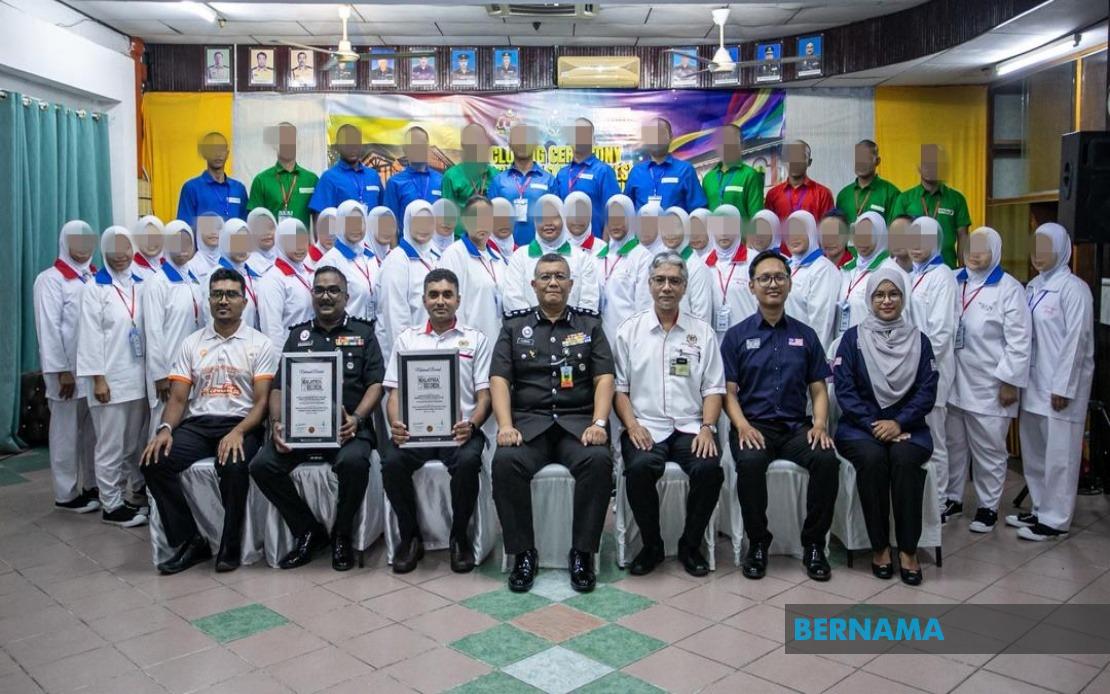
Malaysia's Home Minister Datuk Seri Saifuddin Nasution Ismail has publicly lauded the Malaysian Prisons Department for securing recognition from the Malaysia Book of Records in connection with a pioneering Basic Life Support and Automated External Defibrillator training initiative. The Batu Gajah Correctional Centre spearheaded the programme, which encompassed 42 incarcerated individuals and represented a significant milestone in the country's correctional system's evolution towards restorative practices.
The minister's endorsement underscores a fundamental shift in how Malaysia's penal institutions conceptualise their mission beyond traditional custodial functions. Saifuddin emphasised through a social media statement that correctional facilities ought to function as rehabilitation hubs rather than mere punishment warehouses, a distinction that carries profound implications for how society perceives and manages its prison populations. This philosophical repositioning aligns with international best practices and modernised correctional philosophies increasingly adopted across Southeast Asia.
The BLS and AED training programme exemplifies how Malaysian prisons are attempting to infuse practical, market-valued competencies into their inmate populations whilst simultaneously cultivating humanitarian consciousness. By equipping 42 individuals with skills certified as nationally record-worthy, the Batu Gajah initiative demonstrates that correctional environments can become educational incubators capable of delivering recognised qualifications. These are skillsets that possess tangible currency in the civilian labour market, particularly within healthcare and emergency response sectors where trained personnel remain in demand.
According to Saifuddin's statement, the programme transcends mere technical instruction by deliberately embedding values including humanitarian compassion, disciplinary rigour, personal accountability and self-assurance into its pedagogical framework. This multidimensional approach recognises that successful reintegration hinges not solely on employment-ready capabilities but equally on psychological and emotional reconstruction. Individuals returning to communities must possess both the technical competencies and the attitudinal foundations necessary to function as constructive societal participants.
The Home Minister articulated that the Prisons Department's foundational philosophy pivots on rehabilitation rather than retribution—a critical distinction that shapes every operational decision within Malaysia's correctional ecosystem. This ideological commitment presumes that incarcerated persons retain capacity for transformation and that institutional systems bear responsibility for catalysing positive behavioural and skill development. Such positioning carries particular weight in a Malaysian context where rehabilitation narratives historically received secondary priority to punishment imperatives.
Saifuddin's framing emphasises that the ultimate institutional objective extends beyond the prison walls into community reintegration outcomes. Every individual completing their custodial term ideally returns to society equipped with marketable skills, reinforced value systems, renewed self-efficacy and psychological readiness to contribute meaningfully to familial, communal and national development. This outcome-focused perspective establishes measurable success benchmarks that transcend recidivism reduction alone.
The recognition by Malaysia Book of Records carries symbolic significance beyond the achievement itself. Record-breaking status confers legitimacy and visibility upon correctional innovation within public discourse, potentially shifting societal perception of prisons from stigmatised punishment institutions toward progressive rehabilitation centres. Such reframing proves essential for mobilising public support for programmes that demand substantial resource allocation and professional expertise.
The minister's call for expanded replication of high-impact programmes signals governmental intent to scale successful rehabilitation models across Malaysia's broader correctional infrastructure. Batu Gajah's success with the BLS and AED initiative provides a proven template that other facilities might adapt, gradually transforming the national system's capacity to deliver employability and character-development services to incarcerated populations. Such systematisation requires coordinated training investment, curriculum standardisation and sustained ministerial commitment.
The timing and emphasis of this ministerial intervention reflects broader Southeast Asian trends toward rehabilitative corrections. Nations including Singapore, Thailand and Indonesia increasingly invest in prisoner education and skills training, recognising that human capital development within prisons yields long-term societal benefits through reduced recidivism, improved community safety and enhanced economic participation among formerly incarcerated individuals. Malaysia's positioning aligns with these regional movements toward progressive penology.
For Malaysian readers, this initiative suggests evolving expectations regarding state institutional competence beyond traditional custodial functions. Modern correctional systems increasingly incorporate educational delivery, vocational training and therapeutic services, reflecting recognition that warehousing populations without developmental opportunity perpetuates cycles of re-offending. The Batu Gajah programme exemplifies how institutional creativity and professional commitment can transform correctional spaces into genuine rehabilitation environments.
The BLS and AED training holds particular relevance given Malaysia's healthcare sector labour shortages. Individuals trained in these emergency protocols represent potential workforce solutions for ambulatory services, industrial safety roles and community health initiatives. This intersection between correctional programming and labour market demand demonstrates how strategic training initiatives can simultaneously serve rehabilitation objectives and address sectoral skill gaps.
Looking forward, Saifuddin's advocacy positioning suggests that Malaysia's correctional policy trajectory increasingly recognises rehabilitation as economically prudent and socially beneficial. Programmes delivering nationally recognised qualifications whilst rebuilding personal efficacy promise improved outcomes for vulnerable populations whilst strengthening community resilience through reduced recidivism and increased economic participation among formerly incarcerated individuals returning to Malaysian society.

