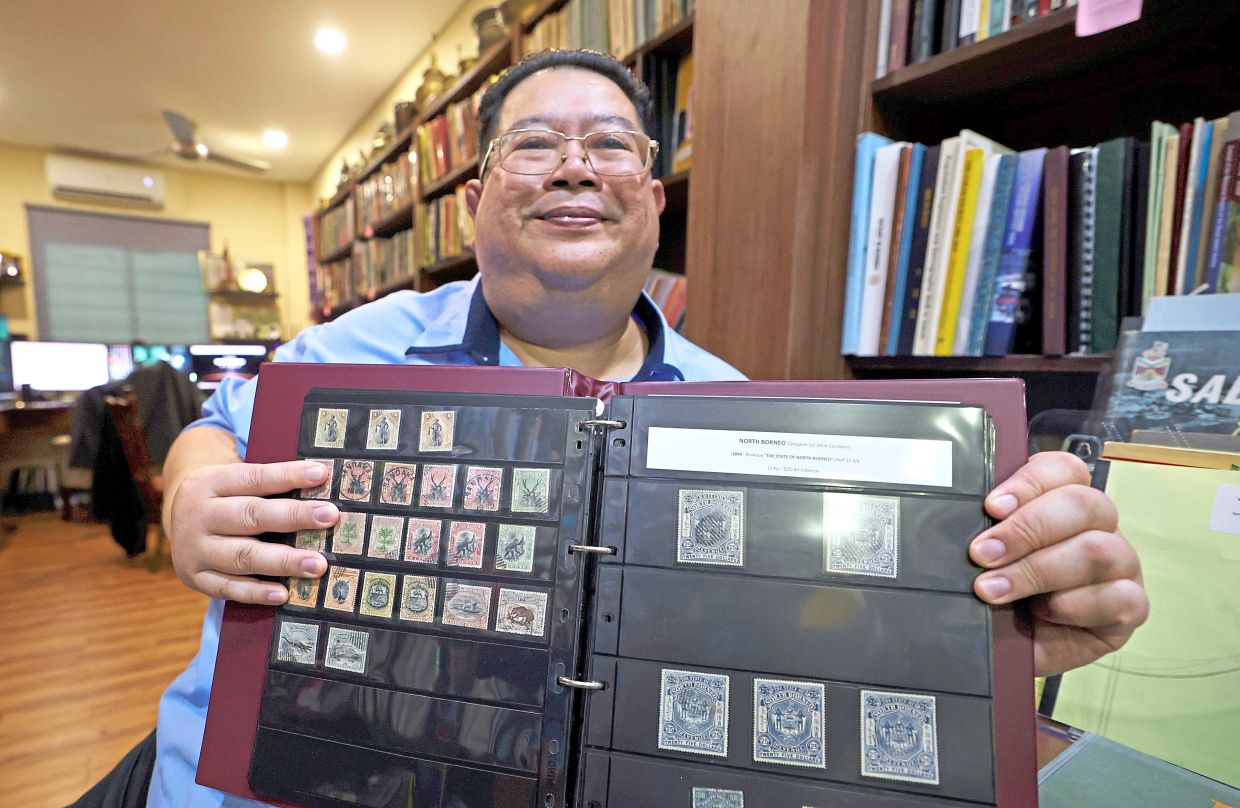
The disappearance of North Borneo stamps—some now over 140 years old—represents a quiet erasure of Sabah's postal heritage, with collectors and historians scrambling to preserve these rare artefacts before they vanish entirely into private vaults or obscurity. Once common in households and collections across the region, these stamps have become increasingly difficult to locate, with antique dealers in Kota Kinabalu reporting significant scarcity and rising values. The urgency of preservation has become impossible to ignore, particularly given the dramatic decline in philatelic interest among younger generations who have grown up in an age of digital communication.
Dr Shari Jeffri, a 56-year-old philatelist and founder of the Borneo History Association, champions the stamps as far more than collectible oddities. He views them as a "living archive"—a tangible record of Sabah's development, identity, and relationship with the outside world during a transformative century. The stamps issued between 1883 and 1963 document the territory's evolution under British colonial administration, capturing shifts in how the region presented itself to the international community. Yet this irreplaceable documentary resource faces an existential crisis. The hobby that once captivated generations has contracted sharply, with only a small committed cohort of enthusiasts remaining and the broader stamp-collecting community continuing to shrink with alarming speed. Without deliberate intervention, Jeffri warns, the knowledge embedded in these objects risks being lost alongside the collectors who understand their significance.
A recent survey conducted by Bernama through antique retailers in Kota Kinabalu confirmed that North Borneo stamps have become markedly harder to obtain. Prices fluctuate dramatically depending on age, physical condition, and rarity—factors that add financial complexity to preservation efforts. Among documented finds were particularly striking examples, including an album containing a six-cent North Borneo stamp from the 1954-1961 period that paired Queen Elizabeth II with a portrait of a Dusun woman, and a ten-cent denomination showing logging operations. These designs transcend mere postal function; they represent historical snapshots of Sabah's economy, demographics, and colonial governance, making their loss a genuine historical tragedy.
Jeffri's personal journey into philately illuminates how the hobby once thrived in regional communities. He inherited a foundational collection from his late grandfather, who worked at the Recreation Club Jesselton during the 1920s. The grandfather had been inspired by British officers who pursued stamp collecting with genuine passion, viewing it as a window into global cultures and postal systems. Rather than keep the hobby private, he explicitly sought to transmit this interest to future generations, recognizing its educational and historical dimensions. Jeffri first encountered stamps at age seven, though he only became a serious, active collector during secondary school years. That sustained engagement has shaped decades of careful stewardship, transforming family inheritance into scholarly expertise.
Among Jeffri's most treasured possessions are two two-cent North Borneo stamps from the historic inaugural 1883 issue, each adorned with a brown sailing boat motif and bearing complete postmarks. These examples carry symbolic weight for collectors: the 1883 series represents the foundational postal identity of the territory, and serious philatelists consider their collections incomplete without examples from this opening year. For Jeffri, such stamps transcend their role as proof of postage. Each tells a specific historical story—about the era in which it circulated, the places it travelled, the hands that held it, and the broader political and economic context it inhabited. This narrative dimension is what elevates philately from mere collecting into genuine historical preservation.
Jeffri's nearly four decades of specialization have given him deep insight into the evolution of North Borneo's postal imagery. The stamps first appeared in 1883 under the British North Borneo Chartered Company and remained in active circulation for approximately 52 years. The designs underwent significant transformation during this period, reflecting changing territorial identities and official priorities. Early denominations featured emblematic imagery—lions, boats, and tigers—alongside the Latin motto Pergo et Perago ("I undertake and I achieve"), elements deliberately chosen to introduce the territory's character and capabilities to the outside world. A pivotal shift occurred from 1894 onwards, when designs increasingly emphasized Borneo's distinctive natural heritage: native flora, fauna, and wildlife became central motifs, signalling a reorientation towards celebrating the territory's environmental assets and ecological uniqueness.
The 1935 series marked a further evolution, with designs more explicitly articulating Sabah's identity and available in a wide range of denominations from two cents to one dollar. These later issues provide particularly rich documentation of how colonial authorities wished the territory perceived internationally. Yet preservation of these materials poses formidable technical challenges. The primary enemy is chemical degradation: stamps must be stored in acid-free albums to prevent fading, discoloration, and physical deterioration. The paper and adhesive used on individual stamps serve as crucial markers of authenticity and value, requiring specialist knowledge to evaluate properly. Stamps bearing complete postal cancellations—those with legible markings showing date, post office, time, and location—are especially prized because they provide verifiable documentary evidence of actual postal use and movement, transforming them into primary historical sources.
To develop his expertise, Jeffri studied under recognized philatelic authorities, including Singaporean experts Voon Kyam Foh and Tan Chun Lim, and has consulted specialized international references such as the Commonwealth & British Empire Stamps catalogue. This scholarly approach distinguishes his work from casual collecting, positioning him as a serious custodian of historical knowledge. His commitment highlights a crucial reality: effective preservation of postal history requires not just emotional attachment but technical competence, institutional support, and knowledge transmission. The expertise currently held by figures like Jeffri remains largely personal, lacking institutional anchoring that might ensure its survival beyond individual lifespans or commitments.
The broader context underscores why North Borneo's postal heritage deserves urgent protection. Letter writing, which once animated the global postal system and drove stamp production, has largely yielded to digital communication. Yet the stamps themselves remain as durable witnesses to an era of human connection, colonial administration, territorial identity formation, and economic activity. They document how Sabah presented itself to the world and how the world responded. As traditional collecting communities age and fragment, and as antique shops report vanishing inventory, the window for comprehensive preservation steadily narrows. These century-old artefacts—fragile, increasingly scattered, vulnerable to loss through deterioration or neglect—deserve recognition as part of Sabah's cultural heritage requiring active institutional safeguarding. Without such intervention, future generations will inherit not living archives but only gaps in the historical record.

