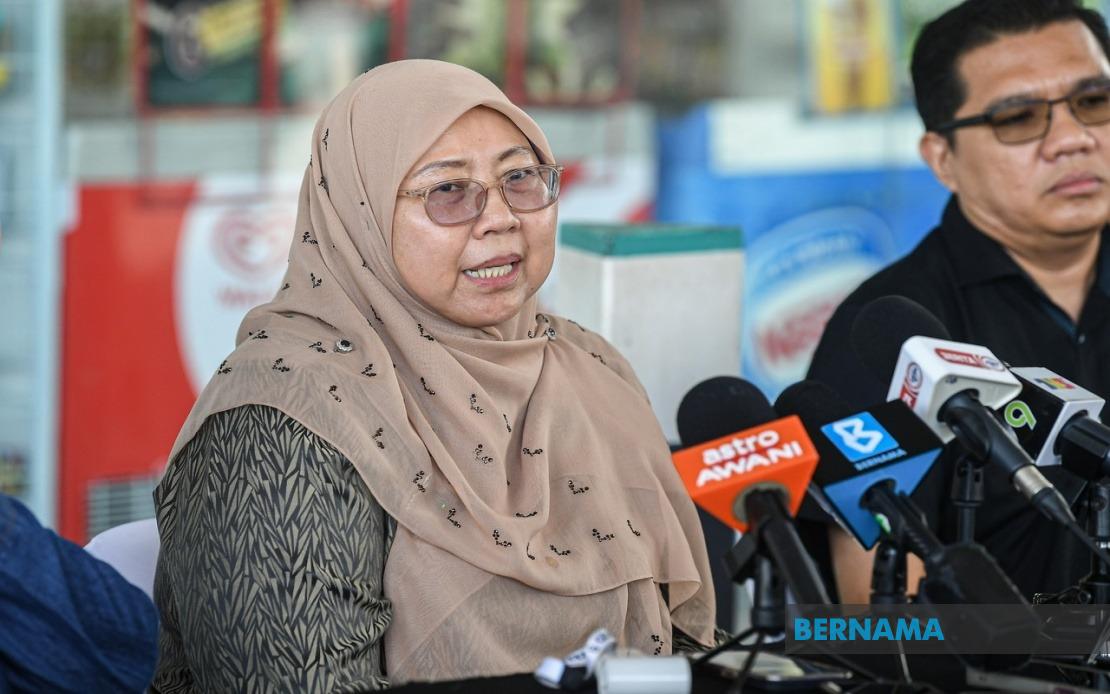
Pakatan Harapan's campaign machinery in Johor is pressing ahead with undiminished energy despite a handful of incidents involving damage to campaign materials, according to party leadership. PKR secretary-general Datuk Fuziah Salleh downplayed the significance of the disruptions during a press conference in Johor Bahru on Tuesday, characterising them as minor setbacks that have not influenced the overall trajectory of the federal ruling coalition's push to retain control of the state.
The incidents documented by PH operatives have included the tearing down of political posters, defacement of billboards, and the burning of party flags across contested constituencies. While acknowledging these occurrences, Fuziah suggested they reflect isolated actions rather than any systematic effort capable of destabilising the campaign. She maintained that the broader environment in which PH is campaigning remains stable and that voter receptivity continues to strengthen, particularly among demographic groups that could prove decisive in the poll.
Fuziah, who serves concurrently as Deputy Minister of Domestic Trade and Cost of Living, offered her assessment while overseeing a review of the government's Budi MADANI diesel subsidy mechanism at a petrol station in the city. The dual engagement illustrated how national ministers are weaving state election campaigning with routine policy work, a pattern common in Malaysian electoral cycles where the machinery of government blends seamlessly with party political activity. The presence of Johor's state-level KPDN director Lilis Saslinda Pornomo underscored the integration of federal and state-level party structures in the campaign effort.
The intensity of grassroots canvassing by PH candidates in Johor has become increasingly pronounced as the election draws near. Fuziah outlined an aggressive schedule whereby individual candidates are maintaining engagement with voters from early morning through late evening, with some participating in up to ten separate events daily. This sustained ground presence aims to consolidate support and reach undecided voters in the final stretch before polling day on July 11. Early voting is scheduled for July 7, providing an additional opportunity for supporters and workers to cast ballots ahead of the main election date.
Remarkably positive feedback from the electorate appears to be buoying PH confidence. According to Fuziah, conversations with voters across different constituencies have yielded encouraging signals, with support reportedly growing among young people and first-time voters. These demographic groups have become increasingly important in Malaysian politics, as young voters are often less aligned with traditional party structures and more responsive to appeals based on specific policies or forward-looking visions. The coalition's apparent traction with these voters could prove consequential in a competitive statewide contest.
A significant portion of Fuziah's remarks addressed the recent announcements by PH candidates for the Skudai and Perlis state seats, who had presented what they described as a manifesto. Rather than endorsing these as official party commitments, Fuziah sought to reframe them as localised pledges rooted in neighbourhood concerns. She distinguished between comprehensive state-level policy platforms and the commitments made by individual candidates to address specific community issues such as waste collection problems. This clarification carries implications for how PH will be held accountable once polling concludes; candidates' local promises may become points of contention if not fulfilled.
The distinction between a manifesto and candidate pledges, while seemingly technical, reflects broader questions about party discipline and the relationship between national-level party platforms and ground-level commitments. Fuziah emphasised that a genuine party manifesto encompasses major policies that reflect how the coalition would govern at the state level if successful. Local initiatives touted by candidates, by contrast, represent their personal or constituency-specific agendas rather than binding party doctrine. This framing allows PH flexibility in how it implements or prioritises different commitments depending on electoral and budgetary circumstances.
PH's official manifesto for the Johor state election was scheduled to be unveiled the day after Fuziah's remarks, providing the comprehensive policy platform that the party believes will guide its governance agenda. The timing of this announcement, late in the campaign cycle, is strategic; it consolidates party messaging while allowing sufficient time for dissemination to voters without inviting protracted scrutiny or criticism. The manifesto will presumably address major issues affecting Johor's economy, infrastructure, and social services, anchoring PH's case to voters beyond the immediate campaign noise.
The Johor state election involves a substantial field of candidates competing across numerous constituencies. A total of 172 candidates are standing in the contest, distributed among the state assembly seats being contested. The July 11 polling date represents the culmination of weeks of campaigning by multiple parties, each seeking to shape voter preferences and secure mandates in their respective constituencies. The scale of the race underscores both the stakes involved in maintaining or shifting state-level power in Malaysia's second-largest state by population and economy.
For PH, the Johor election carries particular significance as the party seeks to consolidate its position within Malaysia's federal government. Control of state governments matters not only for direct governance but also for resource allocation and political positioning within the broader national system. A strong showing in Johor would validate the coalition's claim to renewed voter confidence, while a disappointing result could embolden internal critics or rival coalitions. The minor incidents of campaign disruption, while dismissed by Fuziah, remain reminders that electoral contests in Malaysia, like elsewhere, can occasionally turn heated or contentious as parties vie for voter attention and support.

