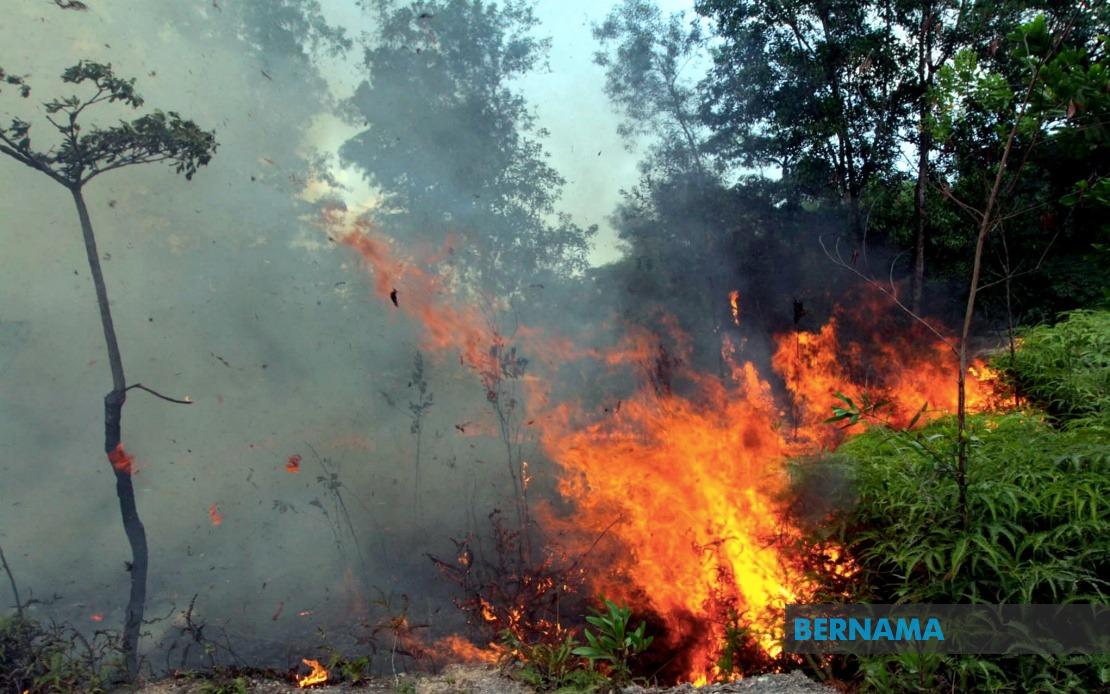
The Sabah Fire and Rescue Department (JBPM) has intensified public outreach efforts to combat open burning practices as transboundary haze originating from Kalimantan's forest fires begins to compromise air quality across the Malaysian state. Director Mohd Pisar Aziz flagged the situation on August 11, noting that smoke from southern and central Borneo is being carried by prevailing winds toward northern Borneo, where it is already affecting visibility and atmospheric conditions in several districts. The combination of meteorological factors—warm, dry weather patterns coupled with regional wind systems—has created conditions conducive to rapid fire spread and the northward transport of smoke across the Indonesia-Malaysia border, a recurring seasonal challenge that authorities must address with coordinated preventive measures.
Current air quality readings from the Air Pollutant Index Management System (APIMS) indicate that Sabah remains in the moderate pollution range, though concentrations are climbing. Kota Kinabalu, the state capital, recorded the highest index at 83, with Politeknik Kota Kinabalu at 81 and Kimanis at 76 during afternoon measurements on the day of the alert. While these figures technically fall within acceptable bands for the general population, officials emphasize that the trajectory is concerning and warrants immediate preventive action before conditions deteriorate further. The haze has already become visible in populated areas, prompting the department to activate communication campaigns targeting both institutional and household levels.
Mohd Pisar underscored that high-risk demographic groups—including asthma sufferers, young children, and elderly residents—face elevated health threats even at moderate API levels and should adopt additional protective measures such as limiting outdoor exposure and using appropriate respiratory protection. This guidance reflects epidemiological evidence from previous transboundary haze episodes in Southeast Asia, where vulnerable populations experienced marked increases in respiratory hospital admissions during elevated pollution episodes. The department's messaging thus balances reassurance about current readings with a precautionary stance toward known health vulnerabilities, avoiding complacency while preventing unnecessary alarm.
The JBPM has declared an open-burning prohibition across districts meeting specific meteorological thresholds, particularly Keningau and Pitas, which recorded seven consecutive days without rainfall through August 10. This trigger-based approach aligns with national environmental protocols that recognize how dry soil and vegetation conditions dramatically amplify fire risk and smoke production. The ban encompasses the burning of household refuse, dried vegetation, garden trimmings, construction debris, and similar combustible materials—common rural and suburban practices that, under current atmospheric conditions, represent a significant multiplier of haze impacts. By restricting these activities during high-risk windows, authorities aim to eliminate avoidable smoke sources that would compound the transboundary contribution already affecting the state.
The enforcement of such restrictions carries legal weight, as open burning constitutes a prosecutable offence under Malaysian environmental law. Mohd Pisar's invocation of this legal framework signals that the department intends not merely to request compliance but to pursue violators through formal channels. This dual approach—combining public education with credible enforcement threat—has proven effective in previous campaigns, particularly when coupled with community peer pressure and perceived legitimacy of the underlying public health rationale. The framing of fire prevention as collective action for environmental and property protection, rather than bureaucratic restriction, typically yields higher voluntary compliance rates across diverse socioeconomic groups.
Practical mitigation guidance circulated by the JBPM recommends that residents curtail outdoor activities during the peak pollution window of 11 am to 4 pm, maintain adequate hydration to support respiratory and systemic functions, and employ face masks in visibly hazy conditions. These individualized protective measures reflect recognition that public infrastructure for air filtration remains limited in Sabah, necessitating household-level adaptation strategies. The department further advises systematic checks of electrical wiring to forestall accidental fires during dry periods when ignition risks accelerate, and heightened vigilance regarding careless disposal of smoking materials—a source category that contributes disproportionately to unplanned fire ignitions across the region.
The transboundary haze phenomenon represents a recurring structural challenge for Malaysian states bordering Indonesian territories prone to seasonal forest burning. Climate patterns, agricultural land-clearing cycles, and the prevalence of peatland ecosystems in central and southern Borneo create predictable windows when smoke transport becomes inevitable absent substantial rainfall or policy interventions in Indonesia. Sabah's situation thus reflects not isolated meteorological misfortune but a recurring environmental pattern that requires sustained bilateral cooperation on fire prevention, early warning systems, and atmospheric monitoring. The state's repeated engagement in such warnings underscores both the regularity of the phenomenon and the persistent difficulty of addressing its root causes in neighboring jurisdictions.
From a public health systems perspective, the escalating alert represents a test of integrated response capacity. District health offices coordinate with fire authorities to anticipate surge demand in respiratory presentations; air quality monitoring networks feed real-time data into public advisory systems; and risk communication cascades through community leaders and digital channels to reach populations with varying information access. The effectiveness of such coordination during this episode will inform preparedness for potentially more severe events later in the dry season, when larger fires or unfavorable wind patterns could push API readings into unhealthy or hazardous ranges. Sabah's experience also serves as a bellwether for other Malaysian states—Peninsular Malaysia, Sarawak—that periodically face similar transboundary smoke incursions and must maintain institutional readiness for rapid escalation of public health countermeasures.
The imperative to contact JBPM via the 999 emergency line for fire reports or suspicious fire-promoting activities mobilizes public surveillance as an early detection mechanism. In dispersed, semi-rural areas where official patrols cannot provide continuous coverage, community reporting has historically served as an effective force multiplier, enabling rapid response to nascent fires before they expand. The normalization of fire-reporting behavior through repeated public messaging during high-risk periods establishes social norms that support fire prevention as a shared civic responsibility. This approach, when sustained across multiple warning cycles, gradually shifts community culture toward greater vigilance and collective stewardship of fire risk.
Looking forward, Sabah's current preparedness posture reveals both institutional capacity and structural vulnerability. The state has functioning air quality monitoring networks, an operational fire department with clear communication protocols, and demonstrated ability to invoke legal enforcement tools. Yet the underlying driver—forest fires in Indonesian territory—remains substantially beyond Sabah's unilateral control. This asymmetry highlights the importance of sustained diplomatic and technical engagement with Indonesian counterparts on fire management, peatland restoration, and enforcement of burning regulations in cross-border zones. For Malaysian policymakers and regional observers, Sabah's haze management experience underscores that transboundary environmental challenges require mechanisms extending beyond national boundaries, even as domestic preparedness and response capability remain essential complements to such regional cooperation efforts.

