Sabah's state government is accelerating efforts to secure the final instalment of a federal special grant package, having collected RM600 million in June and now targeting delivery of the remaining RM900 million before 2024 closes. The interim allocation of RM1.5 billion represents only a partial settlement of what the state argues it is constitutionally owed, a distinction officials have stressed repeatedly as they navigate a complex dispute with Kuala Lumpur over historical revenue-sharing arrangements stretching back decades.
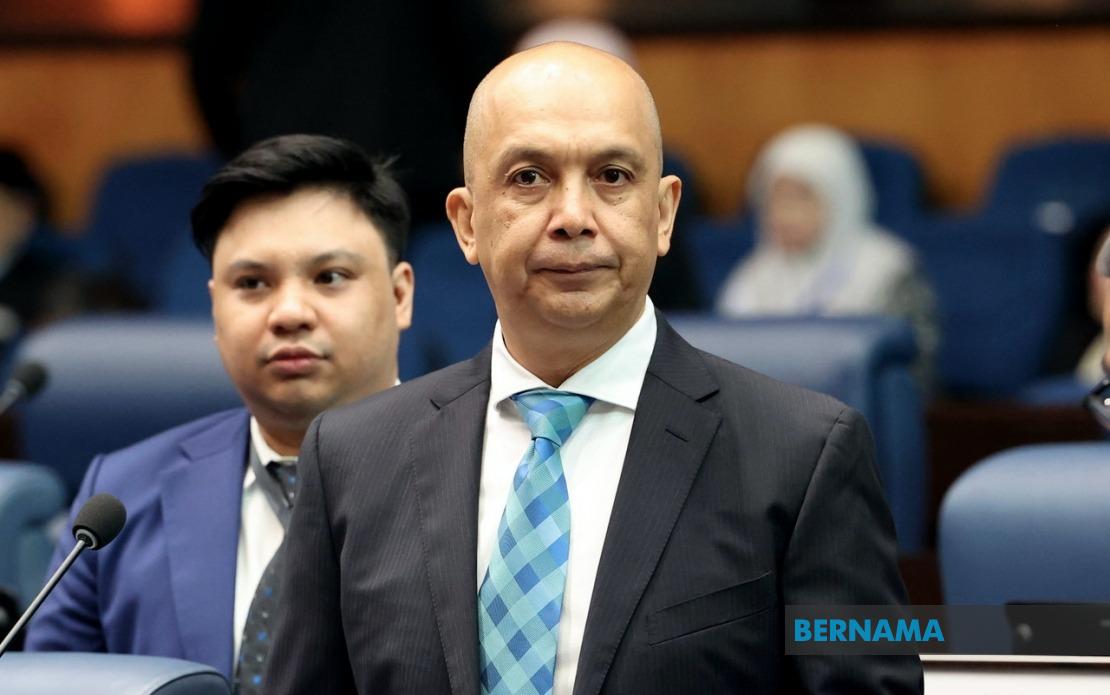
Assistant Finance Minister II Datuk Mohd Ishak Ayub clarified during legislative proceedings in Kota Kinabalu that accepting the interim payment carries no implication of agreement on the final quantum Sabah is entitled to under the Federal Constitution. The state's legal position rests on Articles 112C and 112D, provisions that became focal points in the long-running debate over how much of federal revenue the resource-rich peninsula state should retain. Sabah has consistently championed implementation of the 40 per cent formula embedded in constitutional provisions, viewing this as non-negotiable ground in federal-state fiscal negotiations.
The timeline of government correspondence reveals the diplomatic pathway that led to the June payment. Communications exchanged on June 9, 19 and 26 followed Prime Minister Datuk Seri Anwar Ibrahim's public commitment during the Kaamatan Festival celebration in May to increase the interim disbursement. This sequence underscores how major fiscal announcements in Malaysia often emerge through carefully choreographed public events before formal institutional channels process the details. For Sabah, which has historically found itself marginalised in federal budgeting despite its resource wealth, such announcements carry political weight beyond their immediate monetary value.
The RM1.5 billion package itself reflects an ongoing tension between federal acknowledgement of Sabah's claims and reluctance to fully concede the constitutional interpretation the state advances. By structuring the payment as "interim" and framing it separately from the 40 per cent entitlement question, the federal government preserves negotiating room. Sabah's insistence that its acceptance involves no waiver of constitutional rights suggests the state recognises this distinction and intends to pursue further claims once the current interim phase concludes. This positioning indicates negotiations on the permanent settlement remain unresolved.
For Malaysian federalism more broadly, the Sabah case exemplifies enduring friction between resource-rich peripheral states and the federal centre. Unlike Sarawak, which secured specific constitutional protections over oil revenues, Sabah's revenue arrangements depend on interpretation of general constitutional clauses. The 40 per cent formula, though explicit in the constitutional text, has been subject to varying federal interpretations regarding scope and implementation. Sabah's refusal to treat interim payments as full settlement keeps this fundamental question alive and suggests future federal governments will face similar demands.
Beyond the headline fiscal figures, Sabah's government is simultaneously managing welfare expenditure decisions that reflect constrained state finances. Assistant Minister for Women, Health and People's Wellbeing Datuk Rina Jainal indicated that welfare assistance rates would remain within RM200 to RM350 per beneficiary monthly, with any expansion contingent on improved state financial capacity. This pragmatic stance suggests Sabah recognises that its leverage with the federal government, while real, has limits. Further welfare improvements would require either additional federal transfers or growth in state-generated revenue.
The eligibility criteria for welfare assistance have been broadened alongside slight income adjustments, with the poverty line threshold rising from RM1,198 in 2025 to RM1,236 in the current year. These incremental modifications acknowledge that inflation erodes purchasing power and that poverty definitions require periodic recalibration. However, the modest increase suggests Sabah is calibrating welfare expansion carefully, avoiding commitments that unsustainable state finances cannot support. This reflects a government conscious of its fiscal constraints but attempting to marginally improve social safety nets within available resources.
State-level welfare decisions in Sabah operate within parameters largely set by federal policy. Any significant increase in federal welfare rates emerges through the Prime Minister's annual budget presentation in Parliament, a centralised mechanism that leaves states with limited autonomous room to expand assistance beyond federal baselines. Sabah's welfare officials have therefore framed their position around accepting federal parameters while adjusting eligibility thresholds where state resources permit. This dependency on federal budget cycles illustrates how fiscal federalism in Malaysia constrains state-level social policy autonomy.
The concurrent pursuit of both the special grant and welfare policy adjustments reflects Sabah's multi-layered engagement with Kuala Lumpur. State leaders must simultaneously press constitutional claims over revenue entitlements while negotiating year-to-year transfers for essential services. This bifurcated approach carries inherent tensions—aggressive assertion of constitutional rights might antagonise federal counterparts whose goodwill the state requires for discretionary transfers. Conversely, acquiescence on revenue claims might entrench unfavourable fiscal arrangements permanently.
Looking forward, the December deadline Sabah has set for receiving the remaining RM900 million represents a political benchmark as much as administrative necessity. If the federal government meets this timeline, it signals continued commitment to addressing Sabah's grievances, at least partially. Failure to disburse before year-end would strengthen arguments that the federal government is dilating an already delayed settlement. Either outcome will shape how Sabah approaches the permanent revenue entitlement negotiation that must eventually follow this interim phase.
For Southeast Asian observers, Sabah's fiscal politics illustrate broader patterns in resource-rich subnational governments' relationships with their national centres. When peripheral regions possess valuable commodities but limited political weight, they often find themselves locked in protracted negotiations with dominant central authorities over revenue shares. Sabah's experience suggests that constitutional provisions alone provide insufficient protection without sustained political mobilisation and willingness to escalate disputes. The ongoing emphasis on the 40 per cent formula, despite years of marginalised implementation, reflects Sabah's determination to keep this constitutional question alive for future resolution.

