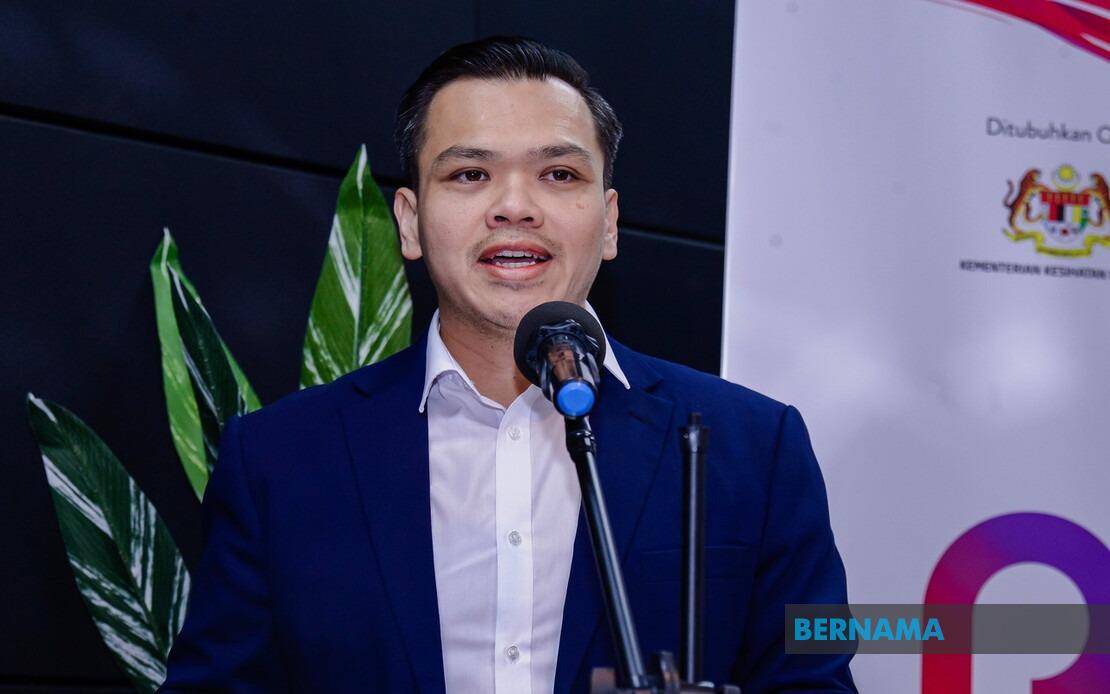
Sabah is strengthening its push to expand free health screenings among lower-income residents through the launch of PeKa B40 Catalyst Sabah 2026, a scheme that abandons one-size-fits-all approaches in favour of grassroots community engagement. The initiative addresses a stubborn gap: while approximately 544,000 B40 group members in the state are eligible for screening benefits under the Rahmah Cash Contribution 2026 framework, only 165,230 have actually undergone health checks in the first quarter, leaving 378,770 untouched. That translates to a mere 30.37 per cent coverage rate—a shortfall that prompted the state government and its healthcare partners to fundamentally rethink how they deliver health services to the poorest households.
ProtectHealth Corporation, the lead agency driving the initiative, argues that the problem is not a lack of willingness among B40 recipients but rather structural barriers rooted in Sabah's vast geography and patchy healthcare infrastructure. Many eligible individuals live in remote settlements, lack reliable information channels, or face insurmountable travel distances to centralised screening facilities. These aren't failures of policy intent; they reflect the real-world friction between a nationwide benefits scheme and the lived reality of communities scattered across an enormous tropical island state. Hazwan Najib, ProtectHealth's chief executive, emphasises that early detection matters profoundly—catching health risks before they spiral into crises allows individuals to intervene sooner, preventing costlier interventions down the line.
The catalyst programme deploys a deliberately decentralised architecture to overcome these barriers. Rather than expecting B40 recipients to navigate to government clinics or private practices on their own initiative, the scheme mobilises what ProtectHealth terms the entire healthcare ecosystem. This includes public clinics, private general practitioners, community-based NGOs, and local leaders who command trust within their neighbourhoods. The logic is straightforward: people are more likely to take health action when information and services arrive through channels they already respect and rely upon, whether that means a religious leader, a longhouse chief, or a respected community volunteer.
The Community Access Network model (CAN Sabah) forms the operational spine of this approach. By formalising partnerships between government and private health providers on one side and grassroots organisations on the other, CAN Sabah creates information pipelines that bypass traditional top-down communication methods. Religious institutions, local authorities, volunteer networks, and commercial entities become formal partners in screening outreach, ensuring that messaging reaches even marginal communities. This is particularly important in Sabah, where populations vary dramatically by district in terms of population density, access to transport, and healthcare infrastructure.
A second pillar involves the Program GP Angkat, which builds deeper collaboration between government-run Klinik Kesihatan clinics and private medical practices enrolled in PeKa B40. Rather than operating in isolation, clinics share responsibilities, conduct joint outreach campaigns, and exchange operational best practices. This cross-sectoral approach allows smaller or isolated clinics to leverage experiences from better-resourced partners, while private practitioners gain insight into serving lower-income populations through government links. The partnership model also distributes the screening workload more evenly, preventing bottlenecks at centrally located facilities.
Monitoring and accountability form a third essential component. The PeKa B40 30-Day Screening Olympics introduces regular performance tracking through a real-time digital dashboard, allowing officials to measure screening volumes, gauge progress against targets, and identify underperforming locations quickly enough to adjust tactics. Rather than waiting for quarterly reports to reveal coverage gaps, the system provides near-instantaneous visibility into which clinics are reaching targets and which are struggling. This data-driven approach allows rapid reallocation of resources to problem areas and enables public recognition of high performers through the PeKa B40 Sabah Pinnacle Award—a fourth mechanism designed to foster friendly competition and maintain institutional momentum.
The timing reflects growing recognition that Malaysia's targeted welfare schemes only deliver benefits if they actually reach intended recipients. The B40 group—households in the lowest 40 per cent of income distribution—often faces the most severe obstacles to accessing public services, despite being the primary targets of government programmes. In Sabah's case, geographical dispersion compounds these challenges. Unlike urban centres where health infrastructure clusters densely, rural and interior areas require active outreach and partnership strategies rather than passive service provision.
For Malaysian policymakers observing from other states, the Sabah model offers important lessons about scaling social safety nets across geographically challenging terrain. The approach acknowledges that uniform service delivery structures fail in contexts of uneven development. By distributing responsibility for outreach across government, private, and community sectors, Sabah sidesteps the traditional bottleneck of underfunded government clinics struggling to reach dispersed populations. The emphasis on trusted intermediaries also resonates with research showing that community-embedded messaging outperforms distant bureaucratic campaigns in changing health-seeking behaviour.
The low initial screening rate—barely one-third of eligible recipients—also raises broader questions about how Malaysian welfare schemes assess success. A payment reaching someone's bank account counts as programme delivery, but if beneficiaries lack information about complementary benefits like health screening, the broader welfare objective falters. PeKa B40 Catalyst Sabah 2026 essentially treats low screening uptake as a programme failure rather than an individual failure, shifting responsibility from recipients to providers and intermediaries.
Looking forward, the success of this initiative will depend on sustained implementation beyond the initial pilot phase. Creating and maintaining multi-sector partnerships requires ongoing coordination, clear role definition, and mechanisms for resolving conflicts. NGOs and private clinics may not maintain enthusiasm if screening doesn't align with their institutional priorities. Communities themselves must remain engaged if outreach efforts are to transcend one-time campaigns. The real-time dashboard, while useful, only works if data quality is high and officials act on findings quickly rather than allowing performance tracking to become mere bureaucratic exercise.
The initiative also highlights how access to healthcare—a foundational determinant of wellbeing—remains unequally distributed even when government introduces targeted subsidy programmes. Free screening means little for households whose transportation costs exceed their spare cash, or whose working schedules cannot accommodate clinic visits. The Sabah catalyst model addresses some of these barriers by bringing services closer and leveraging trusted messengers, but fundamental constraints like time poverty and transport costs require solutions beyond the health sector alone. Nonetheless, by mobilising existing community infrastructure and formalising partnerships often left informal, PeKa B40 Catalyst Sabah 2026 represents a practical step toward ensuring that welfare benefits promised on paper translate into actual health improvements for some of Malaysia's most vulnerable residents.

