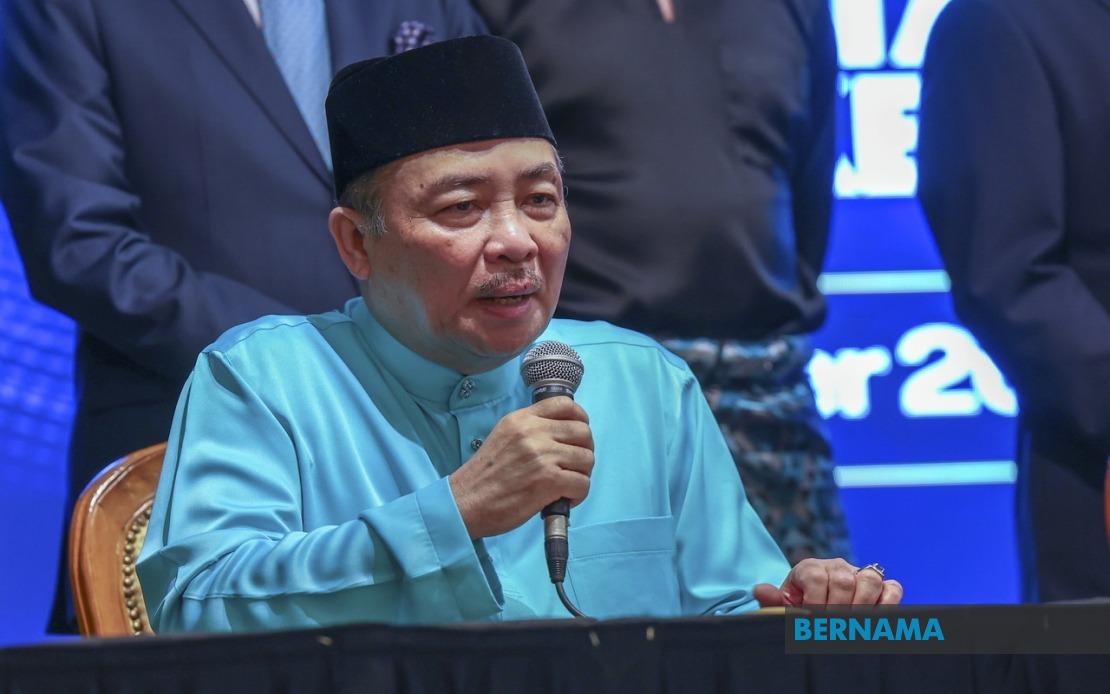
The Sabah government has committed more than RM100 million towards its Sabah State Government Scholarship (BKNS) programme for this academic year, channelling resources to sustain existing recipients while opening doors for 2,182 additional students to pursue tertiary education. Chief Minister Datuk Seri Hajiji Noor announced the substantial allocation as evidence of the state administration's determination to democratise access to quality education across Sabah's diverse communities.
The investment reflects a calculated policy shift within Sabah's education sector, where the government recognises that financial barriers often prevent talented students from disadvantaged backgrounds from continuing their studies. By increasing the scholarship pool, the state government aims to capture untapped potential across its population while building a more skilled workforce capable of competing in knowledge-intensive industries. The latest round of scholarships brings the total number of beneficiaries under the BKNS scheme to 13,389 students, a figure that underscores the programme's growing significance within Sabah's education ecosystem.
The state's strategic prioritisation of Science, Technology, Engineering and Mathematics disciplines reflects broader regional and national imperatives. As Southeast Asia navigates the digital transformation and Fourth Industrial Revolution, countries including Malaysia face acute shortages of qualified STEM professionals. Sabah's deliberate channelling of scholarship resources towards these fields positions the state to develop homegrown talent capable of filling critical skills gaps, reducing dependency on foreign expertise whilst retaining intellectual capital within the state's borders.
Beyond the flagship BKNS programme, Sabah has constructed a comprehensive ecosystem of educational financial assistance. Since 2021, the state government has rolled out fourteen distinct support initiatives designed to address different dimensions of student hardship. These range from the one-off Higher Education Institution Registration Cash Assistance (BUDI), which eases the burden of initial enrolment costs, to the Sabah Student Flight Ticket Assistance (GRS-SUBFLY), a crucial intervention recognising that geographical isolation places additional expenses on students from remote areas. The Special Examination Cash Assistance (BAKTI) and Ihsan Computer Assistance (BAIK) programmes further acknowledge that educational success requires more than tuition support, encompassing examination fees, technology access, and digital literacy resources essential in contemporary learning environments.
The State Higher Education Student Contribution (SENTOSA) scheme and related programmes demonstrate sophisticated understanding of the multiple financial pressures constraining student progression. Rising living costs, particularly in accommodation, transportation, and meals, have emerged as significant barriers to educational continuation, especially for students from lower-income households. By diversifying support mechanisms, Sabah's government acknowledges that a one-size-fits-all scholarship model proves insufficient for addressing the complex socioeconomic realities facing its student population.
Hajiji's emphasis on human capital development as foundational to state progress reflects pragmatic economic reasoning. Sabah's economic model, traditionally dependent on extractive industries and agriculture, faces structural challenges requiring diversification and technological upgrade. A more educated, skilled workforce becomes instrumental in attracting knowledge-based industries, supporting entrepreneurship, and building resilience against commodity price volatility. Education spending, framed through this lens, represents not welfare expenditure but strategic investment in competitive advantage.
The Chief Minister's articulation of desired graduate qualities—knowledge, high skill levels, competitiveness, and creative capacity—suggests recognition that future employment demands transcend technical competence. The emphasis on creative thinking indicates awareness that in rapidly evolving global markets, routine technical skills face automation threats. Education must therefore cultivate adaptive, innovative minds capable of problem-solving in novel contexts. This philosophical positioning distinguishes Sabah's education strategy from purely vocational approaches.
The identified strategic sectors—oil, gas, energy, Technical and Vocational Education and Training (TVET), and Artificial Intelligence—reveal a pragmatic balancing act. Sabah's hydrocarbon reserves remain economically significant, necessitating continued expertise in petroleum engineering and related disciplines. Simultaneously, the government acknowledges TVET's importance, recognising that not all students pursue university education and that skilled trades remain economically vital. The inclusion of AI reflects forward-looking positioning, signalling that Sabah aspires to participate in emerging technological frontiers rather than remaining confined to traditional sectors.
For Malaysian and Southeast Asian observers, Sabah's scholarship initiative offers instructive lessons regarding education financing and state capacity. The RM100 million commitment demonstrates a sub-national government's willingness to prioritise education within constrained fiscal parameters. While substantial, the figure invites comparative analysis: does Sabah's per-capita education spending match Peninsular states or exceed them? How does the scholarship allocation compare to overall state education budgets? These questions become relevant for other states considering scholarship expansion or for federal policymakers evaluating regional education equity.
The programme's expansion also addresses a significant Malaysian policy gap. While federal scholarship schemes exist, they remain highly competitive and reach only a proportion of eligible students. State-level initiatives like Sabah's BKNS partly compensate for this limitation, though such decentralised approaches risk creating uneven opportunities across Malaysian geography. Students in wealthier or more fiscally healthy states may access superior support compared to peers in less resourced jurisdictions, potentially exacerbating regional educational disparities.
Implementation challenges warrant consideration. Scholarship allocation mechanisms must maintain rigorous merit and needs assessment to ensure efficient resource deployment. Anecdotal evidence from other jurisdictions suggests scholarship programmes sometimes struggle with weak targeting, benefiting relatively advantaged students whilst overlooking needier populations. Sabah's government should establish transparent, auditable criteria ensuring scholarships reach intended beneficiaries and that support translates into actual degree completion rather than merely reducing upfront barriers.
The fourteen educational assistance programmes since 2021 suggest institutional learning and iterative policy refinement. Rather than static, one-time interventions, the state appears responsive to emerging student needs and feedback, adapting support mechanisms accordingly. This adaptive capacity, if sustained, could position Sabah as a model for other jurisdictions navigating the tension between fiscal constraints and educational aspirations. Whether the initiatives achieve intended outcomes—improved completion rates, better employment outcomes, reduced regional brain drain—will determine the policy's ultimate success and replicability.

