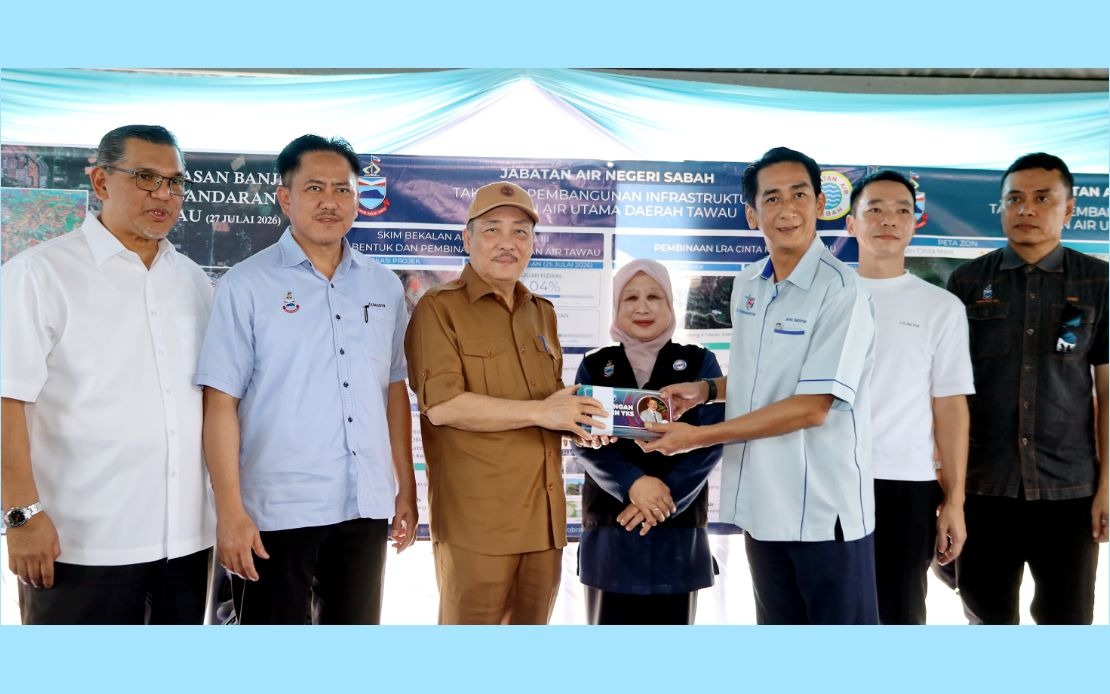
Sabah Chief Minister Datuk Seri Hajiji handed over RM30,600 in financial relief to Tawau Municipal Council on behalf of Yayasan Kebajikan Sabah, marking a coordinated effort to ease the burden faced by families devastated by catastrophic flooding that struck the eastern Sabah town last month. The donation, channelled through council president Mohd Shoffian Mohd Said, reached 102 household heads whose homes and livelihoods were damaged during the natural disaster.
Each affected family received RM300 from the foundation's relief initiative, a modest but meaningful contribution intended to cover immediate expenses such as temporary shelter, food, clothing, and cleaning supplies in the disaster's aftermath. The timing of the distribution reflects the state government's commitment to providing tangible support beyond emergency evacuation and shelter, recognising that disaster recovery extends weeks and months beyond the initial crisis when media attention fades but material needs persist.
Tawau experienced severe flooding on July 25 when heavy rainfall inundated residential and commercial areas, forcing authorities to evacuate 362 residents to temporary accommodation at Dewan Serbaguna Kompleks Sukan Tawau. The evacuation centre operated as a hub for displaced families awaiting water levels to recede and assessing structural damage to their properties. The scale of displacement underscores how vulnerable communities in Sabah remain to seasonal flooding, particularly in low-lying urban areas where drainage infrastructure struggles during intense rainfall events.
Beyond the financial aid itself, Hajiji's statement acknowledged the collaborative response marshalled across multiple government agencies and departments. The Civil Defence Force, Royal Malaysia Police, Fire and Rescue Department, and Health Ministry all deployed personnel and resources to support affected residents during the emergency phase. This multifaceted coordination demonstrates how natural disasters require integrated responses spanning search and rescue, medical assistance, security, and logistics—each component essential to protecting lives and minimising suffering.
The Tawau disaster management committee and local agencies similarly contributed expertise in managing evacuations, operating relief centres, distributing supplies, and coordinating information to residents and media. Such committees, typically comprising representatives from municipal councils, state government departments, and civil society organisations, function as coordination nodes during emergencies when rapid communication and resource mobilisation become critical. Their effectiveness directly influences whether vulnerable populations receive timely help and whether recovery processes commence swiftly.
For Malaysian and Southeast Asian policymakers, the Tawau flooding and subsequent relief response highlights persistent challenges in urban resilience across the region. Climate variability and increasingly intense rainfall patterns have made floods a recurring threat in low-lying areas of Malaysia, Brunei, Indonesia, and Thailand. While emergency response systems have matured considerably, preventative infrastructure—improved drainage, retention ponds, elevated building standards in flood-prone zones—remains underfunded in many municipalities facing competing budget priorities.
The RM300 per household grant, while acknowledging state government responsibility for disaster relief, also reflects fiscal constraints facing Malaysian state administrations. Emergency assistance following natural disasters often arrives through multiple channels: initial government grants, insurance payouts for those with coverage, non-governmental organisation donations, community fundraising, and individual aid from family networks. Low-income households frequently lack insurance, making government grants their primary recovery lifeline, yet the amount distributed rarely covers total losses incurred during major flooding incidents.
Tawau's location in Sabah's southeastern region makes it particularly susceptible to monsoon rains and tropical weather systems that traverse the Celebes Sea. Urban development in recent decades has expanded residential and commercial zones into previously rural lowlands without always implementing commensurate drainage improvements, inadvertently increasing flood vulnerability as impervious surfaces reduce natural water absorption. This pattern mirrors urbanisation trends across Southeast Asia where rapid city growth often outpaces infrastructure planning.
The foundation's intervention also reflects how Malaysian state governments increasingly mobilise charitable mechanisms alongside direct budget allocation to fund disaster relief. Yayasan Kebajikan Sabah operates as a conduit through which government pledges can be channelled, sometimes enabling slightly faster disbursement than formal budgetary processes. This approach blurs lines between governmental and quasi-charitable relief, a model now common across the region as governments seek flexibility in emergency spending without formal legislative appropriations.
Looking forward, Tawau's experience provides lessons for other Malaysian municipalities facing similar flood risks. Investments in early warning systems, community evacuation drills, shelter readiness, and coordinated relief protocols generate measurable returns by reducing casualties and accelerating recovery. Additionally, supporting affected residents' return to economic productivity—through business rehabilitation grants, temporary employment programs, or microfinance for traders whose stock was destroyed—accelerates community recovery beyond immediate humanitarian needs.
The convergence of natural disaster challenges and evolving climate patterns means relief efforts like Yayasan Kebajikan Sabah's will likely become more frequent across Malaysia and the broader region. Building institutional capacity for rapid, equitable aid distribution, integrating disaster risk reduction into urban planning, and strengthening social safety nets for vulnerable populations emerge as critical priorities for governments serious about protecting their citizens from escalating environmental hazards.

