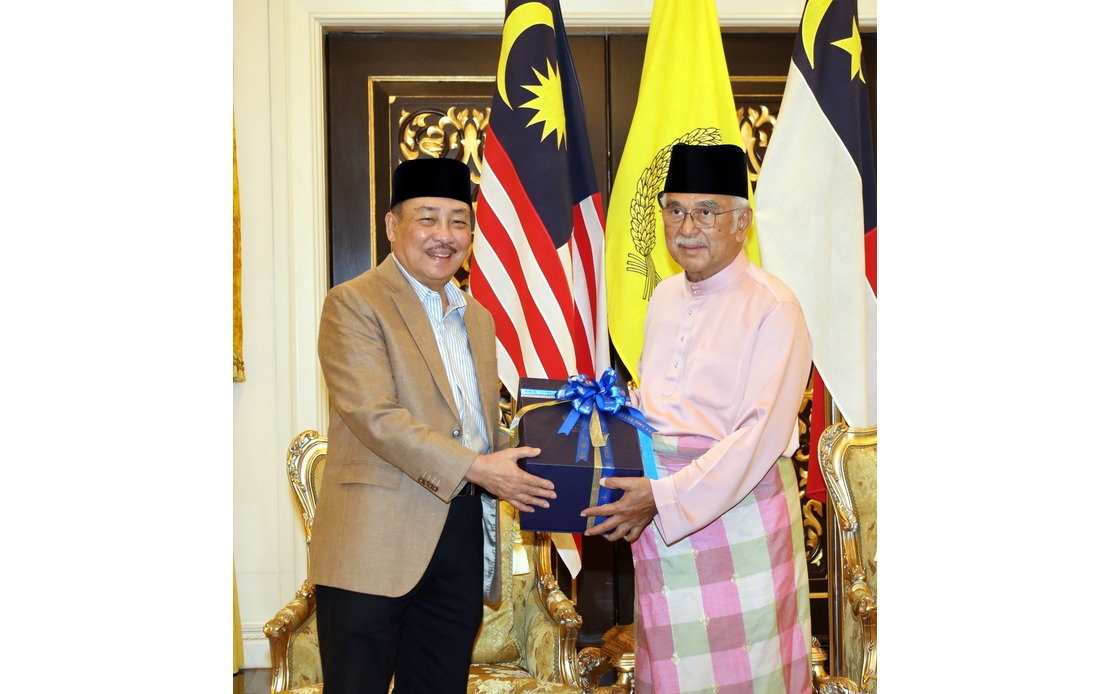
Sabah Chief Minister Datuk Seri Hajiji Noor undertook a diplomatic visit to Melaka on Wednesday to meet with the state's Yang Dipertua Negeri Tun Dr Mohd Ali Mohd Rustam, marking another step in the ongoing efforts to deepen institutional relationships between Malaysia's East and West coasts. The engagement signals the importance of maintaining strong vertical and horizontal coordination among Malaysia's state administrations, particularly as regional governments navigate complex economic and governance challenges.
The encounter took place at Istana Melaka in Bukit Beruang, with Hajiji and his delegation arriving at approximately 3.35 pm. The scheduled nature of the visit underscores a deliberate commitment to fostering dialogue at the highest levels of state administration. Such courtesy calls, while often routine in diplomatic calendars, serve as crucial mechanisms for building personal rapport and establishing informal channels of communication that frequently prove instrumental when states need to collaborate on pressing regional issues.
Accompanying the Sabah Chief Minister were several senior officials reflecting the breadth of his administration's interests. Rural Development Minister Datuk Rubin Balang, Agriculture, Fisheries and Food Industry Minister Datuk Jamawi Jaafar, and Nominated Member of the Sabah State Legislative Assembly Datuk Mohd Razali Mohd Razi joined the delegation. The composition of attendees reveals that the discussions were positioned to address substantive policy areas rather than serving as a purely ceremonial encounter, suggesting that agriculture, rural development, and fisheries—sectors critical to both Sabah and Melaka's economic strategies—featured prominently in the agenda.
Though specific details regarding the substantive matters discussed were not disclosed in detail, the Sabah Chief Minister's Office indicated that both leaders addressed topics of mutual interest spanning both administrations. In the Malaysian context, where inter-state cooperation on infrastructure, trade, and resource management has become increasingly vital, such conversations typically encompass discussions on economic complementarities, regulatory harmonization, and potential collaborative ventures. Melaka, as one of Malaysia's most developed and historically significant states with robust tourism and manufacturing sectors, and Sabah, as a resource-rich state with considerable agricultural and natural wealth, possess natural opportunities for partnership.
The visit represented a broader strategic initiative to strengthen bilateral ties and facilitate the exchange of perspectives on governance issues affecting both regions. In Malaysia's federal system, while the federal government retains primary authority over numerous policy domains, state governments increasingly recognize that coordinated approaches to common challenges—from environmental management to digital infrastructure—generate more effective outcomes. The formal platform provided by such meetings enables state leaders to explore avenues for practical collaboration without bureaucratic constraints.
Melaka's geographical positioning on the Peninsula, combined with its historical significance and recent economic revitalization, makes it an important counterpart for Sabah's administration. The state has invested substantially in becoming a regional hub for trade and tourism, initiatives that could potentially benefit from engagement with Sabah, particularly if collaborative frameworks emerge around supply chain development or heritage tourism. Similarly, Sabah's agricultural and fisheries sectors might find value in accessing Melaka's established trade networks and manufacturing expertise.
The delegation's inclusion of the Rural Development Minister is particularly noteworthy. Rural development remains a significant challenge across Malaysia, and both Sabah and Melaka have distinct rural constituencies with varying needs. Discussions between leaders responsible for rural policies could yield insights into effective implementation strategies, particularly regarding rural infrastructure, agricultural support systems, and livelihood enhancement programs that have succeeded in different regional contexts.
The presence of the Agriculture, Fisheries and Food Industry Minister suggests that discussions likely touched upon food security dimensions and agricultural trade opportunities. Sabah's significant aquaculture and palm oil production capabilities, coupled with its vast agricultural land, position it as a potential supplier to processing and distribution networks. Melaka, with its smaller land area but significant manufacturing and food processing capabilities, could represent a value-addition partner for Sabah's primary products.
The meeting concluded with afternoon tea hosted by Tun Mohd Ali, a customary diplomatic gesture that provides an informal setting for continued conversation beyond formal discussions. These unstructured moments frequently prove as valuable as scheduled agenda items, allowing leaders to build personal relationships and explore potential areas of cooperation with greater flexibility than formal session protocols permit. Such informal engagement is often where practical solutions and innovative partnership models first emerge.
From a broader perspective, this visit exemplifies the growing recognition among Malaysian state administrations that inter-state cooperation, distinct from federal-state relations, can address regional needs more efficiently. As Malaysia's economy becomes increasingly complex and competition for resources intensifies, state governments are recognizing that competing in isolation reduces their collective advantage. Sabah and Melaka, though separated geographically and possessing distinct economic profiles, share common interests in stable governance, economic growth, and effective resource management.
The courtesy call also carries political significance in Malaysia's multi-level governance context. Building strong personal and institutional relationships between state leaders facilitates smoother coordination when federal policies require state-level implementation. Additionally, cooperative state administrations can collectively advocate more effectively for policies benefiting their regions. The visit thus represents not merely a diplomatic courtesy but a functional mechanism for advancing the material interests of both states' populations.

