Sabah and Johor are moving to establish a more cohesive approach to regional tourism promotion, reflecting a broader recognition that cross-state partnerships can amplify Malaysia's competitive standing in Southeast Asia's increasingly crowded travel market. The Sabah Ministry of Tourism, Culture and Environment has identified closer coordination with Tourism Johor as central to achieving visitor growth targets, both within the domestic market and internationally.
Datuk Jafry Ariffin, Sabah's Minister of Tourism, Culture and Environment, outlined the strategic rationale behind the partnership in remarks made during July. The collaboration extends beyond routine promotional exchanges to encompass a comprehensive framework for joint marketing initiatives and shared operational learning. This multi-layered approach signals recognition that sustainable tourism development requires institutional alignment and coordinated messaging across Malaysia's states.
The Visit Sabah Year 2027 initiative serves as the catalyst for this expanded cooperation, positioning the campaign as a watershed moment for the state's tourism sector. By establishing foundational relationships now with established tourism bodies like Tourism Johor, Sabah aims to secure both marketing support and practical expertise that could elevate the 2027 campaign above purely domestic promotion into a regionally significant event. This forward planning reflects lessons learned from previous state-level tourism years across Malaysia and broader Southeast Asian tourism trends.
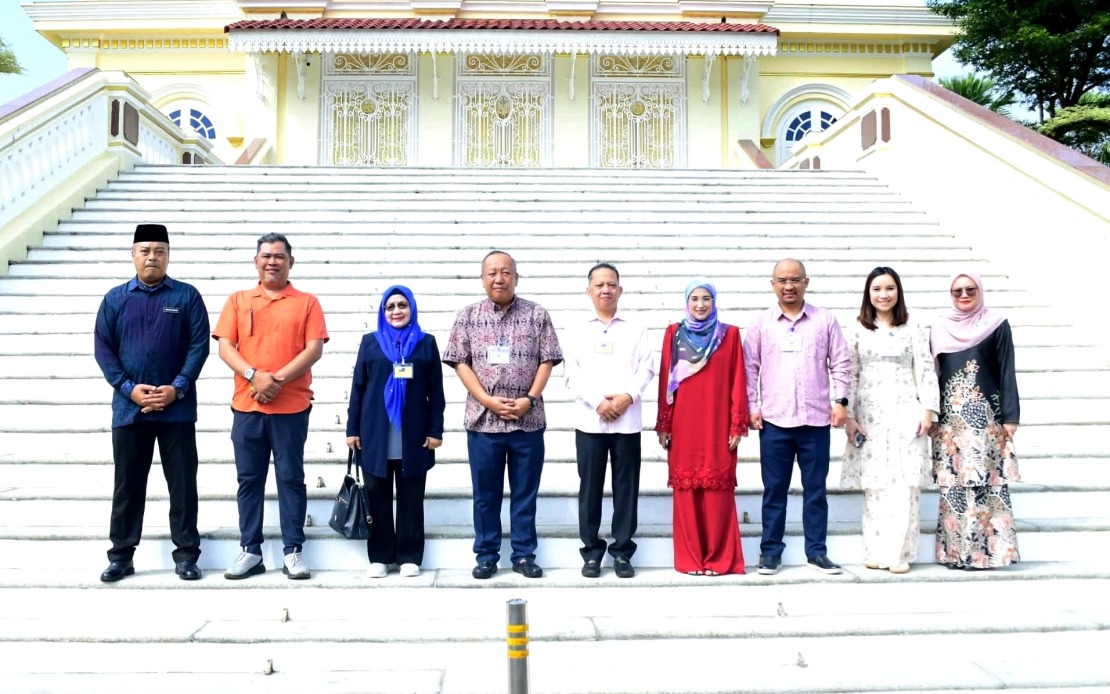
A recent working visit by Sabah officials to Johor moved beyond ceremonial exchanges to produce substantive discussions on cross-promotion strategies, product development, and destination marketing approaches tailored to both state contexts. The visit included technical discussions on how Sabah and Johor can mutually reinforce each other's tourism narratives while maintaining distinct brand identities. Rather than viewing neighbouring states as competitors, both administrations appear to recognise complementary positioning: Johor's heritage and proximity to Singapore, and Sabah's natural assets and positioning as a gateway to East Malaysia.
A significant element of the partnership involves heritage conservation and museum management expertise. Sabah's delegation toured the Muzium Diraja Abu Bakar at Istana Besar Johor, studying institutional best practices in heritage preservation and presentation. This knowledge transfer carries particular weight for Sabah, where cultural tourism represents an underutilised economic opportunity. The exchange acknowledges that international visitors increasingly seek authentic cultural experiences beyond beach and adventure tourism, and that managing such attractions to world standards requires specialised expertise.
The cultural sector figures prominently in Sabah's economic diversification strategy, with heritage and indigenous culture identified as potential high-value attractions for international markets. However, realising this potential demands institutional capacity that may be built more efficiently through interstate knowledge-sharing than through isolated development. By learning from Johor's experience managing royal heritage sites and museum operations, Sabah can accelerate development of its own cultural tourism infrastructure while avoiding costly learning-curve mistakes.
For Malaysian tourism more broadly, this partnership represents a shift towards integrated regional positioning. Tourism is increasingly marketed not as individual state attractions but as integrated travel experiences encompassing multiple destinations. Visitors to Sabah may extend journeys into Peninsular Malaysia, while those visiting Johor might be persuaded to explore East Malaysia. Coordinated promotion and compatible tourism infrastructure enhance the overall proposition, particularly for longer-stay visitors and international tour operators planning multi-state itineraries.
The partnership also reflects competitive pressures from neighbouring Southeast Asian destinations. Thailand, Indonesia, and Vietnam have long emphasised regional integration in tourism marketing, enabling tourists to traverse multiple attractions within a single trip. Malaysia's ability to position itself as a cohesive destination across its diverse states and territories depends partly on such inter-state coordination. Sabah's move to strengthen ties with Johor sets a practical precedent for other state tourism bodies considering similar arrangements.
Domestic tourism forms the immediate focus, with both states recognising the market potential of Malaysian holiday-makers seeking novel destinations. The domestic market proved resilient during global travel disruptions and represents a substantial revenue base independent of international fluctuations. However, the partnership's design also accommodates international expansion, with Datuk Jafry emphasising Malaysia's positioning as a world-class tourism destination and the role both states can play in elevating that perception globally.
The emphasis on best-practice sharing and institutional learning reflects professional maturity in how both states approach tourism development. Rather than relying solely on marketing spend or promotional campaigns, the partnership invests in operational excellence and knowledge transfer. This approach yields longer-term competitive advantage by building capabilities that sustain visitor satisfaction across multiple economic cycles and policy administrations.
For investors and tourism operators in Malaysia, the strengthened Sabah-Johor partnership signals policy stability and coordinated infrastructure development. Multi-state tourism initiatives typically enjoy more sustained funding and political support than individual state projects, as stakeholders across multiple administrations share vested interests in success. This institutional backing can facilitate hotel development, transportation improvements, and attraction enhancement projects that individual states might struggle to fund independently.
The partnership also positions both states as model collaborators for potential tourism initiatives with Sarawak and other Malaysian states. If Sabah-Johor cooperation produces measurable visitor increases and economic benefits, other states may adopt similar frameworks, gradually creating the integrated Malaysian tourism ecosystem that international market positioning demands. Such cascading partnerships could ultimately amplify Malaysia's appeal to tourists planning multi-week regional journeys throughout Southeast Asia.

