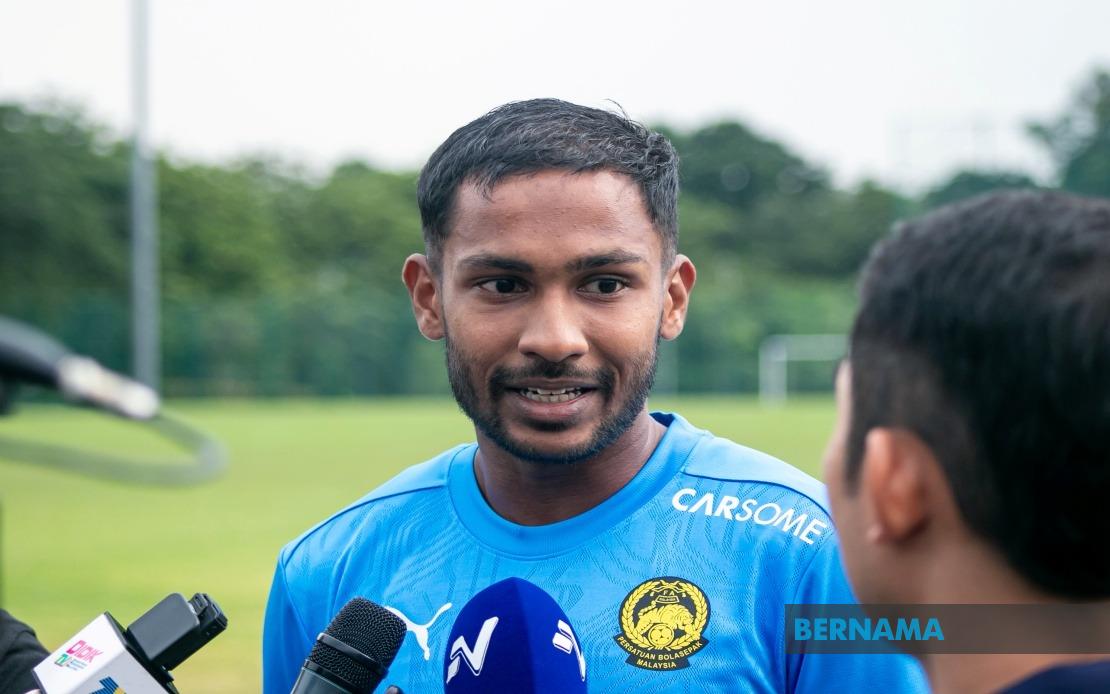
Malaysian national defender V. Ruventhiran has delivered an impassioned call for the nation's football supporters to rally behind Harimau Malaya as the team embarks on their 2026 Hyundai ASEAN Cup campaign, framing the tournament as a moment when collective patriotism should transcend all other considerations. Speaking during the national squad's centralised training programme in Shah Alam, Ruventhiran articulated a conviction that fan engagement represents far more than mere attendance figures, instead serving as the emotional backbone that fuels athlete performance at the highest competitive levels. His remarks underscored a fundamental truth in modern football: that stadium atmospheres, particularly during crucial moments, can shift momentum and inspire teams to achieve beyond their baseline capabilities.
The recruitment challenge facing Malaysian football extends beyond the pitch itself. Ruventhiran specifically referenced the absence of the "12th man"—the colloquial term for passionate home support—expressing particular concern that away fixtures might disadvantage the national team psychologically and practically. Malaysia's opening Group B encounter against Myanmar at Thuwunna Stadium on July 25 will indeed occur on hostile territory, a positioning that could prove strategically disadvantageous. The defender's intervention suggests underlying awareness within the national setup that fan apathy has been a lingering concern, and that reversing this trend requires not managerial directives but emotional reconnection to the cause.
For Harimau Malaya, the tournament structure presents both opportunity and pressure. The group stage format requires Malaysia to navigate matches against Myanmar, Laos at the Kuala Lumpur Football Stadium in Cheras on July 28, Thailand at Bangkok's Rajamangala Stadium on August 1, and the Philippines back in Cheras on August 8. Only the top two qualifiers from each group advance to the mid-August semi-finals, which follow a two-legged format before culminating in finals on August 22 and 26. This framework means Malaysia cannot afford early stumbles, as the narrow qualification pathway leaves minimal margin for error or recovery. The geographical distribution of fixtures—oscillating between away and home venues—adds logistical complexity that could influence team cohesion and player fatigue management.
Ruventhiran's advocacy for fan support carries particular resonance given Malaysia's historical ASEAN Cup performance. The tournament remains one of Southeast Asia's marquee football events, and Malaysian football culture has traditionally demonstrated capability for passionate spectatorship when circumstances align. Yet recent years have witnessed declining attendance at local matches, a phenomenon reflecting broader shifts in how Malaysian sports fans engage with domestic football. The defender's plea represents an attempt to counteract this trajectory, framing the ASEAN Cup not merely as a sporting competition but as a collective national endeavour deserving of unified backing.
Aliff Haiqal Lokman Hakim Lau's perspective adds a complementary dimension to the team's narrative heading into the tournament. The Penang FC player characterises his call-up as a transformative opportunity after enduring a frustrating injury-plagued season that compromised his availability and development. His determination to demonstrate fully recovered form carries implications beyond individual performance metrics; athletes returning from significant injuries often carry psychological weight that either propels them toward exceptional displays or constrains their confidence during critical moments. Aliff Haiqal's framing of the ASEAN Cup as a "fresh start" and an opportunity to "open a new page" suggests he approaches the tournament with renewed clarity regarding what he wishes to accomplish and communicate through his performances.
The player's gratitude for his inclusion in the national squad reflects understanding that call-ups are never guaranteed, particularly following prolonged absences due to injury. In Malaysian football's competitive landscape, where depth in quality defenders remains a perennial concern, Aliff Haiqal's recovery timing aligns advantageously with Harimau Malaya's squad preparation. His commitment to proving something—both to himself and to those who selected him—provides motivation that could translate into stabilising defensive performances during tight Group B encounters. The psychological dimension of team selection frequently receives insufficient attention in football analysis, yet players who view selection as validation rather than entitlement frequently demonstrate elevated commitment levels.
The centralised training camp environment where these remarks were made represents standard preparation methodology for international tournament competition. These intensive periods allow coaching staff to implement tactical systems, build fitness baselines, and establish team cohesion. For players like Aliff Haiqal, such camps also provide opportunity to reintegrate with teammates after extended absences, a process requiring both technical and psychological reacclimation. Ruventhiran's visible comfort in articulating his perspective suggests established standing within the squad hierarchy, positioning him as a voice capable of influencing team culture and messaging.
The broader Southeast Asian football context frames Malaysia's ASEAN Cup participation within a regional competitive landscape where multiple nations possess comparable technical capabilities and ambitions. Thailand, Myanmar, Laos, and the Philippines all field competitive squads, meaning no Group B fixture represents a foregone conclusion. This competitive parity elevates the significance of both technical execution and psychological factors—including fan support and player confidence. Malaysian football's capacity to perform credibly depends substantially on minimising errors while maximising the marginal gains that additional motivation and environmental factors can provide.
Ruventhiran's emphasis on "national pride" transcending individual considerations represents a deliberate attempt to elevate discourse surrounding the ASEAN Cup beyond typical sport-specific framing. This rhetorical approach acknowledges that football tournaments in Southeast Asia frequently carry national significance extending into diplomatic and cultural realms. When supporters return to stadiums in substantial numbers, they simultaneously signal commitment to national sporting development and contribute tangibly to competitive advantage. The defender's message fundamentally asks Malaysian fans to recognise their agency in determining whether Harimau Malaya succeeds or struggles during the coming weeks.
As Malaysia prepares for the July 25 Myanmar fixture and subsequent Group B challenges, the interplay between experienced voices like Ruventhiran and emerging talent in recovery situations like Aliff Haiqal will prove consequential. The squad's tactical flexibility, defensive solidity, and attacking potency will determine competitive outcomes, but the emotional and psychological dimension—anchored significantly by fan engagement—may ultimately prove decisive in tight matches where marginal differences separate advancement from elimination. Ruventhiran's call represents recognition that football success requires mobilisation of resources extending well beyond the eleven players on the pitch.

