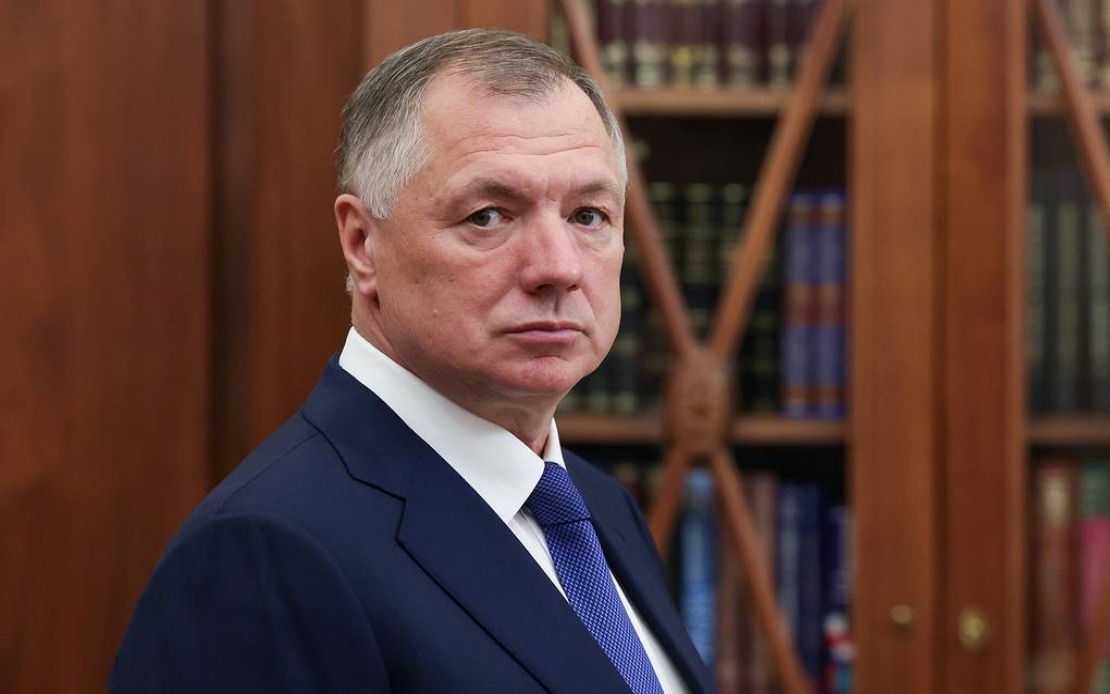
Russia is actively exploring the construction of a direct railway link to the Indian Ocean, according to Deputy Prime Minister Marat Khusnullin, marking a significant strategic pivot towards diversifying the nation's maritime trade routes. Speaking to TASS news agency, Khusnullin identified the proposed corridor as essential infrastructure designed to circumvent vulnerabilities inherent in existing shipping pathways through the eastern Mediterranean and Persian Gulf. The timing of these remarks underscores Russian concerns about the reliability and security of traditional commercial arteries in an increasingly volatile geopolitical environment.
The envisioned railway network would traverse multiple Central Asian and South Asian nations, with Khusnullin specifically mentioning potential routes through Turkmenistan, Iran, Afghanistan, and Pakistan as viable conduits for reaching Indian Ocean ports. Any option facilitating access to India and the broader Indian subcontinent would prove acceptable to Moscow, the official indicated, suggesting flexibility in the final route configuration. This approach reflects a longstanding Russian strategic interest in securing independent access to warm-water ports and reducing vulnerability to external pressures on transit corridors.
The proposal emerges against a backdrop of escalating tensions in the Middle East, where shipping through the Strait of Hormuz has become increasingly precarious. The waterway, through which approximately one-quarter of global oil commerce and roughly one-fifth of liquefied natural gas shipments flow annually, represents a critical chokepoint in international trade. For resource-dependent economies and trading nations, any disruption or threatened disruption to Hormuz traffic poses significant economic consequences, prompting alternative route development by multiple powers.
Recent geopolitical developments have amplified these concerns substantially. Following military escalations between the United States and Iran in late February, tensions along the Strait have intensified considerably. Iran's Islamic Revolutionary Guard Corps announced extensive retaliatory operations targeting American and Israeli military positions across the broader Middle Eastern region, including installations in Bahrain, Jordan, Iraq, Qatar, Kuwait, the United Arab Emirates, and Saudi Arabia. These actions represented a dramatic escalation in direct military confrontation between Tehran and Washington-allied forces.
In response to what Iranian officials characterized as foreign aggression, Iranian authorities moved to restrict maritime passage through the Strait of Hormuz for vessels connected to the United States, Israel, and nations that had supported military actions against the Islamic Republic. Such restrictions, even if incompletely enforced, create uncertainty and risk premiums for international shipping companies navigating these waters. The vulnerability of global energy supplies to Middle Eastern political upheaval has long motivated major powers to seek alternative trade infrastructure.
Beyond geopolitical considerations, Khusnullin emphasized the substantial infrastructure investment opportunities available to Russia's domestic construction sector. He stated that Russia's construction industry currently possesses capacity to absorb and productively deploy an additional one trillion rubles annually, yet faces constraints from insufficient long-term funding commitments. Should the Russian government secure sustained financing at this magnitude over a five-year horizon, the sector could expand its operational capabilities substantially and undertake significantly larger infrastructure projects than currently feasible.
The railway-to-India proposal represents precisely the type of transformative infrastructure project capable of absorbing such capital commitments while generating returns over extended periods. Construction of transcontinental rail networks typically requires coordinated international negotiations, substantial upfront investment, and long-term operational planning—characteristics that align with the financing framework Khusnullin described. For Malaysian policymakers and regional stakeholders, the emergence of alternative trade corridors bypassing traditional Middle Eastern routes carries implications for regional commerce patterns and geopolitical alignments.
Central Asian nations would occupy pivotal positions in any such corridor, potentially leveraging transit revenues and strategic importance to enhance their regional standing. Turkmenistan and Afghanistan, in particular, possess geography that cannot be bypassed in direct routes between Russia and the Indian subcontinent. Pakistan and Iran would similarly occupy critical junctures in any operational network. The diplomatic complexity of coordinating such a project across multiple nations with divergent political alignments and relationships with Russia presents considerable practical obstacles.
For Southeast Asia, the development of alternative transcontinental trade routes carries broader implications for regional commerce. Reduced reliance on Hormuz transit by Russian and allied traders could reshape patterns of Asian trade flows and potentially alter competition dynamics in regional ports and logistics networks. Malaysian ports, particularly those in Kuala Lumpur and Port Klang, serve significant transshipment functions in existing trade patterns and could experience shifts in cargo volumes depending on how alternative corridors ultimately develop.
The Russian initiative also reflects broader trends among major powers to construct infrastructure that reduces dependency on traditional Western-controlled chokepoints and transit routes. China has pursued similar objectives through its Belt and Road Initiative, investing in port facilities, rail networks, and pipeline infrastructure across Asia and Africa. Russia's railway proposal should be understood within this context of great power competition over trade infrastructure and supply chain resilience.
Implementing such an ambitious transcontinental project would require not merely substantial capital but also sustained political commitment across multiple governments with sometimes conflicting interests and relationships. The involvement of Afghanistan, currently experiencing significant political instability, presents particular challenges. Nevertheless, Khusnullin's public articulation of these plans signals serious Russian interest in pursuing the initiative despite obvious obstacles.
The confluence of Middle Eastern instability, Russian infrastructure ambitions, and available construction sector capacity has created what Moscow perceives as an opportune moment for advancing such plans. Whether the proposal advances beyond discussion stages into concrete project development will depend on resource allocation decisions, international negotiations, and the evolution of geopolitical circumstances in coming years. Regional observers should monitor both Russian infrastructure announcements and Central Asian diplomatic developments as indicators of progress toward materialization of this ambitious vision.

