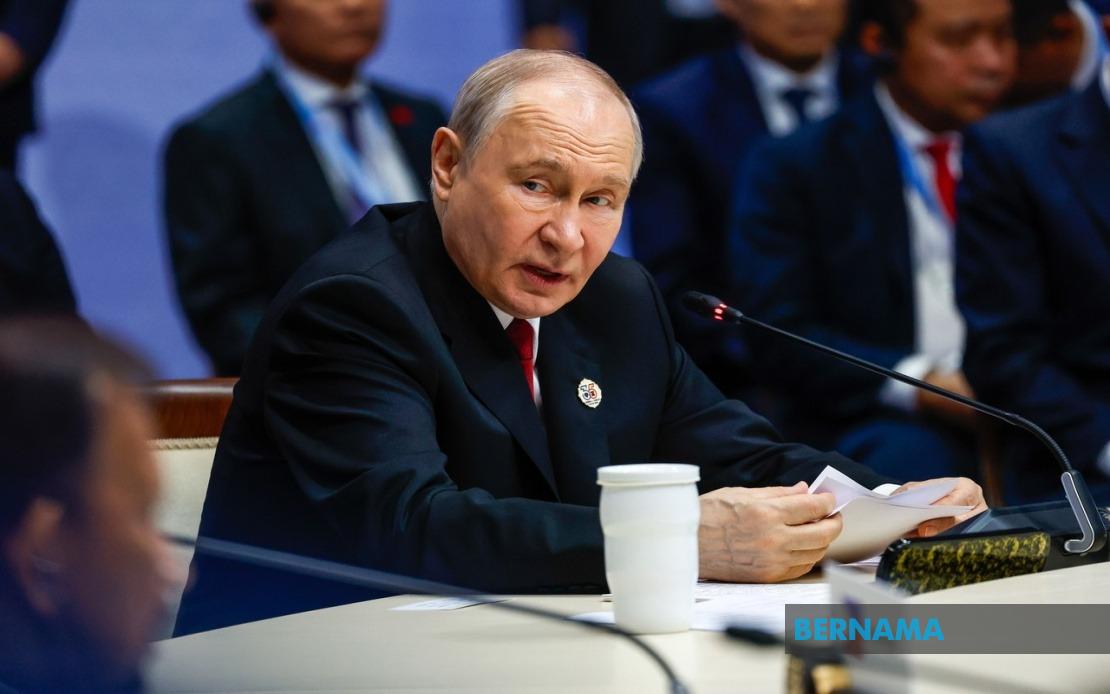
Russia and the Association of Southeast Asian Nations marked three and a half decades of formal diplomatic engagement at a commemorative summit in Kazan, with Russian President Vladimir Putin underlining the relationship's significance as a counterbalance to regional instability. Speaking at the opening ceremony of the two-day gathering, Putin characterised the Moscow-ASEAN partnership as a stabilising force in the Asia-Pacific amidst mounting geopolitical tensions, positioning bilateral cooperation as essential to building what he termed a balanced security architecture across the region.
The foundation for this partnership was formally laid in 1991 when Russia established official relations with ASEAN in Kuala Lumpur, marking Moscow's entry into regional diplomacy during the post-Soviet transition. The trajectory of engagement accelerated substantially five years later when Russia secured full Dialogue Partner status within ASEAN's framework of engagement protocols. The relationship reached its current apex in 2018 when both parties elevated their association to a comprehensive Strategic Partnership, reflecting a deliberate effort to deepen institutional ties and expand the scope of cooperation beyond traditional diplomatic channels.
Putin highlighted the extensive institutional architecture that now underpins Russia-ASEAN relations, emphasising the intricate legal framework and multiple joint mechanisms developed collaboratively over the decades. This infrastructure encompasses far-reaching cooperation across diverse sectors that extend well beyond security considerations. Trade and investment flows have become increasingly significant, with both sides seeking to leverage complementary economic strengths. Energy cooperation remains particularly consequential for Southeast Asian nations heavily dependent on external sources, with Russian expertise and resources playing a meaningful role in regional energy security discussions. Agricultural partnerships have also flourished, positioning Russia as a potential supplier for the region's food security requirements.
The strategic partnership extends meaningfully into the digital and technological domains, reflecting broader global trends towards digital transformation and innovation-driven economies. Scientific collaboration and educational exchanges represent another pillar of engagement, with Malaysian, Thai, Vietnamese and other ASEAN universities increasingly engaging with Russian research institutions. Cultural and humanitarian dimensions of the relationship, including tourism, people-to-people exchanges and educational scholarships, have fostered deeper mutual understanding and civil society connections that underpin more formal state-to-state interactions.
The timing of this commemorative summit carried particular significance given prevailing global conditions. With the Asia-Pacific region confronting multiple sources of instability ranging from great power competition to maritime disputes and supply chain vulnerabilities, both Russia and ASEAN leadership sought to underscore their commitment to principles grounded in international law and mutual interest. Putin explicitly stated that this principled approach formed the bedrock of Moscow's engagement with the bloc, distinguishing it from relationships potentially driven by conditional arrangements or power imposition.
From ASEAN's perspective, Russia represents a dialogue partner possessing distinct comparative advantages in sectors where the region faces strategic vulnerabilities. Energy security, traditionally a cornerstone of ASEAN-Russia engagement, remains relevant as Southeast Asian nations balance diversification efforts against traditional suppliers. Russian technological capabilities, particularly in sectors like telecommunications and space applications, appeal to ASEAN governments pursuing modernisation. Agricultural exports from Russia continue addressing regional food security concerns, especially critical as climate change increasingly threatens traditional agricultural patterns across Southeast Asia.
The summit agenda encompassed comprehensive assessment of three decades of cooperation whilst charting future trajectories. Both sides committed to examining results achieved across political-security, economic and socio-cultural domains before establishing clear objectives for the coming period. Discussions addressed contemporary challenges including food and energy security preoccupations intensified by recent geopolitical disruptions, digital transformation imperatives shaping economic competitiveness, and educational advancement supporting human capital development in ASEAN nations.
The gathering brought together significant regional leadership including Philippine President Ferdinand Marcos Jr, who held the rotating ASEAN chair, alongside Malaysian Prime Minister Datuk Seri Anwar Ibrahim and representatives from other ASEAN capitals. This high-level attendance reflected the relationship's importance across the bloc, though it also illuminated the careful diplomatic balancing act performed by ASEAN members managing relations with multiple global powers holding competing interests in Southeast Asia.
For Malaysian observers and policymakers, the Russia-ASEAN partnership framework offers relevant implications regarding regional stability architecture. Malaysia's own strategic interests in maintaining balanced great power relations align substantially with ASEAN's preference for dialogue-based engagement with all major powers. Russian energy exports, technological cooperation and educational opportunities represent concrete benefits for Malaysian economic and human development objectives. The emphasis on rules-based international law and mutual respect resonates with principles articulated in ASEAN foundational documents like the Treaty of Amity and Cooperation.
The partnership's framing as a stabilising element deserves careful analytical attention. Russia's characterisation of itself as contributing to balanced security architecture appeared designed to counter narratives portraying Moscow as a destabilising force in global affairs. For ASEAN, maintaining dialogue with Russia whilst managing relationships with Western powers and China reflects the bloc's enduring commitment to non-alignment and strategic autonomy principles.
Moving forward, the Russia-ASEAN relationship appears poised for continued expansion despite international sanctions affecting Russia and shifting geopolitical alignments. The diversity of cooperation domains—spanning energy, agriculture, technology, education and culture—provides resilience against disruption in any single sector. Both sides have demonstrated commitment to sustaining engagement through institutional mechanisms even amid broader international tensions, suggesting this partnership will remain consequential for Asia-Pacific regional dynamics in coming years.

