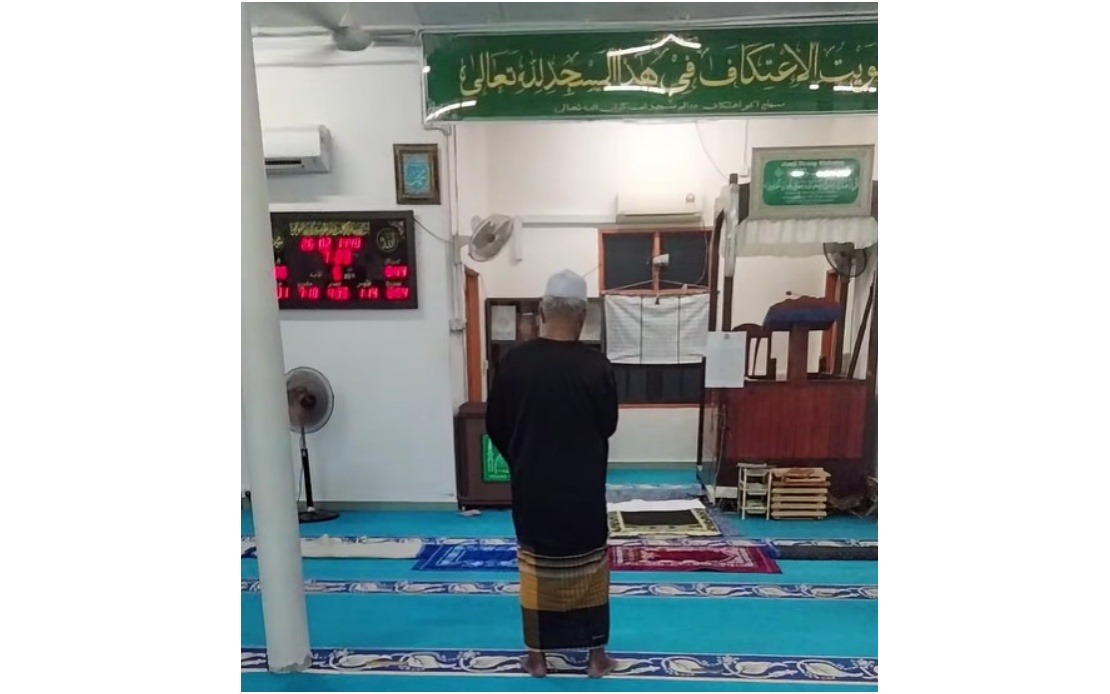
A 15-second video that circulated recently across Facebook and WhatsApp depicting a single congregant performing prayers at Masjid Tanjung Resang in Mersing has triggered a broader conversation about rural mosque management and the challenges facing religious institutions in areas experiencing demographic decline. The footage, which suggested that the individual was simultaneously acting as imam and bilal—the person who issues the call to prayer—raised questions among observers about the mosque's viability and its capacity to sustain regular activities. However, mosque leadership and local representatives have moved quickly to contextualise the situation, explaining that the snapshot captured in that brief clip does not accurately represent the actual state of religious life or community engagement at the facility.
Mersing Member of Parliament Muhammad Islahuddin Abas, who is himself a village resident, addressed the controversy by highlighting the structural demographic problem affecting not only this mosque but numerous rural communities across Malaysia. While acknowledging that the buildings and physical infrastructure throughout the area suggest a once-thriving settlement, he emphasised that the reality of population movement has created significant challenges for institutional life. Young people and economically active individuals have migrated to urban centres seeking employment opportunities, whilst others have permanently relocated to different regions. This pattern of rural-to-urban drift has compressed the resident population base at any given time, directly affecting the number of people available to participate in congregational prayers and other religious activities.
Despite these demographic headwinds, Muhammad Islahuddin underscored that the mosque has maintained a consistent programme of religious and educational activities. Weekly sessions continue uninterrupted, including formal religious discourse, scholarly lectures, and communal Quran recitation gatherings such as the Yasin reading. This continuation of programming reflects a commitment to sustaining spiritual life within the community, even as the absolute numbers of attendees fluctuate. The Member of Parliament's intervention essentially positions the viral video not as evidence of institutional failure, but rather as an incomplete snapshot that fails to capture the full reality of mosque operations across an extended time period.
Mosque chairman Abdul Syamil Abdul Fadzil provided further clarification by noting that the individual shown in the video was actually performing a voluntary, supplementary prayer rather than a mandatory congregational prayer. This distinction carries theological significance within Islamic practice, as it explains why only one person might be present at that particular moment. Voluntary prayers, performed outside the five obligatory daily prayers, are encouraged in Islamic teaching and are often undertaken by the particularly devout, but they do not require congregational participation. The chairman's explanation thus reframes the video from depicting a crisis of religious observance to showing a routine instance of individual devotional practice.
Fadzil further noted that he had been contacted by representatives from the Johor Islamic Religious Affairs Department (JAINJ) to discuss the viral content. Rather than expressing concern or initiating investigations based on incomplete information, the department has demonstrated understanding of the local circumstances. The chairman reported that after explaining the actual operational context, the department acknowledged being fully aware of the mosque's congregational situation and the factors driving it. This institutional support suggests that religious authorities recognise the genuine constraints facing rural places of worship and are not applying uniform urban-based standards to assess their functionality.
Interestingly, Muhammad Islahuddin detected a potential silver lining within the unintended publicity. The viral spread of the video, while initially appearing negative, has inadvertently introduced Masjid Tanjung Resang to audiences far beyond its immediate vicinity. Prior to the social media circulation, the mosque's somewhat obscure location—situated away from main thoroughfares—meant that many people were entirely unaware of its existence. Even residents of other parts of Mersing district had limited awareness of the facility. The viral video, despite its unflattering framing, has created name recognition and curiosity that might translate into increased visitation and engagement from outside the immediate community.
The Member of Parliament characterised the mosque as maintaining a welcoming posture toward diverse visitors. The facility explicitly welcomes both Muslims and non-Muslims, functioning as an accessible cultural and religious landmark for the broader region. For visitors engaged in outdoor recreation activities in the area, particularly those undertaking hiking expeditions on Gunung Arong, the mosque serves as a valuable waypoint. The facility provides practical amenities and conveniences for these hikers, positioning it as a multipurpose community asset rather than merely a place for formal congregational worship. This broader community function deserves recognition when evaluating the mosque's actual role and significance within local life.
The situation at Masjid Tanjung Resang reflects a nationwide phenomenon affecting rural religious institutions throughout Malaysia. As economic opportunities concentrate in major urban centres, peripheral communities experience progressive depopulation during working hours and extended periods. Mosques in these areas must adapt their programming and expectations to accommodate fluctuating attendance patterns driven by external economic forces rather than by any failure of religious commitment or institutional management. The challenge extends beyond mere numbers, encompassing questions about how to maintain meaningful religious community life when the underlying demographic foundation is shifting.
The response from both local political leadership and religious authorities demonstrates an important principle: that institutional assessment must account for contextual realities rather than applying standardised metrics developed for different circumstances. A mosque's health cannot be meaningfully measured solely by the number of people present at any single moment, particularly in communities experiencing demographic transition. Instead, factors such as programme continuity, community engagement, maintenance of facilities, and adaptation to local needs provide more nuanced indicators of institutional vitality. The Masjid Tanjung Resang example suggests that rural mosques can fulfil meaningful functions even when traditional congregational attendance remains limited by population constraints.
Looking forward, the incident raises pertinent questions for policymakers and religious administrators about how to support and sustain places of worship in depopulating areas. Rather than viewing low attendance as a problem to be solved through increased messaging or enforcement, a more constructive approach might involve recognising these institutions as important anchors within communities experiencing transition. Strategic investment in making rural mosques more functionally valuable—through expanded community programming, facilities enhancement, or positioning them as cultural and educational centres—could strengthen their relevance even as baseline population figures remain constrained. The Mersing example demonstrates that with proper context and support, even small congregations can maintain meaningful religious life and community contribution.

