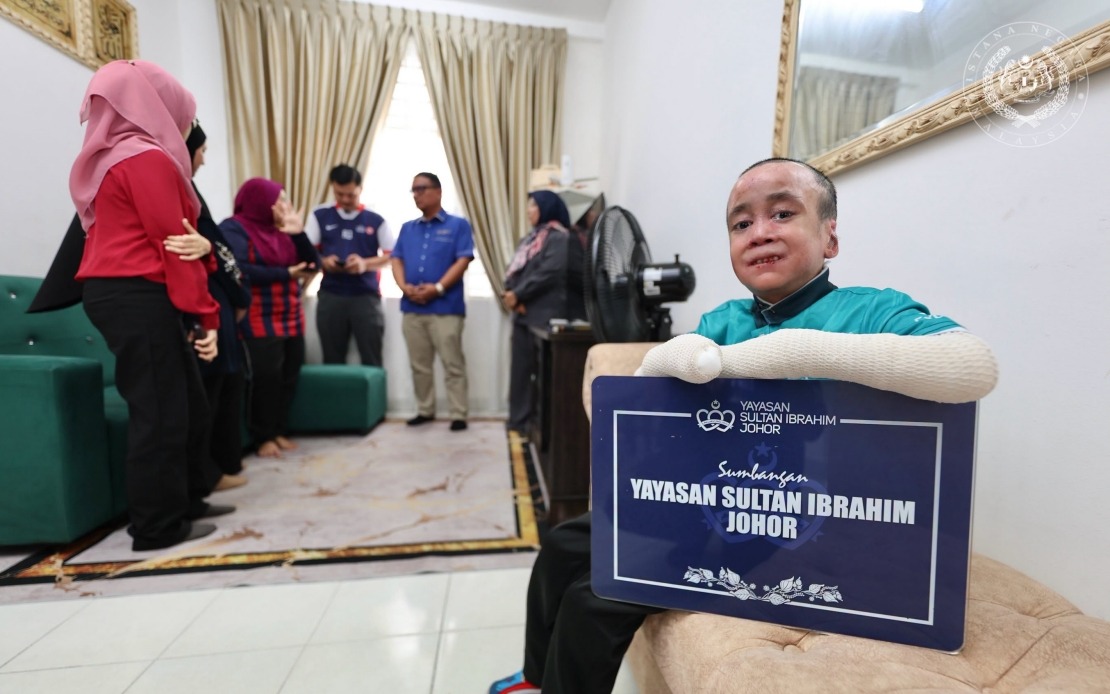
The Yayasan Sultan Ibrahim Johor (YSIJ) has stepped in to offer financial relief for Muhammad Hazreel Mikhail Hizar, a 15-year-old resident of Johor Bahru who has lived with epidermolysis bullosa since birth. The foundation delivered its assistance through the Ziarah Kasih programme, visiting the home of Hazreel's mother, Noor Halimaton Hashim, at the Sungai Tiram People's Housing Project on August 18.
Epidermolysis bullosa represents one of Malaysia's lesser-known but profoundly debilitating conditions. This rare genetic disorder causes the skin to become extremely fragile, blistering and tearing with minimal trauma or even spontaneously. For someone like Hazreel, who has endured the condition since birth, daily life demands extraordinary vigilance and resources. The skin requires constant wound cleaning to forestall infection, a perpetual concern that can escalate into life-threatening complications without proper care. Beyond hygiene measures, maintaining a consistently cool and air-conditioned environment becomes medically necessary rather than a luxury, as heat exposure can trigger additional blistering and deterioration.
The practical realities of Hazreel's condition have created cascading hardships for his family structure. His mother, Noor Halimaton, carries the responsibility of raising three children as a single parent while simultaneously functioning as a full-time caregiver for her son. The around-the-clock nature of his care needs makes traditional employment virtually impossible. She cannot step away for an eight-hour workday when Hazreel requires monitoring and intervention potentially every few hours. This financial squeeze, common among families managing rare diseases in Malaysia, often forces impossible choices between medical care and basic subsistence.
The foundation's intervention arrives at a moment of acute need. According to Noor Halimaton's statement to the Royal Press Office, the timing of this assistance proved crucial for her household's stability. The support provides immediate breathing room in the family's constrained budget, resources that can redirect toward essential medical supplies, electricity costs for air-conditioning, and other necessities that Hazreel's condition demands. For families navigating chronic illness in Malaysia's lower-income bracket, such targeted interventions can mean the difference between managing and crisis.
The Ziarah Kasih programme, through which this assistance was delivered, reflects a broader approach by the Johor palace to identify and support vulnerable residents facing extraordinary circumstances. This direct, personalised engagement differs from more distant bureaucratic processes, allowing foundation officials to understand the specific contours of individual hardship. In Hazreel's case, this hands-on approach revealed not merely a medical situation but a family economic emergency.
Rare genetic disorders like epidermolysis bullosa remain largely invisible in Malaysian public discourse, yet they carry enormous weight for affected families. Limited awareness means limited advocacy, which translates into restricted access to specialised care and limited social support. Medical costs spiral as families seek treatment beyond what standard government healthcare can provide. The psychological toll compounds the physical burden, particularly for teenagers acutely aware of their differentness from peers. Hazreel's story, though individual, illuminates systemic gaps in how Malaysia supports families managing rare diseases.
The foundation's action also highlights the critical role private philanthropic institutions play in filling gaps within the social safety net. While government programmes provide foundation-level support, voluntary organisations often possess the flexibility and resources to respond to cases that fall between bureaucratic categories or exceed standard assistance thresholds. In Southeast Asia broadly, where healthcare systems strain under demand and rare disease infrastructure remains underdeveloped, such partnerships between royal foundations, civil society, and government become essential.
For single mothers like Noor Halimaton, the intersection of poverty, caregiving responsibility, and medical complexity creates particularly acute vulnerability. Government assistance programmes exist, but navigating them requires time and knowledge many lack. The foundation's proactive outreach model addresses this gap by bringing support to families rather than requiring families to navigate institutional labyrinths while managing immediate crises. This approach recognises that systemic poverty and serious illness rarely occur in isolation.
Moving forward, Hazreel's situation underscores the need for expanded awareness and support infrastructure around rare genetic disorders in Malaysia. Medical professionals require better training in recognising and managing conditions like epidermolysis bullosa. Patient advocacy groups need strengthening to help families access available resources and push for policy improvements. Healthcare financing mechanisms should account for the extraordinary costs these conditions impose. Educational institutions require guidance on accommodating students with severe chronic conditions.
The foundation's gesture, while providing immediate material relief, also sends a signal about societal responsibility toward those managing rare diseases. In a country where economic mobility remains stratified and healthcare access linked to resources, royal institutions leveraging their platform and resources for vulnerable populations validates the experiences of struggling families. For Hazreel and his mother, this recognition matters alongside the financial assistance—acknowledging that their burden, though individual, warrants collective attention.

