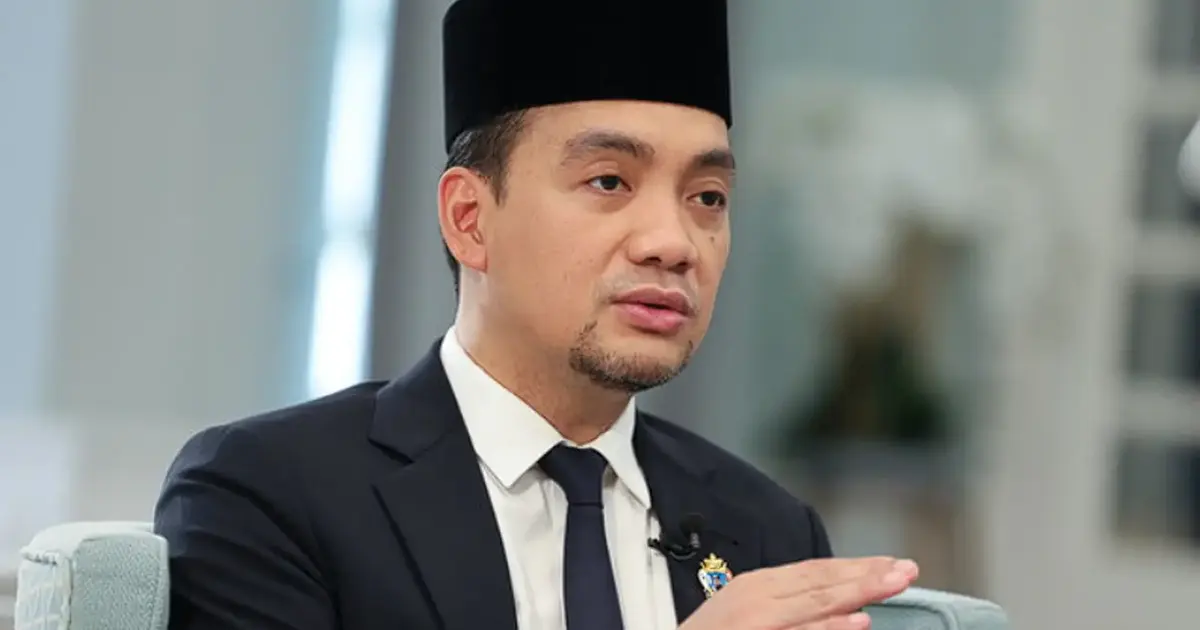
Johor's caretaker menteri besar Onn Hafiz has moved to dispel concerns about the palace overstepping its constitutional boundaries, insisting that the royal assent for the state assembly's dissolution represents nothing more than standard procedure embedded in Malaysia's institutional framework. His clarification arrives amid wider scrutiny of the monarchy's involvement in political processes, a sensitive subject in a nation where the institution remains deeply venerated and constitutionally significant.
The dissolution of a state assembly represents a critical juncture in any Malaysian state's political timeline, triggering the machinery for fresh elections and the formation of a new government. Throughout this process, the ruler's formal approval stands as a necessary constitutional safeguard rather than an exercise of discretionary political power. Onn Hafiz's intervention underscores the distinction between ceremonial approval—where the palace ratifies decisions properly brought before it—and active interference in which the monarchy might independently direct political outcomes.
Malaysia's constitutional architecture deliberately situates the state assemblies and their dissolution within a framework requiring royal endorsement. This requirement exists not to grant the ruler absolute veto power but to embed the institution into governance in a manner befitting its symbolic and constitutional position. For Johor specifically, which maintains one of the country's most assertive and engaged royal households, understanding this boundary proves particularly important. The Sultan of Johor has historically taken keen interest in state matters, making transparent communication about the limits of his constitutional role essential for public confidence.
The timing of Onn Hafiz's remarks reflects broader unease that has occasionally surfaced in Malaysian political discourse regarding institutional balance. Questions periodically arise about whether royalty should retain such formal authority over legislative dissolution, whether such authority might invite abuse, or whether the modern separation of powers calls for recalibration. These queries, while legitimate subjects for constitutional scholars and policymakers, differ fundamentally from suggesting that routine, constitutionally mandated approvals constitute interference.
For Southeast Asian monarchies facing evolving expectations about transparency and governance, the Malaysian experience offers instructive lessons. The region's kingdoms operate within varying constitutional frameworks, yet most maintain formal mechanisms ensuring royal involvement in significant state decisions. How these monarchies communicate their constitutional role to increasingly educated and digitally connected populations shapes public perception of institutional legitimacy. Johor's situation, therefore, carries relevance beyond the state's borders, touching on broader regional questions about how tradition and modern democratic governance coexist.
The caretaker menteri besar's position also carries implications for understanding how Malaysian political transitions function operationally. When state assemblies dissolve and elections are called, numerous constitutional procedures activate simultaneously. The ruler provides requisite assent; electoral commissions establish voting schedules; political parties mobilize resources and campaigns. Each actor remains constrained by constitutional and legal boundaries, yet their cumulative actions produce tangible political outcomes. Conflating procedural approval with decision-making authority obscures how these mechanisms actually function.
Onn Hafiz's clarification appears calculated to preempt narrative drift whereby routine institutional processes become reinterpreted as evidence of palace activism in partisan politics. In Malaysia's polarized contemporary environment, such reframing can occur rapidly, particularly when political fortunes shift unexpectedly or when different factions perceive unfavorable outcomes. By explicitly framing royal assent as constitutional mandate rather than discretionary choice, the caretaker menteri besar attempts to establish a more durable understanding that proves resistant to opportunistic reinterpretation.
The palace's constitutional position in Johor warrants specific recognition given the state's history and political culture. Unlike some Malaysian states where the monarchy assumes largely ceremonial roles, Johor's Sultan wields considerably greater influence in governance, reflecting both historical precedent and the state's geographic and economic significance. This reality renders clarity about institutional boundaries even more crucial, since elevated palace involvement in normal governance can more easily blur the line separating proper constitutional participation from political interference.
For Malaysian voters and political observers, Onn Hafiz's statement serves an important educative function, reminding the public that constitutional procedures and political interference represent distinct categories. The former operates within prescribed channels, follows established precedents, and remains constrained by law; the latter implies extraconstitutional action, unilateral decision-making, or abuse of formal authority for partisan advantage. Confusing these categories undermines institutional literacy and productive public debate about legitimate governance concerns.
Looking forward, Johor's political trajectory will test whether this careful institutional messaging translates into sustained public understanding. As the caretaker administration shepherds the state toward fresh elections, multiple actors—political parties, civil society observers, media outlets—will interpret institutional processes through their own analytical lenses. The palace's formal roles in approving candidates, ratifying government formation, and other constitutional functions will again face scrutiny. How institutions communicate their boundaries, and how credibly they observe them, ultimately determines whether royalty retains its constitutional position in Malaysian governance during an era of intensifying democratic expectations and institutional skepticism.

