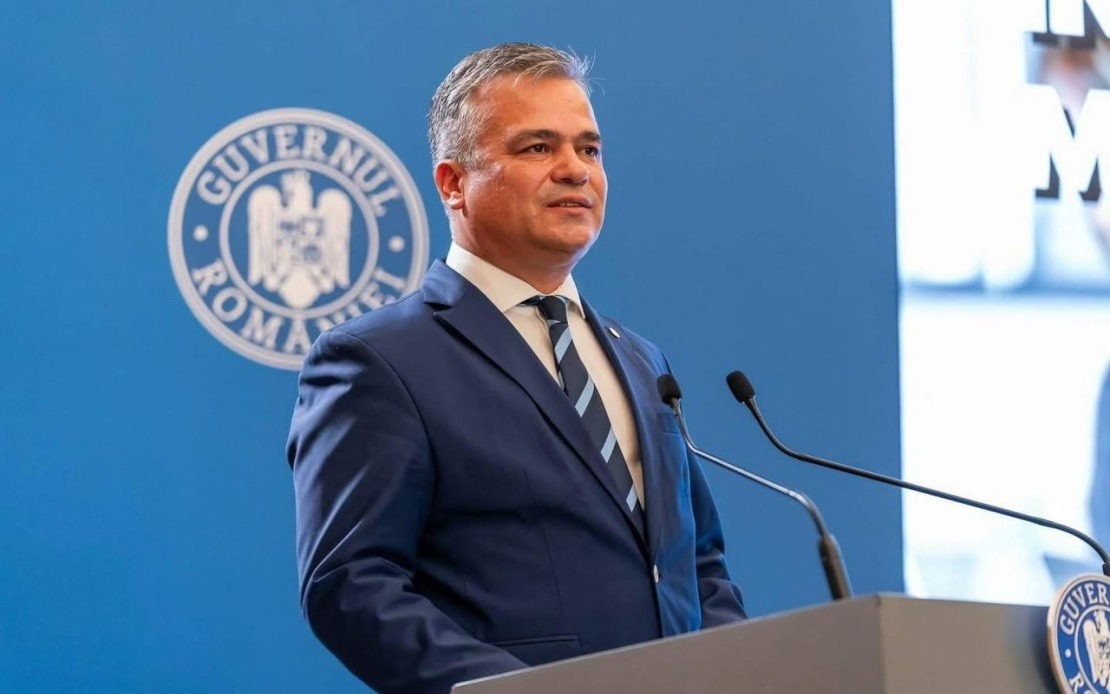
Adrian Vestea, Romania's designate prime minister, formally tabled his cabinet composition and government programme before parliament on Monday, marking a significant step toward resolving the political gridlock that has gripped the country. The submission follows crucial endorsement from the Social Democratic Party, which threw its weight behind Vestea's appointment during a meeting held the previous day. In a statement shared across social media platforms, Vestea emphasized the urgency of moving beyond the period of institutional uncertainty that has hampered effective governance.
The timing of this development carries particular weight in the Romanian political landscape, where competing interests and coalition-building negotiations have frequently stalled government formation. Vestea's approach reflects a pragmatic acknowledgment that the country requires decisive action to restore confidence in institutions and ensure continuity in policy implementation. By presenting both the programmatic framework and the list of ministerial candidates simultaneously, he has sought to provide parliament with a comprehensive vision of how his administration intends to operate.
Vestea's five-pillar agenda represents an attempt to balance competing demands facing the Romanian state. Political stability emerges as the foundational priority, underlining the instability that prompted the designation process in the first place. This emphasis signals recognition that without institutional coherence, other objectives cannot be effectively pursued. The absorption of European Union funds constitutes the second major thrust, reflecting Romania's ongoing integration into broader European economic structures and the necessity of capitalizing on available financial support mechanisms.
Economic stability ranks as the third priority, a concern that resonates across Central and Eastern European nations grappling with inflationary pressures and external economic headwinds. Infrastructure investment, positioned as the fourth priority, connects to Romania's long-standing developmental aspirations and the need to modernize transport networks, energy systems, and urban facilities that have lagged behind Western European standards. The final priority, national security strategic initiatives, addresses both traditional defence concerns and contemporary challenges including hybrid threats and regional geopolitical shifts.
The composition of Vestea's proposed cabinet reflects complex political mathematics within the Romanian parliament. Despite the National Liberal Party's official stance rejecting coalition arrangements with left-wing political forces, Vestea—who holds the position of first vice-chair within the NLP—has constructed a government that incorporates both Social Democrats and NLP members aligned with his vision. This apparent contradiction highlights the distinction between official party doctrine and the practical realities of governing coalitions, where individuals sometimes operate across traditional factional boundaries.
The Social Democratic Party's decision to support Vestea represents a calculated political move that extends beyond conventional ideological alignment. By backing a figure nominally associated with the National Liberal Party, the SDP has positioned itself as a pragmatic force willing to prioritize governmental functionality over strict party discipline. This approach mirrors patterns observed elsewhere in European politics, where centrist or centre-left formations have demonstrated flexibility in supporting technocratic or cross-party cabinets when institutional stability appears threatened.
However, uncertainty persists regarding parliamentary ratification of the proposed ministers. Romanian media sources have reported that formal approval of the cabinet's composition has not yet been secured, indicating that Vestea faces continued negotiation with various parliamentary groupings. This ongoing ambiguity reflects the fractionalised nature of the Romanian parliament and the challenge of assembling stable legislative majorities for executive programmes in an increasingly polarised political environment.
For regional observers and international partners, the developments in Bucharest carry implications extending beyond Romania's borders. As a European Union and NATO member, Romania's governance effectiveness influences broader security and economic dynamics within Central and Eastern Europe. A stable, functioning Romanian government strengthens institutional coherence within these multilateral frameworks and demonstrates that even fragmented parliaments can produce workable executive arrangements.
The emphasis on EU fund absorption particularly resonates given the European Union's substantial financial commitments to member states for recovery, resilience, and structural development. Romania has historically encountered challenges in meeting EU administrative and procedural requirements for fund disbursement, making effective governmental capacity crucial for maximising financial benefits available through Brussels. Vestea's prioritisation of this objective suggests awareness of this bottleneck.
Looking forward, the success of Vestea's administration will depend substantially on whether the heterogeneous coalition backing his appointment can maintain cohesion across the legislative term. Coalition governments assembling across traditional party lines frequently encounter durability challenges when economic conditions deteriorate or policy disagreements intensify. The Social Democrats and various NLP factions that comprise this proposed government may find sustained cooperation difficult should key constituencies within either formation perceive that their interests are being neglected.
The Romanian experience also offers instructive parallels for other Central European democracies managing similar pressures of political fragmentation, demanding EU compliance requirements, and the necessity of maintaining defence capabilities amid regional uncertainty. How Vestea's cabinet navigates these competing demands will provide valuable insights into whether pragmatic cross-party arrangements can deliver effective governance in polarised parliamentary contexts.

