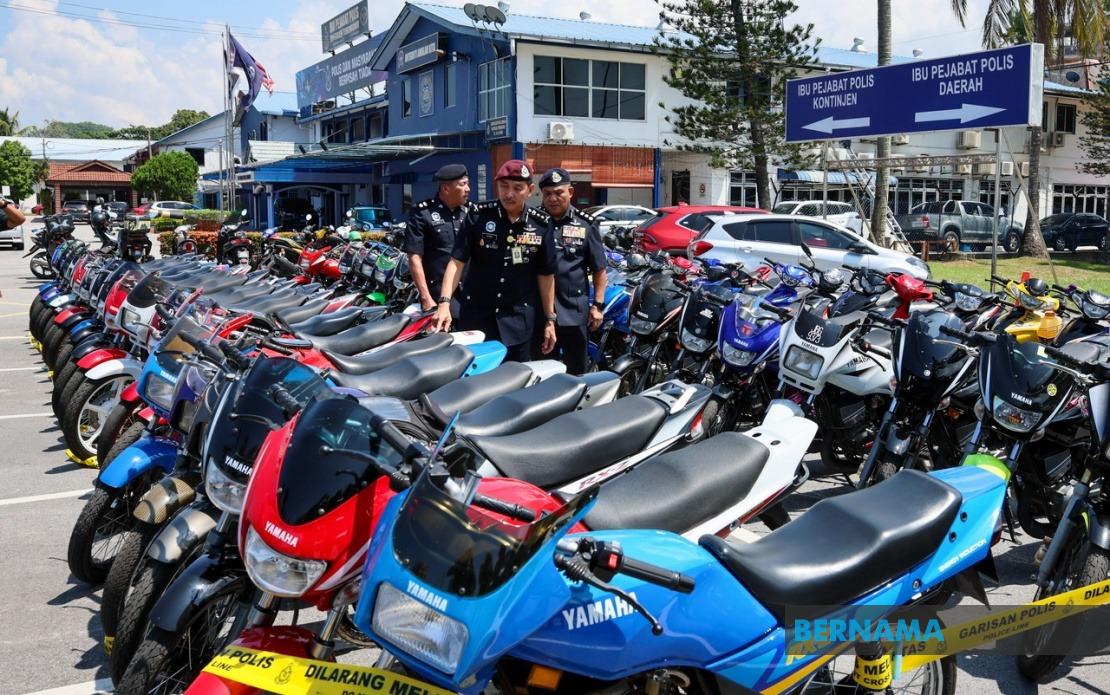
Road safety experts are sounding alarms over the deteriorating safety record of the RXZ Members programme, Malaysia's largest annual motorcycle gathering, with one former official demanding immediate intervention from government authorities and event organisers. Shahrim Tamrin, who previously served on the board of the Malaysian Institute of Road Safety Research (MIROS), has articulated growing concerns about the event's trajectory following the deaths of 11 riders during the most recent iteration held at the Gong Badak Motor Racing Circuit in Kuala Nerus in late July.
The statistics paint a troubling picture. Over a four-day window from July 30 through August 3 during RXZ Members 8.0, police recorded 46 separate motorcycle accidents across the region. These incidents broke down into 11 fatalities, representing nearly a quarter of all recorded incidents, along with five injuries classified as serious and 30 minor collisions. This concentration of tragedy occurred during an event that drew more than 200,000 participants, making it the largest edition since the RXZ Members programme first launched in 2017. The scale alone underscores why conventional traffic enforcement approaches have proven inadequate.
What distinguishes Tamrin's intervention is his documentation of an unmistakable negative trend rather than dismissal of the 2026 toll as a statistical anomaly. The programme's death count has climbed from two fatalities in 2024 to five the following year before spiking to eleven most recently. This three-year trajectory suggests systemic vulnerabilities rather than isolated misfortune. Such escalation demands that stakeholders treat the RXZ Members programme not as a casual weekend gathering but as a major public event requiring the same sophisticated safety planning applied to large-scale infrastructure operations or mass gatherings elsewhere in the region.
Tamrin's proposed framework for comprehensive risk management addresses multiple dimensions of event safety. He advocates for detailed participant projections, strategic planning of vehicle entry and exit corridors, designated rest facilities positioned throughout the venue and travel routes, pre-positioned ambulance deployment zones, an active emergency response command centre, and coordinated communications protocols linking all participants and authorities. Additionally, he recommends conducting thorough risk assessments before the event proceeds rather than reacting to incidents after they occur. Such measures, while standard for international motorsport events and major conferences, remain uncommon in Malaysia's motorcycle gathering landscape.
The post-event analysis component represents equally important territory. Tamrin proposes that authorities conduct detailed safety audits following each RXZ Members programme, documenting accident locations, precise timing, contributing factors, rider demographics, motorcycle-specific issues, and whether enforcement efforts proved effective. Critically, he insists that audit findings be published and analysed before the subsequent annual event, allowing stakeholders to implement evidence-based improvements rather than making ad hoc adjustments in response to tragedy. This approach creates institutional learning and prevents the repetition of preventable mistakes across consecutive years.
Another dimension involves enforcement of environmental and mechanical standards that have generated community complaints. Local residents near the Gong Badak circuit reported excessive noise and visible exhaust emissions that degraded air quality. Tamrin recommends that authorities tighten oversight of noise regulations and emission standards, potentially requiring pre-event certification of motorcycles to ensure compliance with roadworthiness requirements. This interconnects safety with environmental responsibility, addressing dual community concerns rather than siloing them.
A particular focus emerges around the Yamaha RXZ motorcycle itself, the event's namesake model. Most machines in active use today are between 20 and 35 years old, having changed ownership multiple times with many undergoing repairs, modifications, or complete restorations. This history frequently creates documentation gaps and incomplete ownership records that complicate registration. Tamrin suggests that the Road Transport Department (JPJ) should establish streamlined pathways for re-registering these historic vehicles, provided they pass comprehensive inspection at the Computerised Vehicle Inspection Centre (Puspakom). However, he explicitly cautions against rubber-stamping approval for motorcycles modified in ways that compromise structural integrity or safety systems. Such bikes should either be restored to factory specifications or remain off public roads entirely, ensuring that all registered vehicles carry current road tax and insurance coverage.
The human logistics of managing a 200,000-person motorcycle gathering remain inadequately addressed under current frameworks. Tamrin proposes coordinated training between police, JPJ, and RXZ club leadership to prepare marshals and group leaders in safe convoy methodology. Such personnel would serve as force multipliers, helping authorities maintain order across dispersed groups rather than relying solely on uniformed officers to supervise the entire event. This represents a risk management principle applicable across large gatherings in Southeast Asia where resources are stretched thin.
Travel advisory measures, successfully deployed by Malaysian highway concessionaires during festive seasons, offer another underutilised tool. Tamrin recommends similar systems informing RXZ participants of peak travel periods, suggesting alternative routes to reduce bottlenecks, and identifying recommended rest stops positioned strategically along common travel corridors. Such information, disseminated through ride organisers and mobile platforms, helps distribute participants temporally and geographically rather than concentrating them at dangerous chokepoints.
The broader implication extends beyond the RXZ Members programme itself. Malaysia hosts numerous large-scale motorcycle gatherings and informal road events that operate with minimal safety coordination. The RXZ situation serves as a case study in how rapid growth of recreational activities can outpace safety infrastructure. Other Southeast Asian nations watching similar phenomena in their own contexts—from motorcycle festivals in Thailand to informal racing events in Indonesia—face equivalent challenges.
Implementing Tamrin's recommendations would require sustained cooperation among government agencies, local authorities, event organisers, motorcycle clubs, and rider associations. Success depends on treating the RXZ Members programme not as an inevitable source of casualties but as a manageable risk that can be substantially mitigated through evidence-based planning. The escalating fatality trend is neither natural nor inevitable; it reflects choices about how Malaysia prioritises safety at major public gatherings. The coming months will reveal whether authorities and organisers embrace comprehensive risk management or continue accepting preventable deaths as the price of a popular motorcycle tradition.

