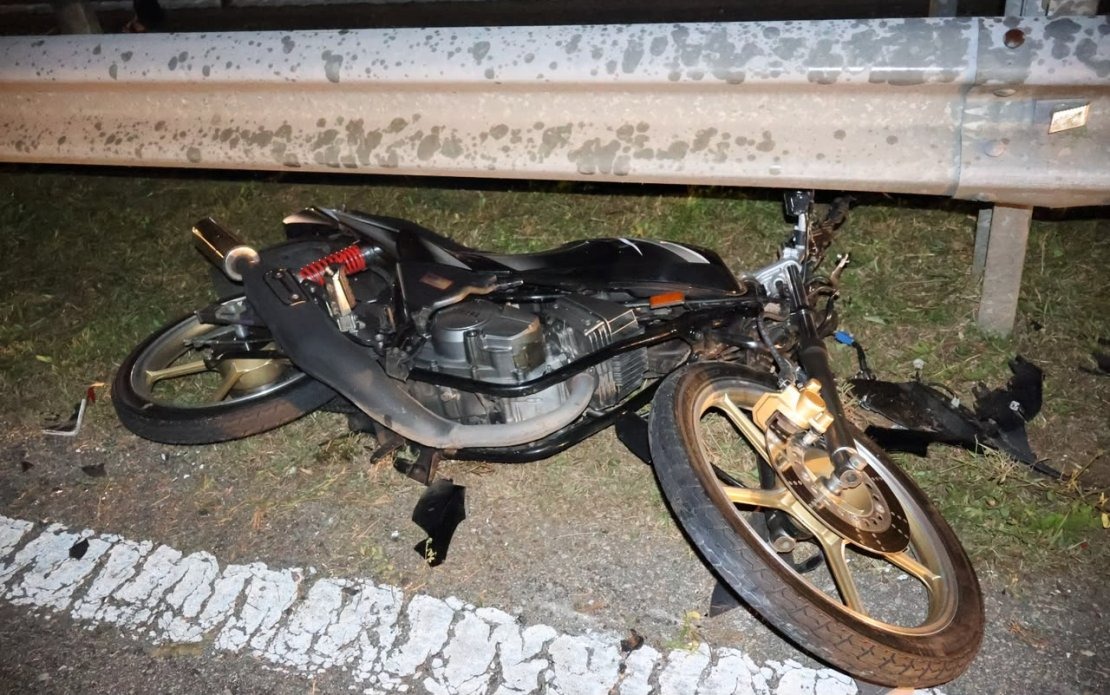
The head of the Royal Malaysia Police's Traffic Investigation and Enforcement Department has warned that tackling reckless driving requires far more than police patrols and fines. Datuk Seri Muhammed Hasbullah Ali, director of Bukit Aman's JSPT, emphasized that road safety education and public advocacy must become central pillars of any strategy to reduce accidents, particularly following a tragic incident on the East Coast Expressway early today that claimed four motorcyclists' lives and injured 20 others.
Muhammed Hasbullah's remarks come amid mounting concern over motorcycle-related fatalities on Malaysian highways. He attributed the persistence of dangerous riding behaviour to deeper cultural and psychological factors that enforcement alone cannot address. When riders deliberately violate traffic regulations in pursuit of personal gratification or social standing among peers, he noted, the issue transcends simple rule-breaking—it reflects an underlying attitude problem that requires sustained intervention through education and community engagement.
The JSPT director stressed that preventing road accidents demands broad-based societal commitment. Parents, families, schools, and neighbourhood communities all have crucial roles to play in instilling responsible attitudes among road users from an early age. This multi-stakeholder approach represents a significant shift in thinking about road safety, moving beyond the traditional enforcement-heavy model toward prevention rooted in cultural change and collective responsibility.
Legislative penalties and traffic stops, while necessary, have proven insufficient to deter some motorcyclists from engaging in high-risk activities on expressways. Despite continuous enforcement operations by JSPT and partner agencies, certain riders persist in taking reckless chances—accelerating to dangerous speeds, participating in illegal street races, and performing acrobatic stunts that endanger themselves and other road users. These behaviours suggest that deterrence through punishment has reached its limits without accompanying shifts in rider psychology and values.
The fatal East Coast Expressway incident illustrates the consequences of this enforcement gap. The collision that killed four motorcyclists and injured numerous others underscores that highways are shared public spaces where irresponsible individual choices create cascading risks for everyone. Beyond the immediate trauma and loss of life, such accidents generate property damage, psychological trauma for survivors, and systemic costs to healthcare and emergency services.
Muhammed Hasbullah stressed that roads function as essential shared infrastructure where all users—motorists, motorcyclists, heavy vehicle drivers, and pedestrians—must exercise mutual respect and responsibility. When individual riders prioritize personal thrills over collective safety, the entire system becomes destabilized. This framing shifts accountability from a purely individual level to a communal one, suggesting that road safety is not merely a personal choice but a social obligation.
The police leadership has committed to maintaining strict enforcement against reckless riders, illegal racers, and those performing dangerous stunts. However, this commitment exists within the broader acknowledgment that penalties alone will not resolve the problem. The announcement signals that JSPT will pursue dual strategies: continuing to apprehend and penalize offenders while simultaneously supporting initiatives to reshape attitudes and behaviours before dangerous acts occur.
For Malaysian policymakers, this position opens discussion about how educational institutions, media campaigns, and community programmes can be strengthened to complement police work. Countries facing similar challenges have found success through integrated approaches combining school-based driver education, celebrity-led public awareness campaigns, parent engagement programmes, and peer-led initiatives that make road safety culturally aspirational rather than merely legally mandatory.
The emphasis on education reflects international best practices in road safety. The World Health Organization and regional traffic safety bodies consistently find that sustainable reductions in road deaths require behaviour change, not just enforcement. Malaysia's growing motorcyclist fatality rate—the country has among Southeast Asia's highest motorcycle accident rates—suggests that current enforcement intensity has plateaued in effectiveness, necessitating investment in preventive education.
Muhammed Hasbullah's comments also implicitly challenge the narrative that police alone can solve road safety problems. By appealing to parents, schools, and communities, he redistributes responsibility away from law enforcement toward civil society, acknowledging that cultural shifts require societal participation. This represents mature recognition that sustainable improvements in public safety depend on partnerships between authorities and citizens.
Moving forward, Malaysian road safety initiatives may increasingly focus on understanding why some riders engage in dangerous behaviour despite awareness of risks and legal consequences. Research into peer pressure dynamics, the psychology of risk-taking, and the appeal of illegal racing communities could inform targeted interventions addressing root causes rather than merely symptoms.
The tragedy on the East Coast Expressway serves as a stark reminder that incremental improvements through enforcement alone will not arrest motorcycle fatalities. Achieving meaningful reductions will require the sustained commitment of government agencies, educational institutions, families, and the riding community itself to fundamentally reshape attitudes toward shared road use. Without this broader cultural transformation, enforcement operations will continue responding to accidents rather than preventing them.

