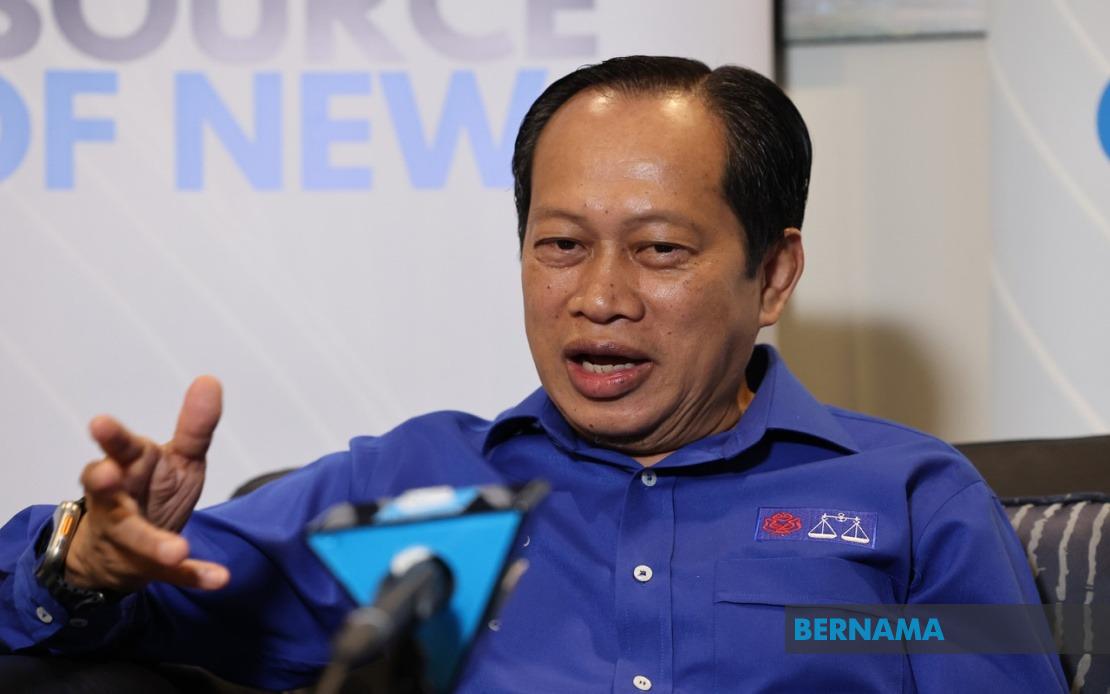
Maintaining Malaysia's road network effectively hinges on seamless cooperation between government agencies, elected representatives at both state and federal levels, and local authorities, according to Deputy Works Minister Datuk Seri Dr Ahmad Maslan. Speaking in Johor Bahru on July 2, he outlined a framework that requires all stakeholders to shoulder responsibility for identifying and addressing deteriorating road conditions, emphasizing that no single entity can manage this critical infrastructure challenge alone.
The minister has instructed the Public Works Department to accelerate repair work on damaged roads nationwide, signalling a renewed push to tackle the backlog of maintenance issues that have accumulated across Malaysia's federal routes and state highways. His directive underscores growing awareness within the federal government that road degradation not only frustrates commuters but also poses safety risks and undermines economic productivity. By pressuring JKR to act with greater urgency, Ahmad is attempting to translate political commitment into tangible improvements on the ground.
Ahmad's remarks came in direct response to recent efforts by Pakatan Harapan's Puteri Wangsa state seat candidate Dr Maszlee Malik, who conducted a high-profile road inspection along Jalan Tebrau in Johor. The former Education Minister's decision to personally drive the problematic stretch, travelling from Kampung Melayu Majidi to Ulu Tiram on June 29 in a Perodua Myvi, represented a deliberate attempt to demonstrate opposition party responsiveness to constituent concerns. Maszlee subsequently publicized his findings, detailing how his vehicle experienced jolting and uneven surfaces while navigating the route, and documenting the severe traffic congestion that peaks during commuting hours.
While Ahmad's comments could be interpreted as a defensive response to opposition-party activism around infrastructure, his underlying message reflects institutional reality: road maintenance in Malaysia operates through a complex network that demands meaningful engagement from assemblyman, parliamentarians, and local agencies. The deputy minister explicitly stated that when road defects are identified, elected representatives must coordinate with relevant local bodies to ensure swift remedial action. This places accountability squarely on the shoulders of government officials across multiple levels, suggesting that inadequate roads cannot be blamed solely on bureaucratic inertia or budget constraints.
In Johor specifically, Ahmad has conducted comprehensive visits to all ten district Public Works Department offices, receiving detailed briefings on development priorities and infrastructure challenges. These field visits appear designed to reinforce his message directly to frontline officials and to gather intelligence about regional needs and implementation bottlenecks. By personally engaging with JKR leadership across the state, Ahmad is signalling that the ministry intends to monitor and evaluate performance more closely, potentially introducing consequences for offices that fail to respond adequately to maintenance demands.
The financing mechanism for road upkeep involves a deliberate approval process that Ahmad outlined to media. Allocations for maintaining federal roads, state highways, and bridges flow through each state's Economic Planning Unit and the state executive council. This structure allows applications for repair work to be systematically assessed and ranked according to priority before funds are released. While such procedural oversight theoretically prevents waste and ensures optimal resource distribution, it can also slow responses to urgent situations and may introduce political considerations into ostensibly technical prioritization decisions.
For Malaysian motorists and businesses relying on efficient road networks, Ahmad's emphasis on multi-stakeholder cooperation carries practical implications. When potholes, surface degradation, and congestion points proliferate, responsibility becomes diffused across multiple authorities, potentially delaying solutions. The deputy minister's push for faster action by JKR suggests acknowledgement that existing processes may not operate with sufficient speed to maintain acceptable road standards. This is particularly significant in economically vital corridors like Jalan Tebrau, where poor conditions directly impact commercial activity and commuter safety.
The political context surrounding Ahmad's remarks cannot be ignored. Opposition parties in Malaysia have increasingly adopted targeted infrastructure audits as a tactic for highlighting government shortcomings and building grassroots support. Maszlee Malik's photogenic road inspection exemplifies this strategy: by documenting deterioration firsthand and sharing experiences via social media, opposition figures can mobilize voter frustration more effectively than abstract complaints. Ahmad's response—emphasizing bureaucratic procedures and distributed responsibility—reflects the governing coalition's need to defend its record while projecting competence and responsiveness.
Regionally, Malaysia's experience with road maintenance challenges mirrors difficulties across Southeast Asia, where rapid urbanization and traffic growth strain infrastructure designed for lower volumes. Countries throughout the region struggle to balance new construction with adequate maintenance budgets, and this tension often becomes visible at election time when political competition intensifies scrutiny of public services. Ahmad's insistence that all parties must contribute to solutions implicitly acknowledges that maintenance cannot succeed through government action alone, hinting at potential future partnerships with private entities or enhanced community engagement.
Moving forward, the success of Ahmad's initiative will depend on whether the Deputy Works Minister's directives produce measurable improvements in road conditions and faster response times to maintenance requests. The framework he articulated—requiring assemblyman, parliamentarians, and local agencies to coordinate actively—remains sound in principle but has proven difficult to execute consistently across Malaysia's complex federal structure. If Johor's ten district JKR offices receive adequate resources and clear performance targets, residents may observe tangible progress on routes like Jalan Tebrau. Conversely, if improvements remain marginal, opposition parties will likely escalate their infrastructure-focused campaigns ahead of future electoral contests.

