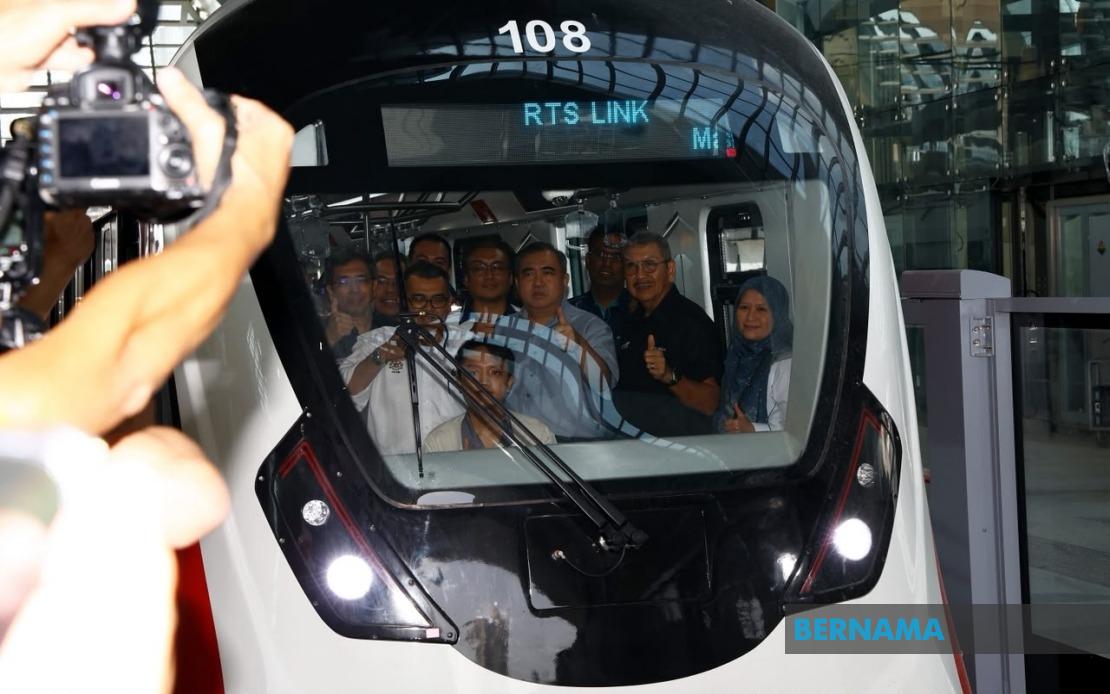
Malaysia's transport infrastructure is set for a significant upgrade as the government commits RM60 million to construct a pedestrian bridge linking the Bukit Chagar RTS Link Station directly to the KTMB Komuter service. The initiative represents a deliberate push toward seamless public transport integration at a critical juncture between Johor Bahru and Singapore's border crossing, with Transport Minister Anthony Loke announcing the project has received formal approval from the Ministry of Economy. The construction phase is expected to span approximately 12 months, positioning the facility for operation coinciding with the RTS Link's scheduled January 1, 2025 commencement.
The bridge project addresses a practical mobility challenge that would otherwise force passengers into an inefficient routing. Currently, commuters travelling between the two rail systems must navigate through JB Sentral, adding unnecessary distance and travel time to their journeys. By establishing a direct pedestrian connection, the government seeks to substantially reduce walking distances and create a more compelling case for passengers to utilise the RTS Link as their primary transit choice. This design philosophy reflects international best practices in transport hub development, where seamless connectivity between different modes encourages higher patronage and improves overall system efficiency.
The broader context of this investment reveals a strategic vision for establishing Bukit Chagar as a genuine multimodal transport hub rather than merely a single-purpose facility. Beyond the bridge initiative, the government is simultaneously developing integration points with JB Sentral, e-hailing services, and expanded bus networks. This comprehensive approach acknowledges that modern transport hubs succeed when they function as ecosystems offering multiple connection options rather than as isolated transit nodes. The Bukit Chagar development thus represents a departure from fragmented transport planning toward integrated systems thinking.
Complementing the bridge construction is an ambitious bus service expansion known as the Stage Bus Service Transformation 2.0, which envisions deploying at least 200 additional buses throughout residential areas surrounding Johor Bahru. These vehicles will funnel passengers to Bukit Chagar, creating the so-called first-mile and last-mile connectivity that urban transport specialists identify as critical to transit system success. The agreement with the operator remains under finalisation, with final approval pending from the Ministry of Finance, though the expansion is explicitly timed to align with the RTS Link's opening to ensure coordinated passenger management.
The RTS Link itself represents a watershed moment for cross-border transport in Southeast Asia, with projections suggesting capacity for up to 10,000 passengers hourly in each direction between Bukit Chagar and Singapore's Woodlands North station. This volume necessitates careful attention to how passengers access and egress from the facility, making the supporting infrastructure investments particularly consequential. Without adequate bridging solutions and feeder bus networks, the RTS Link's full potential would remain unrealised despite substantial capital investment in the core rail asset.
Minister Loke's recent site visit confirmed that physical construction of the building, the Customs, Immigration and Quarantine complex, and the RTS Link station itself has concluded. The project currently occupies the critical testing and commissioning phase, during which engineers conduct system integration testing, fault-free operations verification, and trial runs. This phase typically demands considerable attention to detail, as any operational shortcomings identified at this stage can require design modifications or procedural adjustments before public service launch.
For Malaysian travellers and the Johor Bahru business community, the implications are substantial. Enhanced connectivity to Singapore through a rapid rail service could fundamentally alter commuting patterns and cross-border commerce dynamics. Malaysian workers employed in Singapore's central business district would gain a faster, more reliable alternative to road-based crossing, potentially reducing dependency on private vehicles and alleviating congestion at traditional checkpoints. Similarly, Singapore residents and businesses would gain improved access to Johor's residential, commercial, and recreational opportunities, potentially catalysing further economic integration across the causeway.
The investment timeline warrants close attention as well. The 12-month construction period for the bridge positions completion around August 2025, providing a six-month buffer following the RTS Link's January launch. This sequencing allows the rail link to commence operations and reveal initial operational challenges and passenger flow patterns that might inform the bridge's detailed design and operational protocols. However, the staggered opening also means the full integrated experience will not be immediately available to users, potentially requiring communication to manage passenger expectations during the interim period.
Regional context enhances the significance of this project. Southeast Asia has witnessed increasing investment in cross-border rail and transit infrastructure, reflecting regional recognition that seamless connectivity drives economic growth and improves quality of life. The Bukit Chagar RTS Link, combined with these supporting investments, positions Malaysia and Singapore as leaders in sophisticated regional transport planning. For other Southeast Asian nations and cities contemplating major transport infrastructure, the Bukit Chagar approach offers a template for thinking beyond individual projects toward integrated systems.
The financial commitment of RM60 million, while substantial, represents a relatively modest expenditure when measured against the RTS Link's overall investment and the projected economic benefits of enhanced cross-border mobility. The decision to fund this supporting infrastructure through Ministry of Economy approval suggests recognition at senior government levels that transport hub success requires holistic planning rather than incremental project-by-project development. This budgetary discipline and integrated approach may offer lessons for other Malaysian transport initiatives that sometimes appear disconnected from their supporting ecosystems.
Looking ahead, the success of the Bukit Chagar development will depend substantially on execution of these multiple components in coordinated fashion. The bridge, bus expansion, and RTS Link opening must function together to create the seamless, efficient experience that justifies the substantial public and private investment involved. Any significant delays in bridge construction or bus service deployment could compromise the integrated vision and reduce the RTS Link's effectiveness as a transformative cross-border transport solution, underscoring the importance of maintaining rigorous project management discipline across these interconnected initiatives.

