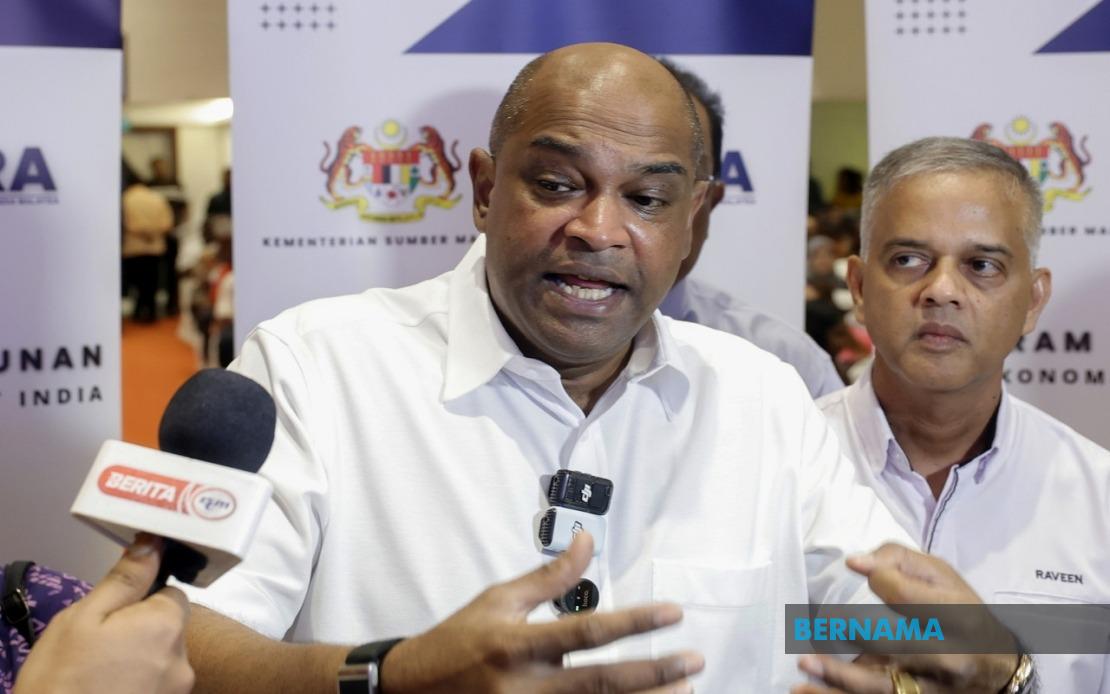
The Malaysian Indian Transformation Unit (MITRA) has secured RM6.7 million in government funding across three distinct programmes designed to strengthen socio-economic conditions within the Indian community, according to Human Resources Minister Datuk Seri R. Ramanan. The comprehensive allocation reflects the government's commitment to targeted community development whilst addressing specific vulnerabilities in education, entrepreneurial capacity and religious infrastructure.
The largest educational initiative, Tuisyen MADANI 2026, represents a direct intervention in academic performance disparities. Operating across 28 tuition centres distributed throughout seven states, the programme extends free coaching to 2,343 secondary students preparing for the Sijil Pelajaran Malaysia (SPM) and Sijil Tinggi Persekolahan Malaysia (STPM) examinations. Running for five consecutive months from August through December, this approach targets a critical juncture in students' academic journeys when examination pressure peaks. The RM2.63 million allocation specifically addresses the phenomenon whereby financial constraints force families to forgo private tuition, thereby widening achievement gaps between economically advantaged and disadvantaged pupils.
For Malaysian readers familiar with the persistent educational disparities documented in government reports, the Tuisyen MADANI initiative carries particular significance. By subsidising tuition costs, the programme attempts to neutralise one mechanism through which poverty transmits educational disadvantage across generations. The five-month intensive window reflects recognition that targeted intervention during examination years yields measurable returns on educational investment. The concentration of centres across seven states suggests strategic geographical distribution, though questions remain regarding penetration into rural and semi-urban areas where transport barriers may limit accessibility.
Parallel efforts to stimulate entrepreneurial activity within the Indian community materialised through Series I of the 2026 B40/M40 Indian Entrepreneurs Grant Programme, branded as Uyarvu MADANI. A total of 128 selected entrepreneurs received cumulative grants exceeding RM3.05 million, distributed across three impact categories ranging from micro-enterprises through growth-stage businesses to high-impact ventures. Rather than functioning as loan instruments requiring repayment, these grants provide capital infusions to strengthen operational infrastructure, competitive positioning and market penetration capabilities.
The entrepreneur-focused stream acknowledges the structural barriers limiting Indian community participation in Malaysia's MSME sector. By channelling development finance specifically toward community members, MITRA attempts to counterbalance historical underrepresentation in formal business ownership. Ramanan's emphasis that applicants may simultaneously pursue parallel financing through SME Bank, Bank Rakyat and Amanah Ikhtiar Malaysia suggests the grants function as catalytic capital rather than comprehensive financing solutions. This multipronged credit approach enables entrepreneurs to stack various government support mechanisms, potentially assembling comprehensive capital packages necessary for meaningful business expansion.
The Dharma MADANI Programme represents investment in religious and community infrastructure serving the Hindu population. Series 4 allocations delivered RM1.04 million to 52 Hindu temples, with an additional 324 religious institutions scheduled to receive funding in subsequent tranches. The projected total of 676 recipients across the series indicates substantial commitment to temple renovation, maintenance and capacity enhancement. For the Indian community, temples function not merely as religious spaces but as cultural anchors providing educational programmes, festive event organisation and community welfare activities.
Infrastructure investment in Hindu temples carries implications extending beyond religious observance into community cohesion and cultural preservation. Temple renovation projects frequently employ community members, stimulate local economic activity through construction procurement, and enhance gathering spaces for cultural transmission. The phased approach to disbursement suggests methodical assessment of temple applications and capacity for project execution, though the extended timeline also raises questions about bureaucratic processing efficiency.
However, the policy framework disclosed by Ramanan crystallised around a secondary issue during the announcement. His commentary on the resignation of Subang Member of Parliament Wong Chen introduced partisan political dimensions that somewhat overshadowed the substantive community development announcements. As PKR vice-president, Ramanan characterised Wong's departure as disappointing and disloyal, emphasizing the party's past electoral support. The framing of Wong's three electoral contests as preferential treatment reflected internal party tensions regarding member commitment and loyalty expectations.
For Malaysian observers, the Wong Chen resignation episode illustrated the fluid political landscape within which community development initiatives operate. Parliamentary representation shifts and party-hopping episodes can disrupt continuity in constituency advocacy and policy implementation. The Subang seat's significant Indian voter population connects directly to MITRA initiatives and broader community development frameworks. Wong's departure, regardless of political characterisation, potentially affects advocacy for targeted programmes and legislative attention to Indian community concerns.
The three MITRA programmes collectively address interconnected dimensions of community development: immediate educational outcomes through tuition subsidies, medium-term economic empowerment through entrepreneurship support, and long-term cultural infrastructure through temple grants. This integrated approach recognises that community advancement requires simultaneous intervention across multiple development domains rather than siloed sectoral initiatives.
Implementation effectiveness will depend substantially on execution quality at state and local levels. The involvement of 28 tuition centres requires standardised curriculum frameworks and teacher training protocols to ensure consistency across geographic locations. Entrepreneur grant distribution necessitates transparent selection mechanisms and post-disbursement monitoring to prevent misallocation and ensure productive capital deployment. Temple funding administration requires accountable project management to prevent cost overruns and ensure projects serve intended cultural and community functions.
For policymakers across Southeast Asia observing Malaysia's targeted community development approach, the MITRA initiatives demonstrate both promise and inherent limitations. Directed programmes addressing specific community vulnerabilities generate measurable outcomes and build political constituency support. However, sustainable development ultimately requires equitable access to quality education and economic opportunity across all demographic groups. Community-specific initiatives, whilst important, function most effectively as supplements to universal programmes offering comparable quality and accessibility regardless of ethnicity. The RM6.7 million investment thus represents meaningful immediate support whilst raising broader questions about Malaysia's long-term development equity trajectory.

