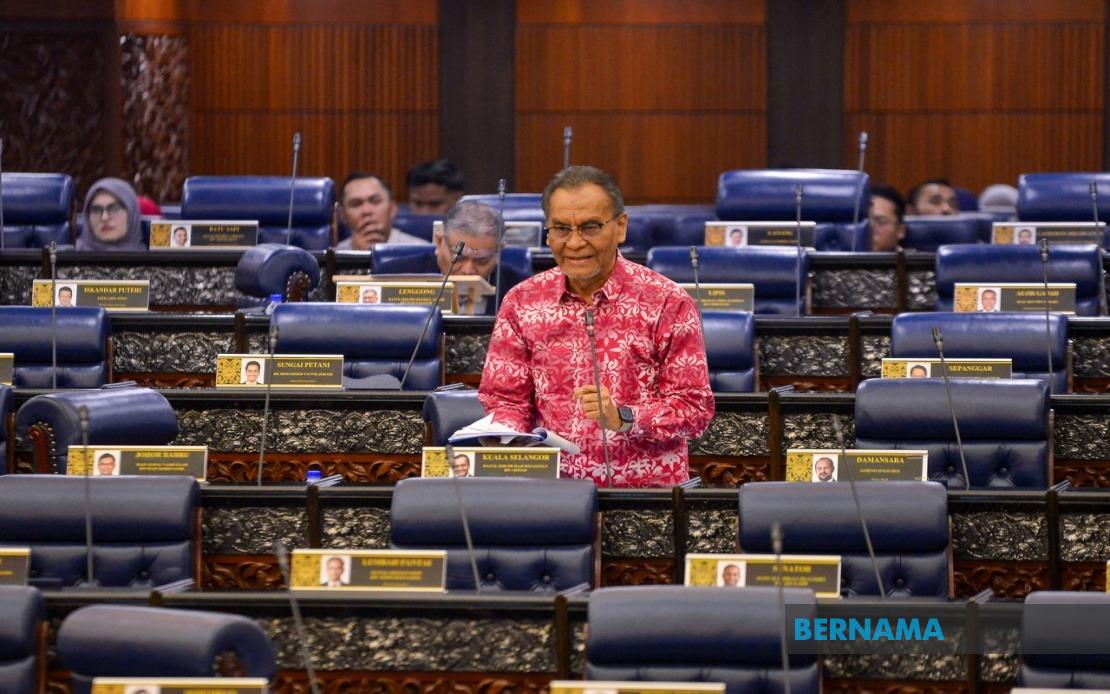
Health Minister Datuk Seri Dr Dzulkefly Ahmad has moved to dispel public concern about the impact of a RM500 million expenditure restriction warrant imposed on the Ministry of Health, characterising the measure as a routine financial adjustment that preserves operational capacity. Speaking during a parliamentary question-and-answer session in the Dewan Rakyat, Dzulkefly explained that the constraint affects only surplus allocations earmarked for positions that remain unfilled, allowing the government to achieve budgetary savings without compromising service delivery to patients across the country.
The RM500 million reduction represents approximately 1.07 per cent of the Ministry of Health's total annual allocation of nearly RM46.52 billion, making it a relatively modest proportion of the overall budget. This context is crucial for understanding why the Health Minister maintains that fundamental operations remain unaffected. The restriction warrant was formally issued by the Finance Ministry on June 5, triggering questions from both government and opposition parliamentarians about whether rural health facilities and hospital services would suffer.
Central to Dzulkefly's argument is the distinction between different categories of budget allocation. He emphasised that the adjustment specifically excludes funds designated for day-to-day operations, capital development projects, staff salaries and benefits, professional training programmes, and the acquisition of medical equipment and supplies. Instead, the savings derive from re-evaluation of how the ministry deploys its financial resources, with an emphasis on eliminating waste and adopting more efficient spending practices across the health system.
The underlying reason for the adjustment reveals a structural challenge within Malaysia's public health sector: the ministry has been allocated funding for 18,641 approved positions by the Public Service Department, yet it lacks sufficient qualified personnel to fill every vacancy. Dzulkefly pointed out that even with the approved staffing level, recruitment constraints mean the ministry cannot deploy additional workers beyond this number. Consequently, the salary allocations designated for unfilled posts represent a pool of unspent money that the government can redirect to other priorities without operational detriment.
Parliamentarians from both the ruling coalition and opposition raised concerns that the budget restriction would adversely affect healthcare delivery, particularly in rural and underserved regions. Datuk Shahelmey Yahya from BN-Putatan and Abdul Latiff Abdul Rahman from PN-Kuala Krai specifically questioned whether health facility development would suffer. Dzulkefly refuted these concerns categorically, asserting that all fundamental healthcare services and planned health infrastructure projects will proceed as scheduled throughout the financial year.
Beyond addressing the budget cut, Dzulkefly outlined significant initiatives aimed at controlling rising healthcare costs, a persistent concern for Malaysian patients and policymakers. The Ministry of Health, working through the Joint Committee on Private Healthcare Costs known as GBMKKS, will introduce a new basic health protection scheme this month at selected hospitals. Branded as the Base Medical and Health Insurance/Takaful or MHIT, the scheme represents an attempt to provide affordable health coverage that offers meaningful protection while remaining accessible to consumers grappling with escalating private healthcare expenses.
The MHIT scheme will undergo a pilot phase during July before expanding to full national rollout in January 2027, allowing the government and private healthcare providers to refine implementation and address operational challenges. This measured approach reflects recognition that integrating new insurance products into Malaysia's mixed public-private healthcare ecosystem requires careful coordination and testing. For patients, the scheme promises a middle-ground option between uninsured self-payment and comprehensive premium policies that many consider unaffordable.
Compounding the affordability issue, the government is simultaneously implementing a Diagnosis Related Groups (DRG) payment system designed to create uniform billing standards across Malaysia's healthcare network. This framework will apply to public hospitals, private institutions, university medical centres, and military medical facilities, establishing consistent charges for comparable treatments nationwide. By establishing benchmarks and reducing billing variability, the DRG system aims to enhance transparency and prevent the price fluctuations that have driven patients toward catastrophic out-of-pocket expenses.
The convergence of these initiatives reflects a strategic approach to healthcare governance: maintaining public sector efficiency while introducing market-based transparency mechanisms into the private sector. The RM500 million budget adjustment sits within this broader context, representing fiscal discipline rather than service reduction. For Malaysian patients and policymakers, the challenge remains balancing cost containment with quality maintenance as the health system serves a growing and ageing population.
The minister's reassurances carry practical weight given that Malaysia's public health system serves the majority of the population, with particular importance for lower-income communities that cannot access private alternatives. Rural patients especially depend on government facilities and staff, making any genuine reduction in operational capacity a serious concern. By framing the adjustment as reallocation of vacant positions rather than service cuts, Dzulkefly attempted to separate legitimate fiscal concerns from operational realities.
Looking ahead, the effectiveness of these budget management and cost-control measures will depend on implementation quality. The MHIT pilot programme and DRG payment system represent policy innovations that could reshape Malaysia's healthcare landscape if successful, but require careful execution to avoid unintended consequences. For Southeast Asia more broadly, Malaysia's experience with containing healthcare costs while maintaining service quality offers instructive lessons as other regional nations grapple with similar fiscal pressures and aging populations.

