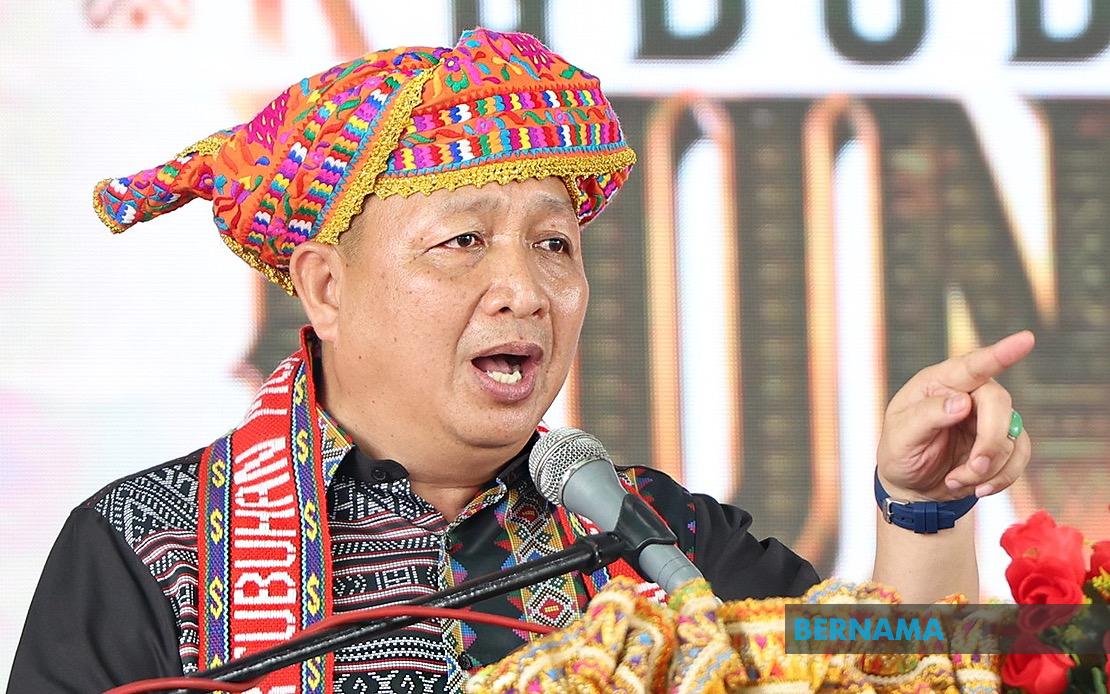
The Federal government has earmarked RM4.06 billion specifically for the Rural Water Supply (BALB) project in Sabah, a significant commitment aimed at addressing long-standing disparities in access to clean water across the state's interior and remote settlements. The funding announcement came during the Rungus Cultural Festival in Kudat, where Deputy Prime Minister Datuk Seri Dr Ahmad Zahid Hamidi unveiled the initiative, signalling renewed federal focus on rural infrastructure in Malaysia's easternmost state.
Kota Marudu Member of Parliament Datuk Wetrom Bahanda framed the allocation as concrete evidence of Kuala Lumpur's determination to prioritise basic rural amenities alongside broader development goals. Speaking at the festival event on August 8, Wetrom emphasised that the scale of investment reflected genuine recognition of rural communities' infrastructure needs, particularly in areas where potable water remains inaccessible or intermittently supplied. For Sabah's interior populations—including the Rungus and other indigenous groups—reliable water supply has long been a pressing concern affecting health, agriculture, and quality of life.
A notable departure from conventional practice underpins this initiative: the Rural and Regional Development Ministry (KKDW) has chosen to channel funds directly to the Sabah state government rather than managing implementation from federal headquarters in Putrajaya. Wetrom suggested this structural decision reflects pragmatic recognition that state-level authorities possess superior knowledge of local conditions and genuine water supply challenges facing individual communities. By devolving project oversight to Kota Kinabalu, the Federal government aims to expedite service delivery and ensure allocations target areas of genuine need rather than following standardised blueprints unsuited to Sabah's diverse geography.
The timing of this announcement carries political significance within Malaysia's federal structure. Increasing rural infrastructure investment in opposition-governed states demonstrates willingness to transcend partisan divisions in pursuit of national development goals. For Sabah specifically, improved water access could substantially advance human development indicators and reduce urban-rural migration pressures, allowing communities to remain rooted in their ancestral lands while enjoying modern amenities.
Beyond water supply alone, the Federal government has simultaneously accelerated funding for complementary rural infrastructure projects across Kota Marudu and surrounding districts. Road connectivity initiatives, long identified as critical development bottlenecks, are receiving sustained investment through multiple parallel projects. The Sonsogon-Megandai road and Mangin road construction represent early phases of a broader strategy to unlock interior areas' economic potential by facilitating trade, reducing transport costs, and enabling access to education and healthcare services.
Additional road upgrades including Jalan Rendemon, Jalan Teringai, Jalan Sembayan, and the route to Pampang Poring through Jalan Raritiden are advancing simultaneously, creating an interconnected network intended to transform mobility patterns across the district. Wetrom articulated a clear development philosophy: infrastructure investment forms the essential foundation upon which communities can transition beyond poverty and economic marginalisation. Kota Marudu and Kudat districts, among Malaysia's poorest by official metrics, have languished partly due to geographic isolation and inadequate transportation networks that impede commerce and service delivery.
The political acknowledgment that Matunggong merits elevation to full district status further signals commitment to administrative restructuring that recognises growing populations and development potential in previously peripheral areas. Such upgrades typically unlock enhanced budgetary allocations, staffing capacity, and institutional autonomy that accelerate service provision. For communities within Matunggong, achieving district status represents validation of their development aspirations and improved access to government resources.
Wetrom's presidency of the Malaysian Momogun Rungus Association (PMRM) positions him as an effective advocate for indigenous community interests within parliamentary structures. His articulation of federal development commitment carries credibility within constituencies he represents, potentially mobilising support for infrastructure projects requiring community participation or labour input. The timing of announcements during the Rungus Cultural Festival underscores symbolic recognition of indigenous heritage alongside material investment in community welfare.
For Malaysia's broader rural development trajectory, Sabah's water supply initiative demonstrates evolving policy approaches that emphasise devolved implementation and community-responsive project design. Rather than imposing standardised solutions, contemporary federal strategy increasingly acknowledges that peripheral regions' complexity demands locally-calibrated interventions. This philosophical shift, if consistently applied, could improve outcomes across Malaysia's less-developed zones.
The RM4.06 billion commitment's magnitude warrants scrutiny regarding implementation timelines and accountability mechanisms. Effective state government administration remains prerequisite for translating financial allocations into tangible water infrastructure reaching isolated settlements. Coordination between federal oversight bodies and Sabah's implementation apparatus will determine whether allocated funds efficiently construct treatment facilities, distribution networks, and storage infrastructure.
Regionally, Sabah's experience could influence water infrastructure approaches across Southeast Asia, where similar remote communities face comparable service access challenges. Malaysian experience with devolved rural infrastructure management may offer instructive lessons for neighbouring jurisdictions wrestling with equitable development distribution.

