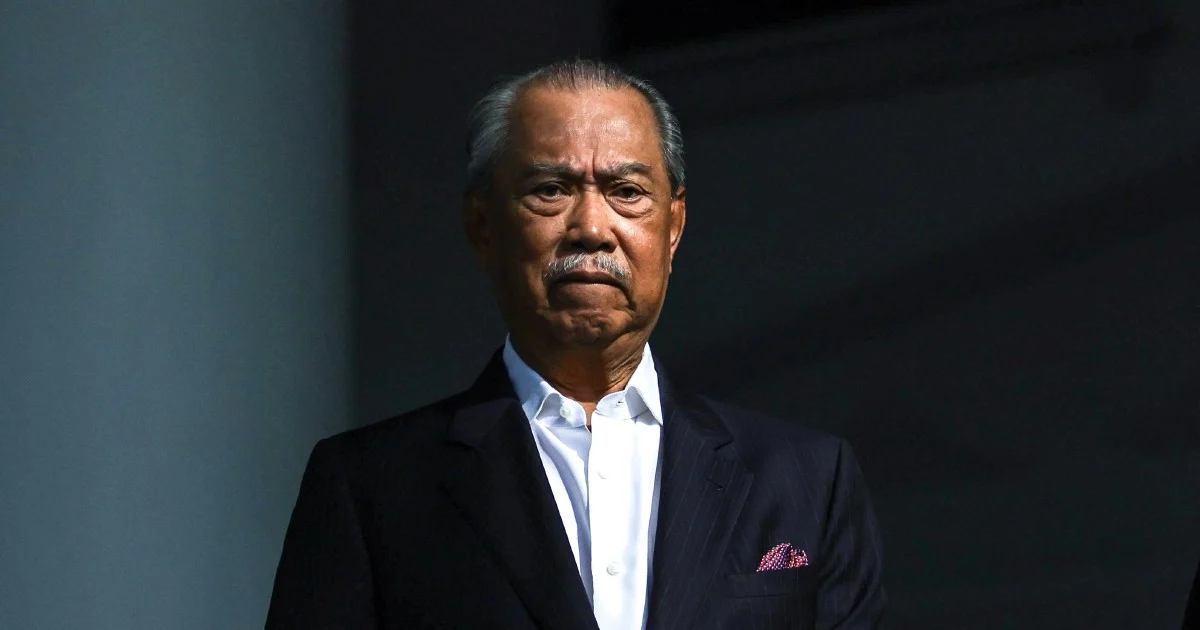
A court ruling has maintained the freeze on RM195 million held in Bersatu Rakyat Semesta accounts, deepening the financial crisis gripping the political party during a period marked by internal divisions and control disputes. The decision represents a significant setback for the party's operations and highlights the intersection of legal proceedings with Malaysia's increasingly fractious party politics.
The frozen funds constitute a substantial portion of Bersatu's liquid assets and operational capital. With access to this money restricted, the party faces mounting difficulties in managing day-to-day administrative functions, funding campaigns, and meeting financial obligations. The scale of the freeze underscores how contested leadership claims within the party have translated into concrete financial constraints that limit its ability to function effectively as a political organization.
Bersatu has experienced considerable turmoil in recent years, marked by power struggles between rival factions claiming legitimate authority over the party structure and its resources. These internal conflicts have repeatedly spilled into courtrooms, with competing leadership groups pursuing legal remedies to assert control. The frozen accounts represent collateral damage in these disputes—funds that technically belong to the party remain inaccessible while courts determine which group holds rightful authority over them.
The timing of this ruling carries implications for Bersatu's political positioning and electoral prospects. As a member of the ruling coalition, Bersatu's internal instability reverberates through Malaysia's broader political alignment. The party's weakened financial position may constrain its capacity to mobilize supporters, conduct grassroots campaigning, and maintain organizational presence across constituencies—disadvantages that could prove costly in future electoral contests.
Court proceedings surrounding the accounts have centred on competing claims regarding legitimate party leadership. Different factions have presented arguments about constitutional governance within Bersatu, proper procedures for leadership succession, and rightful authority over party assets. These legal battles reflect fundamental questions about party democracy and institutional safeguards, issues that extend beyond the immediate financial dispute to touch on broader governance principles within Malaysian political parties.
The RM195 million freeze also creates uncertainty for party members and affiliated organizations depending on Bersatu funding. Some party activities may be deferred or scaled back pending resolution of the leadership question. This financial paralysis potentially damages morale among the rank-and-file membership and may influence some party members' calculations about remaining affiliated with an organization facing such substantial operational constraints.
From a regional perspective, Bersatu's internal crisis offers instructive lessons about succession planning and institutional resilience in political parties across Southeast Asia. The inability to resolve leadership disputes through internal mechanisms has forced the party into protracted court battles, a path that consumes resources, invites public scrutiny, and creates uncertainty that undermines party effectiveness. Other regional parties watching Bersatu's experience may draw conclusions about the importance of establishing clear constitutional procedures for managing leadership transitions.
The court's decision to maintain the freeze suggests judicial skepticism about the legitimacy of one faction's claims over another, or alternatively, cautious recognition that determining rightful authority requires more extensive legal examination. By maintaining the freeze rather than releasing funds to either claimant, the court has chosen a path that protects the assets themselves while the underlying dispute continues. This approach prevents one faction from gaining unilateral financial advantage but perpetuates the constraints on Bersatu's operations.
Resolving this impasse ultimately requires either a decisive court ruling that unambiguously establishes legitimate party leadership, or alternatively, internal reconciliation and negotiated settlement among feuding factions. Internal settlement would be more constructive, as it would restore party unity and allow for resumption of normal operations without awaiting further judicial proceedings. However, given the depth of antagonism characterizing these disputes, voluntary resolution remains uncertain.
The frozen accounts episode reflects broader challenges facing Malaysian political parties regarding institutional strengthening and governance standards. The paralysis caused by contested leadership demonstrates how inadequate internal mechanisms for resolving disputes can cascade into serious operational problems. Parties that invest in clear constitutional procedures, transparent governance structures, and established pathways for leadership succession position themselves to weather internal disagreements without resorting to protracted legal warfare.
For Malaysian voters and the broader electorate, Bersatu's difficulties raise questions about party stability and organizational capacity. Political parties are fundamental institutions for democratic participation, policy development, and political representation. When major parties experience severe internal dysfunctions that require court intervention to manage, the implications extend beyond the parties themselves to affect the quality of democratic choice available to voters and the effectiveness of governance institutions dependent on stable party structures.
Moving forward, the sustainability of Bersatu's political relevance may depend less on court rulings about existing frozen assets and more on the party's capacity to resolve internal disputes and restore operational coherence. The RM195 million freeze serves as tangible reminder of the costs imposed by prolonged internal conflict, a sobering reality that might eventually concentrate minds around the necessity of negotiated settlement and institutional repair.

%22%2F%3E%3C%2Fpattern%3E%3C%2Fdefs%3E%3Crect%20width%3D%22100%25%22%20height%3D%22100%25%22%20fill%3D%22url(%23ph1354vg)%22%2F%3E%3Crect%20width%3D%22100%25%22%20height%3D%22100%25%22%20fill%3D%22url(%23ph1354vp)%22%2F%3E%3Ctext%20x%3D%2250%25%22%20y%3D%2250%25%22%20text-anchor%3D%22middle%22%20dominant-baseline%3D%22central%22%20fill%3D%22rgba(255%2C255%2C255%2C0.95)%22%20font-family%3D%22Georgia%2C%20'Times%20New%20Roman'%2C%20serif%22%20font-weight%3D%22700%22%20font-size%3D%22320%22%20letter-spacing%3D%22-0.02em%22%3EGRS%3C%2Ftext%3E%3C%2Fsvg%3E)