The MADANI government has committed substantial resources to expanding religious infrastructure, approving RM160.82 million towards 92 mosque construction projects nationwide between 2023 and June 2024. This represents a significant investment in meeting the spiritual and community needs of Malaysia's Muslim population, reflecting the administration's emphasis on enhancing religious facilities across both urban and rural areas.
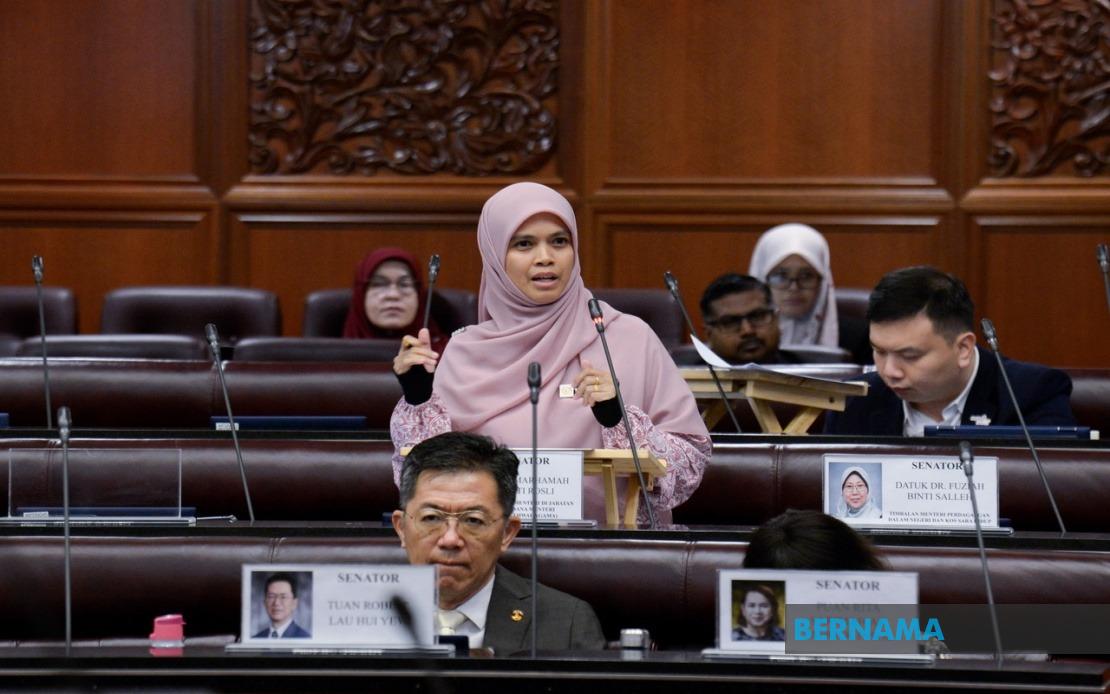
Deputy Minister in the Prime Minister's Department (Religious Affairs) Senator Marhamah Rosli disclosed these figures while addressing the Dewan Negara, revealing that 54 of the approved projects have already reached completion. An additional 16 facilities are actively under construction, demonstrating tangible progress in the rollout of these initiatives. The remaining 22 projects remain at earlier stages, either awaiting formal implementation or navigating the procurement process—a typical trajectory for large-scale infrastructure programmes involving multiple stakeholders and bureaucratic requirements.
The approval mechanism for new mosque construction reflects a thoughtfully calibrated approach that considers community demographics and existing infrastructure capacity. Recommendations flow through state religious authorities, who evaluate whether specific locations genuinely require additional facilities based on local Muslim population density, proximity to existing mosques, and their respective capacities. Site suitability, land tenure considerations, and the state government's willingness to co-finance projects all factor into the decision-making framework. This multi-criteria assessment helps ensure that allocations address genuine gaps rather than duplicating existing worship spaces.
A pivotal governance decision underpins this funding model. At the 139th Meeting of Menteri Besar and Chief Ministers convened on June 28, 2022, state and federal leaders agreed to share the financial burden of mosque development. This cost-sharing arrangement acknowledges that religious infrastructure serves community-wide needs transcending state boundaries, while recognizing that local authorities possess intimate knowledge of their constituents' requirements. The collaborative funding structure has evidently facilitated the substantial progress achieved during the MADANI tenure, enabling faster project delivery than would occur under unilateral federal or state funding mechanisms.
Senator Mohd Hasbie Muda prompted this parliamentary disclosure by questioning whether mosque construction during the MADANI era adequately addressed the growing Muslim population's needs. His inquiry touched upon a genuine policy challenge: Malaysia's expanding Muslim community, whether through natural population growth or migration patterns, creates sustained demand for worship facilities. Rural-to-urban migration particularly strains existing mosque capacity in metropolitan areas, necessitating strategic expansion programmes to maintain accessibility and functionality of these critical spaces.
Beyond their primary religious function, mosques increasingly serve as anchors for broader community welfare programmes. The Deputy Minister outlined a comprehensive ecosystem of social initiatives coordinated through mosque networks and their affiliated organisations. The Department of Islamic Development Malaysia (JAKIM), in collaboration with state Islamic religious departments and councils, orchestrates these efforts in partnership with non-governmental organisations and other community actors. This integrated approach transforms mosques from exclusively devotional spaces into multipurpose community hubs addressing multiple dimensions of social vulnerability.
These welfare initiatives demonstrate how Malaysia's mosque infrastructure can serve disadvantaged populations including the homeless, urban poor, and low-income families. Distribution of aid specifically targeted towards asnaf groups—a Quranic classification encompassing the poorest segments of society—represents a direct application of Islamic principles to contemporary social challenges. Community kitchen programmes and food basket distributions leverage the mosque's centralised position within neighbourhoods to facilitate rapid food assistance delivery during crises or sustained hardship. Such initiatives prove particularly valuable in urban areas where traditional extended family support networks have fragmented.
Educational and counselling components address the psychological and developmental dimensions of poverty. By providing emergency financial assistance tied to educational pursuits, these programmes interrupt intergenerational poverty cycles and enable talented individuals from disadvantaged backgrounds to access advancement opportunities. Counselling services, whether addressing mental health challenges, family disputes, or personal crises, tackle root causes of homelessness and destitution that purely material assistance cannot resolve. The mosque serves as a trusted, culturally appropriate venue where vulnerable individuals feel comfortable seeking such support.
Funeral management services administered through mosque networks represent a particularly significant contribution to low-income families. In Malaysia, death-related expenses can impose severe financial burdens on grieving families already struggling economically. By providing funeral management assistance, mosque-based programmes ensure that loss of a family member does not precipitate complete financial collapse. Temporary shelter facilities similarly address immediate housing needs during crises, whether resulting from fire, eviction, or domestic violence. These time-limited interventions often prove crucial in stabilising situations that might otherwise deteriorate irreversibly.
The RM160.82 million investment therefore extends beyond religious infrastructure into comprehensive social safety-net provision. This holistic approach reflects theological principles emphasising community responsibility for vulnerable members while addressing pragmatic governance realities. Malaysia's expanding Muslim population creates demographic pressures that justify mosque expansion on purely devotional grounds, yet the contemporary application of mosque resources to social welfare demonstrates how religious institutions can address the plural needs of diverse communities. The progress achieved—with 54 completed projects and 16 under construction—indicates that this integrated strategy is gaining operational traction across multiple states.

