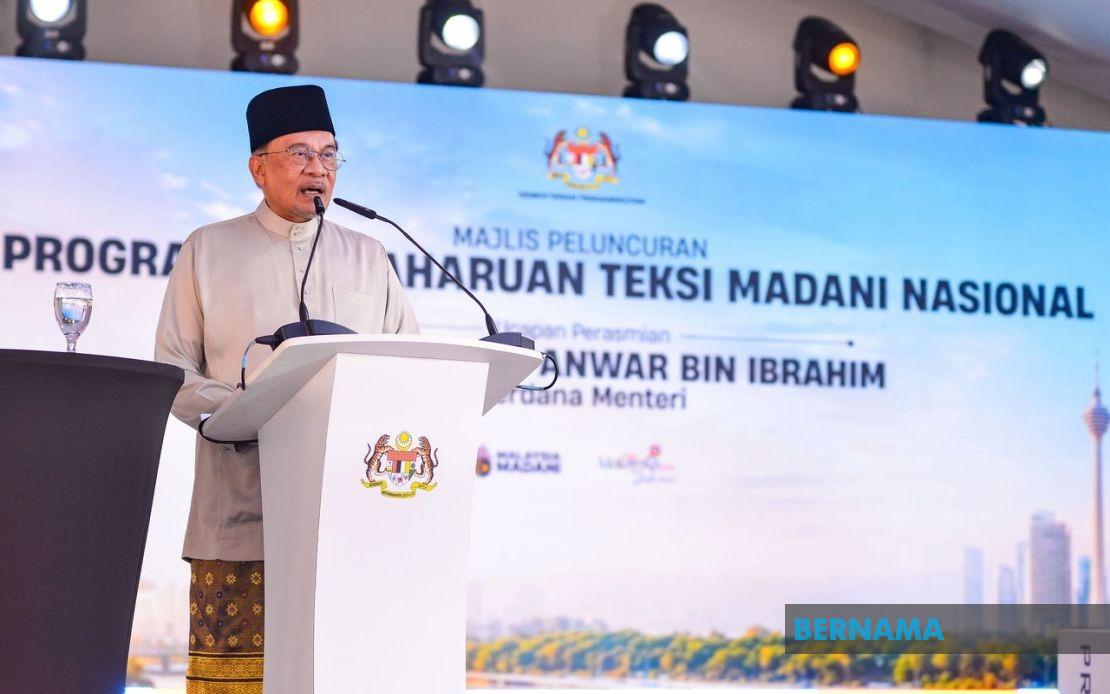
Prime Minister Datuk Seri Anwar Ibrahim unveiled an extra RM10 million allocation for the Vehicle Replacement Matching Grant Programme during the launch of the National MADANI Taxi Reform Programme at Dataran Merdeka, signalling the government's commitment to revitalising the country's taxi sector. The fresh injection comes on the heels of the initial RM10 million committed in Budget 2026, effectively doubling the available funding pool for drivers seeking to replace aging vehicles with more modern, reliable transportation.
The decision to enhance the scheme stems from unexpectedly robust uptake of the original allocation, demonstrating that taxi operators have been eagerly awaiting structured support to modernise their fleets. Anwar, who serves concurrently as Finance Minister, emphasised that the immediate disbursement reflects the government's recognition of the taxi industry's pivotal role in Malaysia's transport ecosystem and urban mobility. The announcement underscores a strategic pivot toward supporting traditional transport sectors even as the broader economy navigates digitalisation pressures.
Central to the revitalised reform initiative is a groundbreaking partnership between the government, Proton, and the Transport Ministry to create a bespoke financing mechanism for taxi drivers purchasing the Proton S70. This collaboration represents a deliberate effort to stimulate domestic vehicle manufacturing while simultaneously modernising the taxi fleet with locally-produced sedans. The S70, Proton's core mid-range offering, presents an economically accessible platform for drivers transitioning from older vehicles, potentially improving service quality and passenger safety across Malaysia's taxi networks.
The timing of this initiative carries significance for Malaysia's transportation sector, which has faced mounting competition from ride-hailing platforms and emerging mobility solutions. By facilitating fleet modernisation through subsidised grants and tailored financing, the government hopes to enhance the competitive positioning of traditional taxis while maintaining affordable public transport options. For taxi drivers, particularly owner-operators struggling with mounting maintenance costs on aging vehicles, the matching grant programme offers a tangible pathway toward vehicle ownership without prohibitive upfront capital burdens.
The launch event drew attendance from Transport Minister Anthony Loke, whose portfolio directly oversees the sector's regulatory framework, and Hannah Yeoh, Minister in the Prime Minister's Department handling Federal Territories transport affairs. The presence of Chief Secretary to the Government Tan Sri Shamsul Azri Abu Bakar underscored the initiative's cross-ministry coordination and significance within the broader national development agenda. This alignment suggests the government views taxi modernisation as integral to its wider MADANI framework, which emphasises inclusive economic participation and improvement of livelihoods for traditional economic sectors.
From an industry perspective, the additional funding could catalyse substantial renewal of Malaysia's taxi fleet, potentially affecting tens of thousands of drivers nationwide. Drivers operating vehicles exceeding ten years old stand to benefit most substantially, as replacement incentives reduce the financial burden of transitioning to contemporary models. The Proton partnership simultaneously creates manufacturing demand, supporting the automotive sector's production capacity and employment levels, particularly as global supply chains stabilise post-pandemic disruption.
The government's approach reflects a conscious policy choice to balance modernisation imperatives with social protection for established transport workers. Rather than pursuing aggressive deregulation or permitting unrestricted competition from unregulated platforms, the intervention maintains formal taxi sector structures while enhancing their economic viability. This contrasts with certain other regional approaches that have seen traditional taxi industries diminished by digital disruption and regulatory arbitrage favoring ride-sharing platforms.
The dedicated Proton financing scheme represents innovative collaboration between public and private sectors, potentially serving as a template for future support mechanisms targeting other traditional industries. By negotiating preferential financing terms with Malaysia's national carmaker, the government leverages purchasing power to secure better accessibility for individual drivers. Such arrangements could be extended to other vehicle categories or sectors requiring capital-intensive modernisation.
For consumers, fleet modernisation promises tangible benefits including improved vehicle reliability, enhanced safety standards through newer models with contemporary safety systems, and potentially better air quality outcomes as older, less efficient engines are retired. Modern vehicles incorporate better emissions control technologies, contributing to environmental objectives while improving the driving experience for passengers using Malaysia's taxi services. The initiative thus creates positive externalities extending beyond direct beneficiaries to the broader public.
The government's willingness to deploy additional resources within months of the initial budget allocation indicates responsive policymaking and acknowledgement that initial estimates of demand proved conservative. This flexibility suggests openness to further enhancement if uptake continues exceeding expectations, potentially creating momentum for sustained support beyond the current financial year. Success of this programme could influence future budget decisions regarding other traditional sectors seeking modernisation support or facing disruption from technological change.

