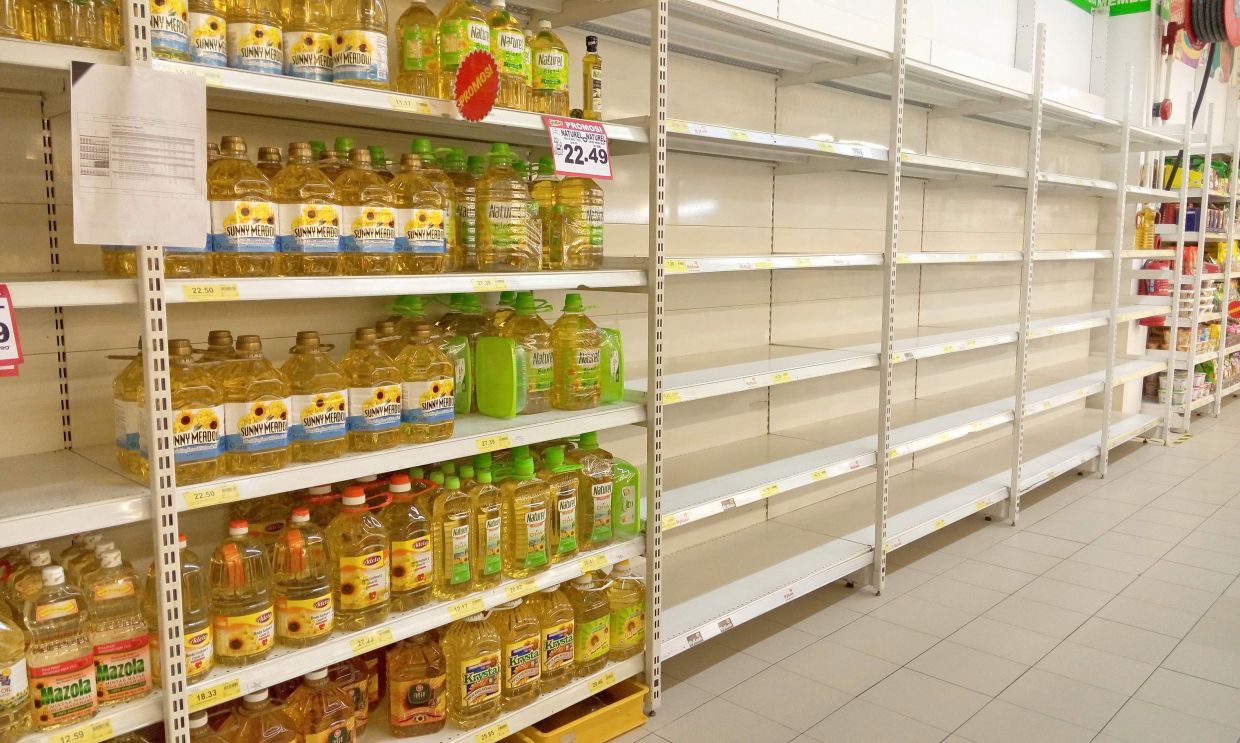
A damning investigation by the Public Accounts Committee has unveiled that RM10.879 billion earmarked for cooking oil subsidies never reached their intended recipients over a six-year period spanning 2019 through February 2025. The revelation strikes at the heart of Malaysia's subsidy management framework and raises uncomfortable questions about who bears responsibility for allowing such an enormous sum to leak from a programme ostensibly designed to ease the burden on ordinary households.
The scale of this leakage demands immediate scrutiny. When RM10.879 billion vanishes from a targeted subsidy scheme, it represents not merely a budgetary mismanagement but a fundamental failure of the system designed to protect vulnerable Malaysians from food price volatility. The cooking oil subsidy programme, presented to the public as a carefully calibrated intervention to support those who need it most, has instead become a cautionary tale of how government assistance can be diverted, lost or simply rendered ineffective despite the best intentions.
This incident exposes significant cracks in three critical areas of governance: the mechanisms through which subsidies are delivered, the government's capacity to monitor market conditions in real time, and the enforcement machinery tasked with ensuring compliance. Each represents a potential point of failure where the subsidy could have been intercepted, misdirected or simply absorbed through inefficiency rather than reaching cooking pots and kitchen tables across the nation.
The timing of this revelation is particularly troubling given the government's repeated commitments to subsidy rationalisation. Officials have consistently argued that moving away from blanket subsidies toward targeted support represents progress—a smarter, more efficient use of public resources that directs assistance precisely where it is needed rather than benefiting those who can afford market prices. The PAC's findings directly contradict this narrative, suggesting that even supposedly refined targeting mechanisms have failed comprehensively.
For Malaysian households already grappling with cost-of-living pressures, the implications are stark. Cooking oil remains an essential commodity with few substitutes in Malaysian kitchens. A family's monthly food budget depends partly on the assumption that subsidised prices will remain within reach. When RM10.879 billion intended for such assistance evaporates, it potentially translates into higher prices at wet markets and supermarkets, offsetting the intended relief and deepening the squeeze on household finances.
The accountability question becomes increasingly urgent as the Committee's work progresses. Were the subsidies lost to administrative breakdown, systematic smuggling to neighbouring countries where unsubsidised prices command higher returns, hoarding by distributors, or some combination thereof? Each scenario carries different implications for policy reform and ministerial responsibility. Without clarity on where the money went, effective corrective action remains impossible.
This situation reflects broader challenges facing Southeast Asian governments attempting to balance fiscal sustainability with social protection. Neighbouring countries including Indonesia have grappled with similar subsidy leakage problems, where the gap between intended recipients and actual beneficiaries has created both budgetary crises and public frustration. Malaysia's experience offers a cautionary example of how quickly well-intentioned programmes can deteriorate without robust oversight infrastructure.
The regional dimension also matters. Uncontrolled cooking oil subsidy leakage can distort markets across Southeast Asia, as subsidised Malaysian oil becomes attractive for export or cross-border arbitrage. This creates perverse incentives for smuggling and informal trade networks that undermine legitimate commerce and cheat the Malaysian exchequer of intended domestic benefit.
Moving forward, the PAC's investigation must identify not just where the money went but establish clear lines of accountability among relevant ministries, agencies and officials. Whether responsibility lies with the Ministry of Domestic Trade and Cost of Living, regulatory bodies, or implementing agencies, someone must answer for this loss. Without consequences, future subsidy programmes will inevitably repeat these failures.
The path to reform requires simultaneously strengthening market monitoring capacity—using real-time data systems to track subsidy flow from distributor to retailer—and enhancing enforcement against diversion and smuggling. Technology solutions including digital payment systems for subsidised purchases have shown promise in other countries and deserve serious consideration for Malaysian implementation.
This controversy also underscores why subsidy rationalisation, properly executed, could indeed improve outcomes. Rather than simply scaling back programmes, the government must invest in the administrative architecture necessary to make targeted subsidies actually work. The RM10.879 billion that disappeared could have funded significant improvements in tracking, verification and enforcement systems that would pay dividends across all subsidy programmes.
Ultimately, cooking oil subsidies represent a social contract between government and citizens. When billions allocated for this purpose fail to deliver, that contract is breached. Restoring public confidence requires not merely administrative fixes but transparent accountability and genuine commitment to protecting those who depend on these subsidies to maintain their living standards.

