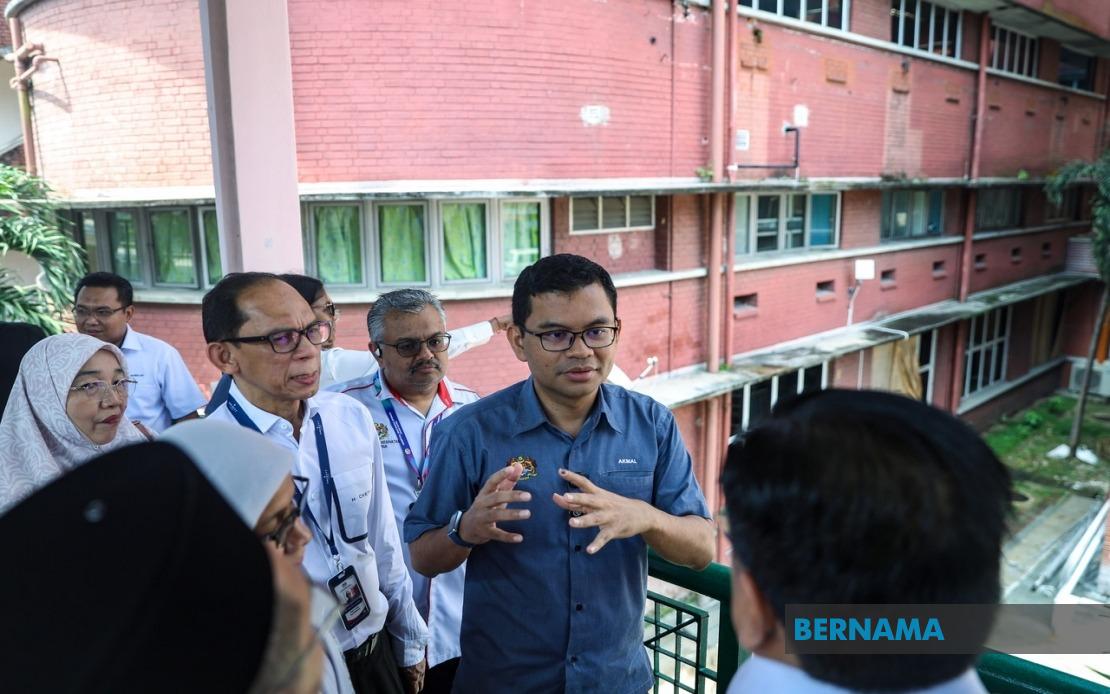
Seven significant infrastructure and improvement initiatives costing RM1.139 billion are currently transforming Sultanah Aminah Hospital (HSA) in Johor Bahru, representing a major commitment to expanding the region's healthcare infrastructure. The comprehensive modernisation programme encompasses upgrades to critical systems, construction of new specialist facilities, and enhanced support services designed to substantially lift the hospital's operational capacity and service quality for residents across Johor and surrounding areas.
Economy Minister Akmal Nasrullah Mohd Nasir disclosed the project portfolio during a working visit to Johor on August 7, underlining the government's determination to strengthen medical facilities in the state. Among the immediate initiatives is a major electrical and mechanical systems upgrade valued at RM159 million, which has already achieved 76.49 per cent physical completion. This foundational work addresses the hospital's core infrastructure requirements, ensuring that ageing systems are replaced with modern, efficient alternatives capable of supporting the expanded operations anticipated once other projects reach completion.
The most substantial component involves construction of an Ambulatory Care Centre (ACC) paired with a multi-storey parking facility, combined with the phased development of a specialist clinic complex. These interconnected projects carry a collective value of RM877.54 million and represent the strategic centrepiece of HSA's transformation. The Ambulatory Care Centre will serve as a dedicated hub for outpatient treatments and diagnostic services, reducing congestion in the main hospital buildings whilst the modern parking structure will ease chronic congestion affecting both staff and patients seeking care at one of Johor's principal medical institutions.
A critical feature of the specialist clinic expansion is its two-phase implementation approach, allowing the hospital to progressively increase service offerings without overwhelming existing administrative and logistical systems. Akmal Nasrullah indicated that contractors for these major construction elements are expected to receive formal appointment through Letter of Acceptance in February of the following year, suggesting project commencement in the first half of the calendar year. The staggered timeline reflects careful planning to minimise operational disruptions—a genuine concern given HSA's role as a tertiary referral centre serving a substantial population across Johor and neighbouring regions.
Operating theatre capacity constitutes another significant enhancement within the overall programme. The hospital will add three new operating rooms, expanding its total surgical capacity from the current twelve to fifteen theatres. This expansion addresses a persistent bottleneck in Malaysian public healthcare, where surgical wait lists remain a chronic challenge affecting both emergency cases and planned procedures. For Johor residents, the addition of forty per cent more surgical capacity promises measurable improvements in treatment timelines and reduced delays for time-sensitive interventions.
The broader development context in Johor reflects sustained governmental investment in state infrastructure. Akmal Nasrullah reported that since 2000 through the current year, a total of 613 development programmes and projects collectively valued at RM56.12 billion have been initiated across Johor. This portfolio comprises 154 entirely new ventures alongside 459 extension or expansion initiatives, indicating a deliberate strategy of both establishing new facilities and progressively enhancing existing infrastructure to match population growth and evolving service demands.
Fiscal allocation and disbursement patterns demonstrate active resource commitment to these initiatives. The minister disclosed that as of late July, expenditure had reached RM2.5 billion out of an annual RM4.95 billion allocation designated for 2024, representing 50.51 per cent budget utilisation at a point roughly two-thirds through the financial year. This spending trajectory indicates that implementation momentum remains strong despite Malaysia's complex project management environment, where contractors' capacity, material supply chains, and regulatory approvals frequently introduce delays.
For Malaysian healthcare observers, the HSA project carries implications extending beyond Johor's borders. The transformation of a major public hospital demonstrates the government's willingness to commit substantial capital to tertiary healthcare infrastructure in non-federal territories, signalling that similar investments might be contemplated for other state-level medical centres. The project's emphasis on specialist services and ambulatory care aligns with global healthcare trends emphasising outpatient management and the reduction of unnecessary hospital admissions, approaches that Malaysian policymakers have increasingly embraced.
Coordination challenges inherent in managing simultaneous construction projects whilst maintaining full hospital operations represent a central concern acknowledged by Akmal Nasrullah. Hospitals cannot simply close during renovations, meaning contractor scheduling, phasing of work components, and careful traffic management within clinical spaces require sophisticated project governance. The minister's explicit reference to minimising service disruption suggests awareness of past instances where construction activities have compromised patient care or staff working conditions—lessons that presumably inform current planning.
The competitive environment for specialist healthcare across Southeast Asia also contextualises this investment. Regional medical tourism and the migration of affluent patients to Singapore or other centres with perceived superior facilities creates incentives for Malaysian public hospitals to upgrade, modernising patient environments and expanding service breadth. Enhanced operating theatre capacity and new specialist clinics at HSA position the institution to retain and attract patients who might otherwise seek treatment elsewhere, supporting the broader Malaysian healthcare ecosystem and local economic activity.
Implementation timelines extending into subsequent years mean that HSA's transformation will unfold over an extended period, likely continuing beyond 2026. This gradualism permits phased learning and adjustment—contractors and hospital administrators can identify operational challenges from early phases and adapt approaches in later stages. Conversely, extended construction timelines increase exposure to cost escalation from material price inflation and potential labour market tightening, variables that Malaysian project managers have grappled with in recent years as supply chain globalisation introduced new cost volatility.
For residents and patients across Johor, the RM1.139 billion investment represents a tangible commitment to healthcare accessibility and quality improvement. Beyond new buildings and equipment, the expanded capacity should translate into shorter wait times for outpatient consultations, reduced surgical delays, and improved working conditions for medical staff—outcomes that Malaysian healthcare advocates have consistently advocated. Success in delivering these benefits whilst maintaining existing service levels throughout construction will establish a replicable model for other major hospital transformations across the country.

