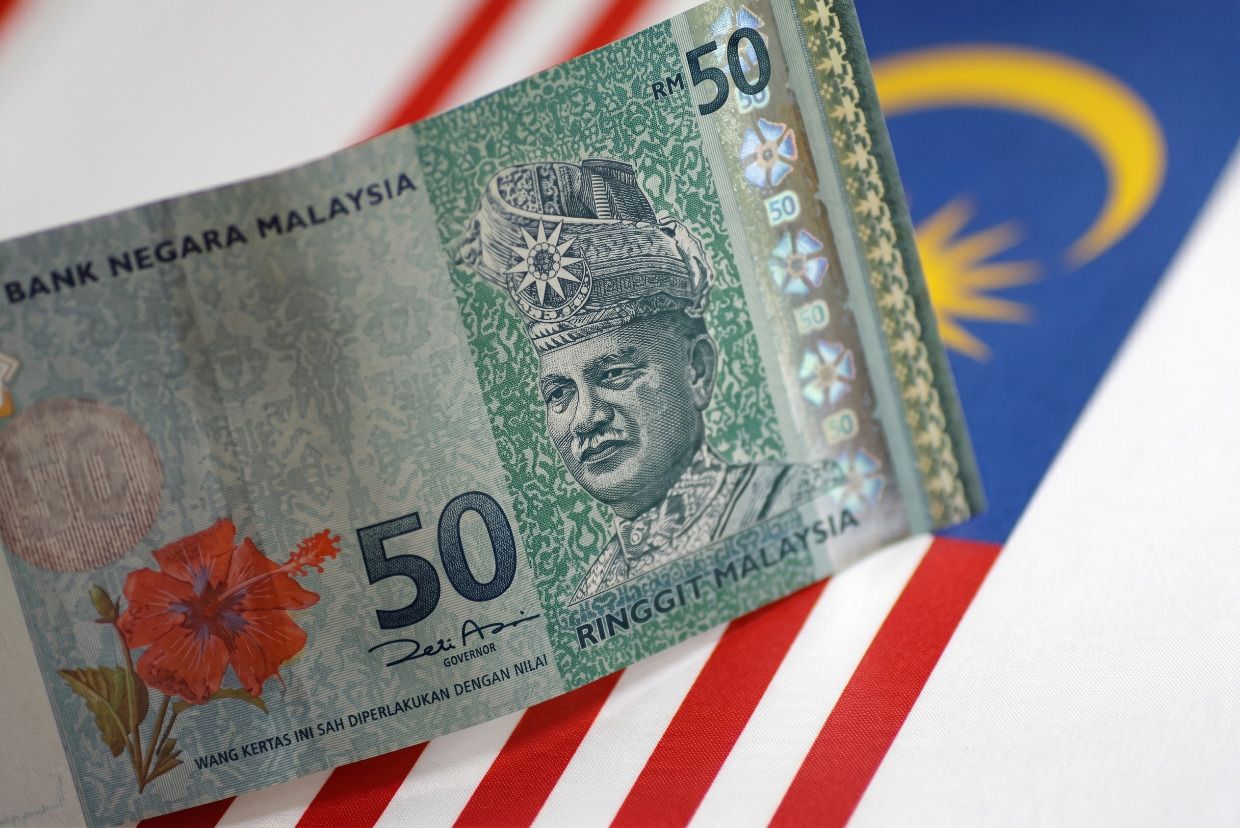
After stumbling through the first half of 2024 as Asia's weakest performing currency, the Malaysian ringgit stands on the cusp of a significant turnaround, underpinned by targeted policy interventions and a fundamentally robust economic backdrop. Bank Negara Malaysia's intensified efforts to encourage companies to repatriate and convert overseas earnings, coupled with sustained capital inflows into Malaysian assets, have created conditions that major financial institutions believe could see the currency rally to levels not witnessed in nearly a decade. Market watchers are increasingly confident that the ringgit's weakness was a temporary aberration rather than a reflection of underlying economic fragility.
Royal Bank of Canada projects the ringgit will trade at 3.95 per dollar by year-end, a position reflecting the central bank's proactive stance on managing foreign-exchange flows. This forecast is underpinned by the assumption that BNM's campaign to incentivise the repatriation and conversion of companies' offshore earnings will gain momentum, capturing a portion of the significant foreign-currency deposits that Malaysian businesses have accumulated. The mechanism is straightforward yet powerful: companies sitting on foreign-exchange reserves represent a latent source of demand for ringgit, and once activated through regulatory encouragement and favourable conversion terms, these funds can meaningfully shift the currency's supply-demand equation. The central bank's ability to lever this corporate cash pool represents one of the more tangible policy tools available to support the currency without resorting to interest-rate hikes.
Australia & New Zealand Banking Group's analysts take an even more optimistic view, projecting strength to 3.80 per dollar—a level that would represent the ringgit's best performance against the dollar since 2015. This target reflects confidence in the sustainability of recent gains and the expectation that capital inflows will remain robust throughout the second half of the year. Such a move would represent a meaningful recovery from the 4.07 levels that prevailed as June concluded, signalling a reversal of the currency's downward trajectory that had accumulated force throughout the opening months of 2024. The variance in forecasts between the two institutions underscores genuine debate about the pace of recovery, though both point in the same directional arrow.
The ringgit's recent performance has already begun to vindicate these bullish assessments. Since BNM announced its capital-flow enhancement measures on June 24, the currency has outperformed every other Asian peer, a remarkable turnaround considering it had been dragged lower by broader Asian depreciation earlier in the year. This shift reflects a fundamental re-rating of Malaysian assets among international investors, who had previously been concerned about capital flight and currency weakness. The restoration of confidence represents not merely a technical bounce but a genuine recalibration of how market participants view Malaysia's economic prospects and policy framework.
Malaysia's trade position has emerged as the principal pillar supporting this optimism. The nation's merchandise exports surged 45 percent year-on-year during May, while the trade surplus reached a record monthly peak of 40 billion ringgit—equivalent to approximately USD 9.8 billion—thereby showcasing an economy firing on multiple cylinders. This outsized surplus is not merely a statistical aberration; it reflects genuine structural advantages that Malaysia has cultivated in high-demand sectors. The artificial intelligence revolution has positioned Malaysia as a crucial node in the global data-centre infrastructure build-out, while the nation's electrical and electronic manufacturing sector continues to benefit from robust global appetite and supply-chain diversification away from China.
The regional dynamics underpinning Malaysia's export strength carry profound implications for the ringgit's medium-term trajectory. As multinational corporations continue relocating capacity and establishing new facilities across Southeast Asia to hedge against geopolitical tensions and Chinese competition, Malaysia's combination of political stability, established industrial clusters, and strategic geographic location makes it a natural beneficiary. The export surge is therefore unlikely to represent merely a cyclical upturn but rather reflects longer-term structural reorientations in global manufacturing that should underpin sustained trade surpluses. Each month of surplus accumulation creates additional foreign-exchange reserves that, if encouraged to convert to ringgit through BNM's initiatives, can provide ongoing support to the currency.
Foreign institutional investor appetite for Malaysian financial assets has provided crucial ballast during the recovery phase. Global funds purchased approximately USD 2.1 billion of local bonds through June 29 alone, positioning the bond market to record its largest monthly inflow since May 2025 based on current trajectories. This renewed interest from international portfolio managers reflects a fundamental reassessment of risk-reward dynamics in Malaysian assets. Investors who had previously taken defensive positions are now re-engaging with Malaysian fixed-income securities, attracted by yield levels that now adequately compensate for perceived risks and increasingly confident about currency stability. The bond inflows matter not merely for their direct capital contribution but as a visible signal of restored international confidence in Malaysian macro management.
BNM's broader policy framework demonstrates an institution learning from recent episodes of currency stress and implementing lessons from 2024, when the ringgit had collapsed to levels unseen since the 1998 Asian financial crisis before recovering to become Asia's strongest performer that year. The central bank's experience navigating that volatility has clearly informed its current approach, emphasizing preventative measures and proactive management rather than reactive crisis responses. By encouraging foreign-exchange conversion before acute pressure develops, BNM aims to smooth currency dynamics and avoid the sharp swings that had previously undermined business confidence and created self-fulfilling depreciation dynamics. This represents a more sophisticated approach to exchange-rate management than purely defensive interventions.
Yet the path forward contains genuine obstacles that temper unbridled optimism about the ringgit's trajectory. The Federal Reserve's hawkish policy stance, as officials signal the possibility of interest-rate cuts later than previously anticipated, creates headwinds for emerging-market currencies generally by maintaining yield differentials favourable to dollar assets. When American interest rates remain elevated, the opportunity cost of holding Malaysian assets increases, potentially dampening foreign demand regardless of local economic fundamentals. Additionally, the domestic political calendar introduces an element of uncertainty that international investors monitor closely. Upcoming state elections represent an early test of support for Prime Minister Anwar Ibrahim and his ruling coalition before the general elections scheduled for later in the electoral cycle, and any erosion of political confidence could trigger defensive positioning among risk-conscious portfolio managers.
Foreign-currency deposits accumulated by Malaysian businesses during the March-May period represent a crucial variable in the unfolding recovery narrative. According to ANZ's analysis, these accumulations have reached significant levels, creating a pool of potential ringgit demand once BNM's incentive measures take full effect. Kausani Basak, the bank's foreign-exchange analyst, emphasises that the conversion of these corporate deposits represents a crucial transmission mechanism linking Malaysia's underlying trade surpluses to actual currency strength. Without this conversion channel operating efficiently, even substantial export surpluses might fail to translate into sustained currency appreciation. The effectiveness of BNM's measures will therefore become apparent through monitoring whether corporate foreign-exchange holdings are indeed flowing toward ringgit conversion rather than remaining parked in offshore accounts.
Foreign direct investment inflows represent a second critical source of potential support for the currency. Malaysia's attractiveness as a destination for greenfield investment and business expansion, particularly in artificial-intelligence-adjacent sectors and advanced manufacturing, should continue channelling fresh foreign capital into the economy. Unlike portfolio flows, which can reverse suddenly if investor sentiment shifts, FDI represents a stickier source of foreign-exchange inflows that tends to remain resilient through periods of moderate volatility. The combination of robust exports generating trade surpluses, foreign bond purchases adding portfolio inflows, and FDI providing structural capital formation creates a multi-layered support system for the ringgit that extends beyond any single factor.
The consensus among major financial institutions pointing toward ringgit strength to 3.80-3.95 levels by year-end reflects more than mere optimistic sentiment; it represents a considered assessment that Malaysia's economic fundamentals have improved sufficiently to overcome the currency's previous vulnerability. BNM's proactive policy framework, the nation's structural advantages in high-demand sectors, and the restoration of international investor confidence collectively suggest that the ringgit's recent rebound represents the beginning of a sustained recovery rather than merely a technical bounce. Malaysian businesses and policymakers can take confidence from this reorientation of international market sentiment, though vigilance regarding both external risks and domestic political developments remains warranted.

