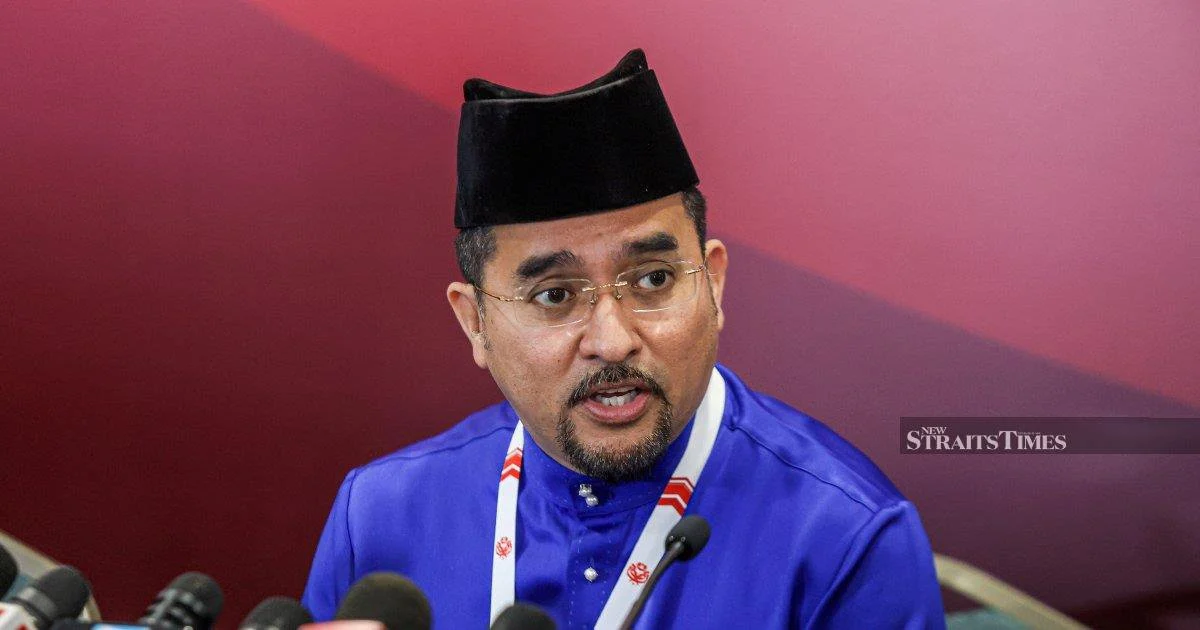
The Barisan Nasional coalition's postponement in revealing its slate of candidates for the Johor state election stemmed from an exceptionally thorough screening mechanism, Umno secretary-general Datuk Dr Asyraf Wajdi Dusuki has explained. The extensive vetting process, rather than internal disagreements or logistical complications, was identified as the principal factor responsible for the delay in making public the names of candidates who would contest in the upcoming state polls.
The Umno leadership's decision to implement rigorous evaluation standards underscores the coalition's apparent determination to field only those nominees who satisfy stringent criteria before advancing them for public endorsement. Such comprehensive scrutiny of potential candidates has become increasingly important for BN as the coalition seeks to restore public confidence following electoral setbacks in recent years. By carefully assessing each prospective contender's background, qualifications, track record, and suitability for office, the coalition aims to present a credible roster to Malaysian voters.
For Malaysian political observers, the explanation carries particular significance given the ongoing concerns about political integrity and the calibre of elected representatives. The vetting process likely encompasses multiple dimensions: evaluation of candidates' professional backgrounds, assessment of their standing within their respective communities, investigation of any legal or financial irregularities, and scrutiny of their commitment to party principles and governance standards. Such layered assessment helps protect the coalition from fielding candidates whose liabilities might subsequently damage the party's electoral prospects or parliamentary performance.
The delay in candidate announcements inevitably creates uncertainty within the political ecosystem. Party machinery members, grassroots supporters, and aspirants themselves remain in suspense until official names are released. However, this apparent inconvenience can be justified if the resulting candidate pool demonstrates markedly higher quality and credibility than predecessors. Voters increasingly demand that their political representatives meet higher standards of integrity and competence, making pre-election vetting not merely an administrative requirement but a democratic necessity.
Johor, as the nation's second-largest state by population and a traditional BN stronghold, demands particularly careful candidate selection. The state has historically served as a crucial component of BN's parliamentary mathematics, and any erosion of support there directly threatens the coalition's federal position. Rigorous vetting in Johor thus carries implications extending well beyond state-level politics, affecting the broader balance of power in Kuala Lumpur. Candidates fielded in Johor must therefore represent not only their local constituencies but also the coalition's commitment to accountable governance.
The emphasis on vetting also reflects changing dynamics within Umno itself, where competition for candidacies has become increasingly intense. Multiple aspirants for desirable seats necessitate objective evaluation mechanisms to prevent accusations of favouritism or nepotism. When leadership can credibly attribute delays to systematic assessment rather than backroom bargaining, it enhances rather than diminishes institutional legitimacy. This distinction between rigorous process and backroom politics carries weight with both party members and the broader electorate.
The broader context of Malaysian politics suggests that voter expectations regarding candidate quality have shifted markedly from two decades ago. Successive elections have witnessed stronger performance by parties emphasising clean governance and meritocratic selection. The Pakatan Harapan experiment, despite its eventual collapse, fundamentally altered public discourse around political standards. Barisan Nasional's renewed emphasis on vetting processes therefore represents an implicit acknowledgement that the coalition must compete on grounds of demonstrated integrity and competence, not merely traditional patronage networks.
From a Southeast Asian perspective, Malaysia's political evolution continues to reflect broader regional trends toward greater accountability and professionalism in party politics. Neighbouring democracies have similarly witnessed voter demands for elevated standards in candidate selection. However, the challenge for BN lies not merely in implementing rigorous vetting but in ensuring that such processes remain transparent and credible to external observers. Closed-door assessments, regardless of their actual rigour, risk appearing exclusionary to potential supporters.
The timing of Johor elections remains fluid, with the state government having discretion over the precise date within a permissible window. This flexibility means that the vetting process cannot extend indefinitely; BN must eventually conclude its assessments and announce candidates while still allowing adequate campaigning time before polling day. The balance between thoroughness and timeliness thus represents a genuine challenge for the coalition's leadership, requiring careful management of expectations while maintaining momentum.
AsEconomic and political uncertainty persists in Malaysia, with international investors watching both federal and state governance, the quality of elected representatives takes on heightened importance. Poor-performing state governments or those plagued by scandal risk deterring investment and constraining development opportunities. Johor, which has pursued aggressive economic development strategies, cannot afford governance deficits. By emphasising rigorous candidate vetting, BN implicitly positions itself as the coalition most committed to sustainable state administration and investor confidence.
Moving forward, the credibility of Barisan Nasional's vetting process will ultimately be judged by the calibre of candidates announced and their subsequent performance if elected. Should the delayed announcement indeed produce a slate of demonstrably capable representatives, the coalition can credibly claim that the delay served the public interest. Conversely, if candidates subsequently face scandals or perform poorly, the justification rings hollow. The stakes for BN's credibility in Johor thus rest substantially on delivering tangible evidence that rigorous vetting translates into superior governance.