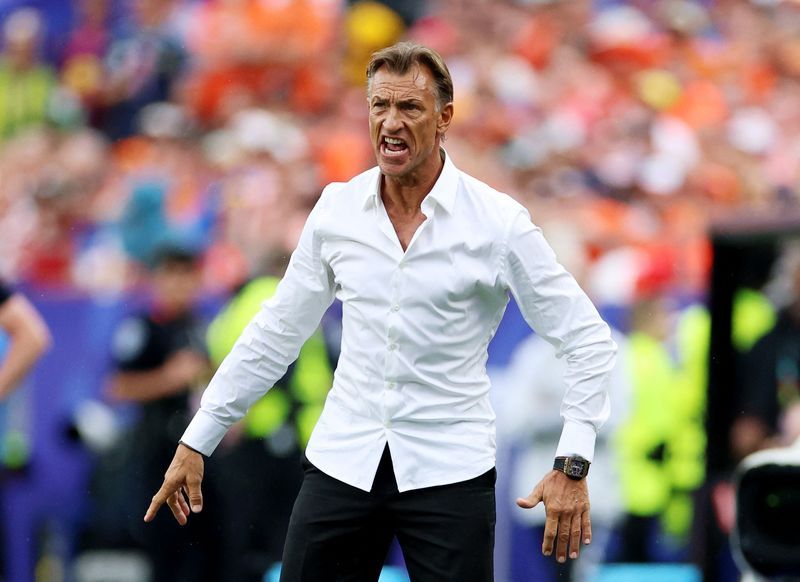
Hervé Renard has confirmed his departure as Tunisia's head coach, ending a brief and ultimately unsuccessful spell in charge following the team's elimination from the World Cup at the group stage. The 57-year-old Frenchman announced his resignation on Saturday through Instagram, expressing gratitude to the Tunisian Football Federation for the opportunity to lead the North African nation at the tournament while acknowledging that his tenure had simply run its course.
Renard's arrival had been meant to inject fresh energy into Tunisia's campaign after the team's impressive qualifying run, during which they accumulated an impressive defensive record. However, his appointment proved unable to reverse the nation's fortunes once tournament football began, and Tunisia exited without recording a single victory across their three group matches. The coaching change, implemented in desperation after an opening debacle, failed to provide the tactical corrections needed to stabilise a defence that rapidly fell apart under tournament pressure.
Tunisia's collapse was particularly stark given the optimism surrounding their qualification. The team had completed their qualifying campaign without conceding a goal, suggesting they possessed the defensive solidity required to compete at international level. This clean sheet record made their subsequent defensive implosion even more alarming and raised serious questions about their ability to transition from qualifying football to the demands of World Cup competition against elite opponents.
The scale of Tunisia's defensive breakdown reached historic proportions. Across their three group matches, they conceded 12 goals—an unwanted record for any nation in World Cup history. This shattered the previous benchmark set by Costa Rica, who had conceded 11 goals during their group-stage exit at the 2022 World Cup in Qatar. The statistic underscores not merely a disappointing campaign, but a comprehensive collapse in a fundamental aspect of the game.
The decline accelerated dramatically from Tunisia's opening match. A devastating 5-1 defeat by Sweden immediately exposed fundamental defensive vulnerabilities that previous coaching staff had managed to mask or mitigate. This heavy loss triggered immediate decision-making at the federation level, resulting in Sabri Lamouchi's removal after just a single game. Despite the urgency of bringing in new leadership, Renard's arrival produced no immediate improvement in either defensive organisation or overall performance.
Tunisia's second group match against Japan proved equally damaging, with the team suffering a 4-0 humiliation that left Renard openly expressing feelings of shame about the result. The magnitude of these defeats—5-1 and 4-0 in consecutive matches—suggested systemic issues that extended beyond tactical adjustments or personnel changes at the coaching level. Questions emerged about squad cohesion, mental resilience, and whether the transition from qualifier to tournament football had exposed deficiencies that the federation had failed to address in their preparation.
The final group match against the Netherlands confirmed Tunisia's exit, with another heavy defeat completing their disappointing journey. The 3-1 loss provided no consolation and simply added to an already humiliating set of statistics. For a nation that had qualified with such promise and had generated expectations of a competitive showing, the reality fell drastically short of pre-tournament projections.
Renard's decision to step aside represents an acknowledgement that his appointment, intended as a stabilising force, had instead coincided with Tunisia's most humiliating World Cup campaign. His brief tenure lasted only two matches, and the combination of results and defensive collapse made his continued presence untenable. In his resignation announcement, Renard reflected on the experience as an honour while recognising that the adventure had reached its end.
The implications for Tunisian football extend beyond the immediate disappointment of this tournament. The federation faces fundamental questions about squad construction, preparation methodologies, and whether the disparity between qualifying and tournament performance reflects deeper organisational weaknesses. For Malaysian football observers and other Southeast Asian nations navigating qualification campaigns, Tunisia's experience serves as a cautionary tale about the distinction between success in regional qualifying and readiness for global competition.
The 48-team World Cup format, while providing more nations with opportunities to participate, also created conditions where defensive inadequacies could be exposed more starkly. Tunisia's inability to adjust or compete defensively against established football nations suggests that their qualifying achievements may not have been built on sufficiently robust foundations. As the federation considers its next coaching appointment and strategic direction, the lessons from this campaign will likely shape their approach to future international competitions.
Renard's departure marks the end of a relationship that never gained traction, illustrating how quickly circumstances can deteriorate in high-pressure international football. The contrast between Tunisia's qualifying campaign and their tournament performance will remain a significant point of reflection for African football, raising questions about competitive depth and the real challenges facing smaller confederations when competing against elite teams.

