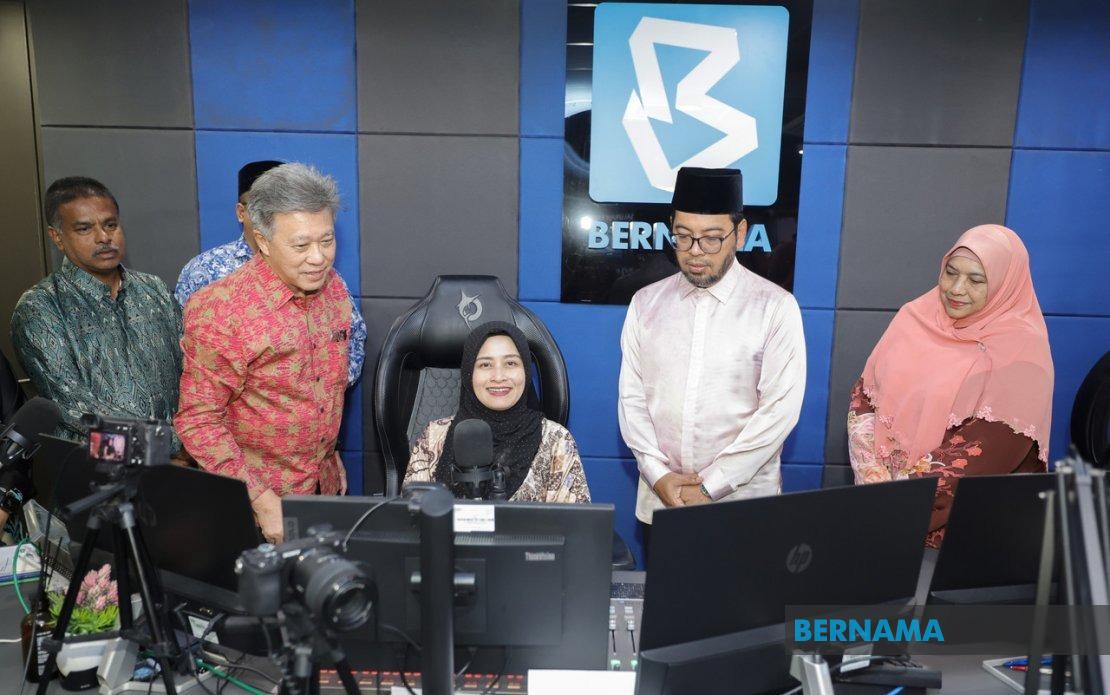
Malaysia's Religious Affairs Ministry is moving to deepen its strategic relationship with the national news agency Bernama, recognizing the critical role media partnerships play in shaping public discourse around religious and social affairs. During an official visit to Bernama's headquarters in Kuala Lumpur on July 30, Minister Dr Zulkifli Hasan outlined plans for enhanced cooperation aimed at promoting what he described as a more dynamic, progressive and inclusive mindset throughout the country's Muslim population.
The visit underscores a broader effort within government circles to leverage mainstream media platforms for communicating complex policy messages related to religious development and community cohesion. Dr Zulkifli stressed that Bernama's reach and credibility make it an invaluable partner in advancing the ministry's vision of a society built on mutual respect, intellectual growth and social harmony. The minister emphasized that the work of cultivating progressive religious attitudes is inherently demanding, requiring sustained institutional coordination and consistent public messaging across multiple channels.
According to Dr Zulkifli, the Religious Affairs Ministry currently operates numerous programmes and campaigns specifically designed to reshape community attitudes towards modernization and cultural pluralism. These initiatives rest on the premise that religious communities are best served when exposed to frameworks emphasizing tolerance, intellectual rigour and openness to diversity. By positioning Bernama as a central platform for disseminating these values, the ministry appears to be attempting to normalize progressive Islamic perspectives among Malaysian Muslims more broadly.
The minister's remarks reveal underlying concerns within government about the information environment shaping religious discourse in Malaysia. Public institutions, it seems, recognize that without consistent media amplification of moderate messaging, alternative narratives may dominate the conversation. Bernama's position as the official national news agency makes it a particularly strategic partner for this communications effort, given its wide distribution to government agencies, schools, and media outlets across the country.
Dr Zulkifli also took the opportunity to commend Bernama's recent operational transformation, noting that the agency's modernization efforts represent an effective overhaul of its traditional newswire model. His tour of Bernama's facilities included visits to broadcast studios and digital media operations, reflecting the agency's efforts to remain relevant in an increasingly fragmented media landscape. The minister's decision to publicly praise these changes signals government confidence in Bernama's capacity to execute contemporary communications strategies.
The delegation accompanying Dr Zulkifli included several senior ministry officials, while Bernama's leadership was represented by Chairman Datuk Seri Wong Chun Wai, Chief Executive Officer Datin Paduka Nur-ul Afida Kamaludin, and Editor-in-Chief Arul Rajoo Durar Raj, among others. The high-level attendance on both sides underscores the importance both institutions attach to the partnership, suggesting this visit represents more than ceremonial gesture-making.
This development comes amid broader regional conversations about the relationship between government institutions and media outlets in Southeast Asia. Malaysia's experience demonstrates how national news agencies continue to serve as important policy communication tools even in an age of proliferating digital platforms. The Religious Affairs Ministry's outreach to Bernama reflects a calculated strategy to shape information flows around religiously sensitive policy areas where government messaging faces competition from various non-institutional voices.
For media observers and communications specialists, the partnership illustrates how government agencies leverage public institutions to amplify preferred narratives. The ministry's focus on promoting dynamic, inclusive and moderate religious frameworks suggests confidence that consistent, professional messaging through established news channels can influence public attitudes. This approach assumes that Bernama's credibility and distribution advantages justify investment in developing deeper institutional relationships.
The timing of the visit also carries potential significance. By publicly emphasizing partnership with Bernama on progressive religious messaging, the Religious Affairs Ministry signals commitment to shape discourse around Islam in Malaysia along particular lines. This positioning may be designed to influence both public opinion and internal debates within religious institutions themselves about how Islam should be practised and promoted in a modern, plural society.
Looking forward, the nature and scope of concrete collaborations emerging from this partnership will merit monitoring. Whether the relationship results primarily in increased coverage of ministry activities and messaging, or whether it catalyzes more substantive collaborative content development, will indicate how deeply both institutions are willing to integrate their operations. The success or limitations of this partnership may also offer insights into broader questions about media independence and institutional messaging in Malaysian public discourse.

