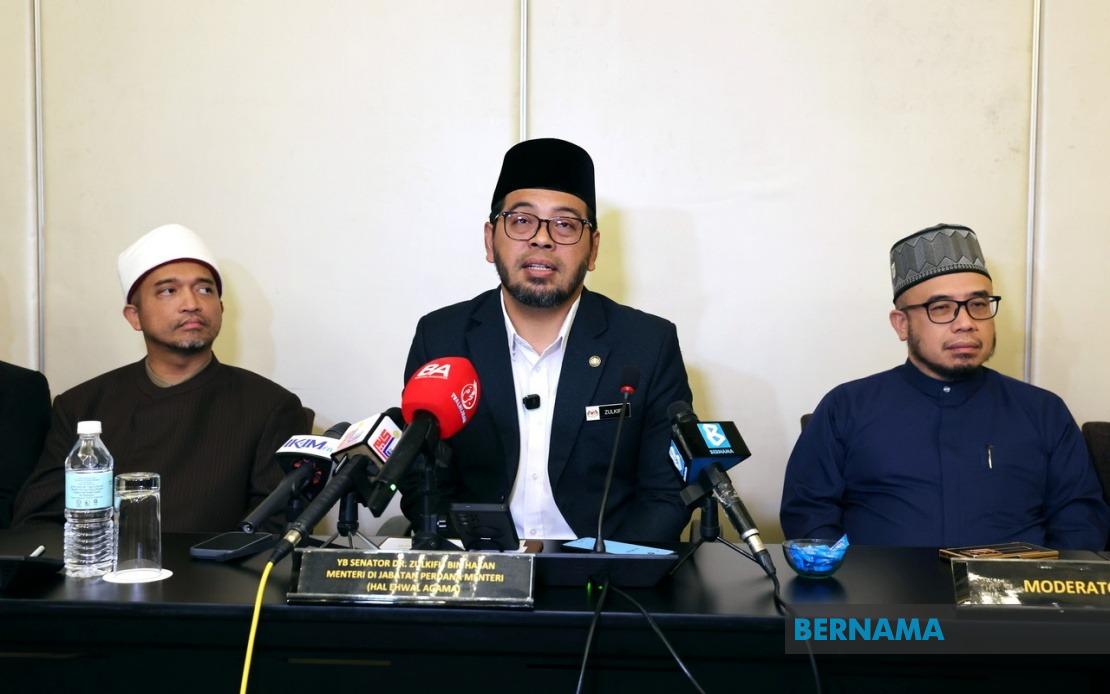
Dr Zulkifli Hasan, Malaysia's Minister in the Prime Minister's Department (Religious Affairs), has firmly rejected the use of the term "kafir harbi" in the Malaysian context, arguing that such terminology contradicts the fundamental principles binding the nation together. Speaking in Putrajaya on August 10, he outlined conclusions from a dedicated roundtable discussion convened specifically to examine the contentious phrase and its implications for the multi-faith nation.
The discussion, formally titled "'Kafir Harbi' in Malaysia: A Discussion," brought together religious scholars, government officials, and policy experts to deliberate on whether the Islamic theological term—historically referring to non-believers engaged in hostilities against Muslims—remains applicable in modern Malaysia's constitutional framework. The consensus emerging from these deliberations represents a significant statement from the religious establishment on interfaith coexistence and national identity.
Zulkifli's core argument rests on Malaysia's constitutional structure and shared civic obligations. He emphasised that every Malaysian citizen, irrespective of faith, operates within the binding legal and social framework of the Federal Constitution. This foundational document establishes a social contract wherein all citizens shoulder equal responsibilities toward nation-building and societal development. Under this interpretation, applying a label that historically denotes hostility or exclusion would fundamentally misrepresent the relationship between Malaysian citizens and the state.
The minister articulated a vision of national unity premised on common citizenship rather than religious identity. In his remarks, he stressed that Malaysians form "one society and fellow citizens sharing the same homeland," a formulation that elevates constitutional belonging above sectarian categorisation. This framing is particularly significant given Malaysia's ongoing navigation of religious tensions and the periodic emergence of provocative rhetoric in public discourse that threatens communal harmony.
Beyond symbolic rhetoric, Zulkifli announced concrete institutional steps to consolidate this position. The Department of Islamic Development Malaysia (JAKIM) will spearhead collaborative efforts with other government agencies and ministries to disseminate information, provide clarifications, and conduct public education initiatives addressing the matter. This multi-agency approach signals recognition that managing sensitive religious terminology requires coordination across portfolios rather than isolation within religious institutions.
The decision to involve multiple government bodies reflects strategic thinking about the reach and credibility of public messaging. By positioning JAKIM as a coordinator rather than sole authority, the government seeks to demonstrate that commitment to national integration transcends religious boundaries. Ministries dealing with education, social development, and communications will presumably contribute their respective platforms and expertise to ensure the message penetrates diverse communities effectively.
For Malaysian readers accustomed to periodic controversies involving religious rhetoric, this ministerial pronouncement offers reassurance from the highest religious policy levels that constitutional principles take precedence over theological classifications. The emphasis on comprehensive implementation rather than sectoral confinement addresses long-standing concerns that religious matters are sometimes addressed in isolation from broader national policy frameworks, potentially limiting their effectiveness and credibility among non-Muslim citizens.
The timing and tone of Zulkifli's statement also merit consideration. By framing the rejection of "kafir harbi" as emerging from structured deliberation rather than partisan politics, the minister attempts to anchor the position in scholarly consensus and institutional gravitas. This approach provides political insulation against accusations of religious compromise while simultaneously asserting that the state's religious apparatus operates according to rational principles consistent with constitutional governance.
The emphasis on mutual respect, cultural understanding, and interfaith dialogue in his closing remarks reinforces the government's contemporary positioning on religious affairs. Rather than retreating from religious discourse, Zulkifli recasts religious governance as fundamentally supportive of pluralism, suggesting that properly understood Islamic teaching aligns with respect for fellow citizens of different faiths. This theological repositioning has implications extending beyond Malaysia's borders, potentially influencing how regional Islamic scholarship addresses minorities and constitutional governance.
For Southeast Asia broadly, Malaysia's official rejection of "kafir harbi" categorisation carries symbolic weight. As the region's largest Muslim-majority nation with significant non-Muslim populations, Malaysia's approach to religious terminology and interfaith relations influences broader regional conversations. The decision demonstrates that modern Islamic governance institutions can maintain religious authority while accommodating constitutional pluralism, potentially offering a model relevant to other Southeast Asian nations grappling with similar dynamics.
The collaborative framework announced by JAKIM will be crucial in determining whether this policy position translates into changed public discourse. Religious terminology often persists through informal usage networks, sermon delivery, and social media commentary that formal pronouncements struggle to influence. The effectiveness of JAKIM's outreach will depend on capacity to engage grassroots religious teachers, community leaders, and digital influencers who shape religious understanding among ordinary citizens.
Moving forward, monitoring compliance with this directive across Malaysia's diverse Islamic institutions will reveal the genuine institutional commitment to this position. State-level Islamic authorities, private Islamic schools, and independent preachers may demonstrate varying degrees of adherence to the federal guidance. The success of this initiative ultimately depends on whether it reshapes the vocabulary and conceptual frameworks through which Malaysian Muslims discuss citizenship and national belonging.

