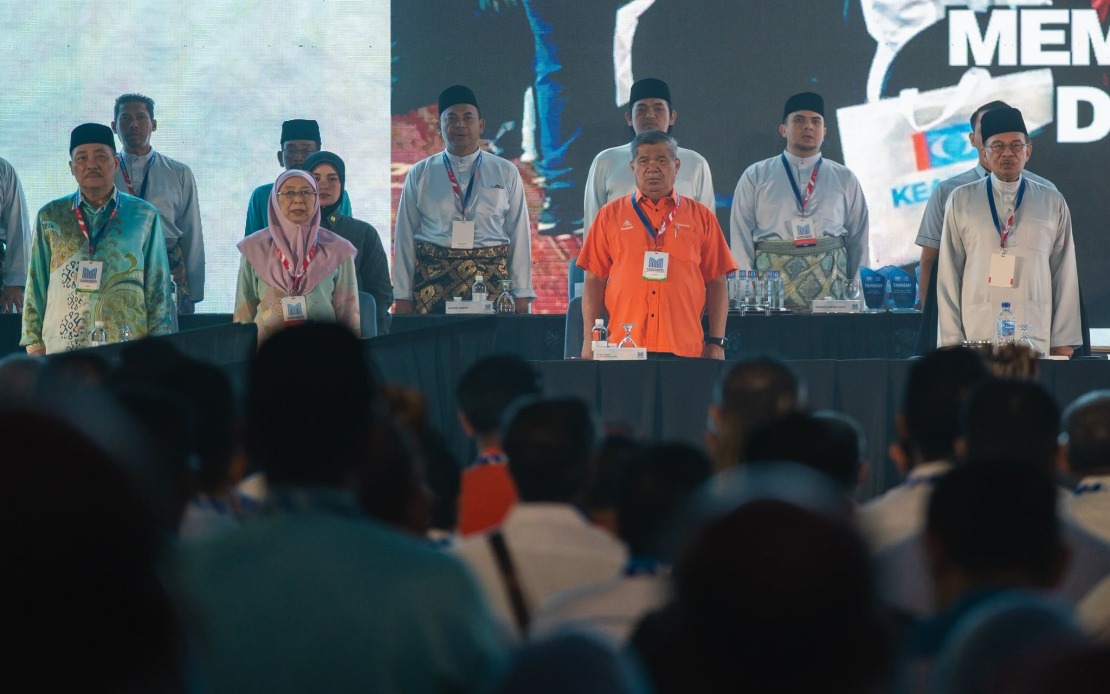
Parti Amanah Negara president Datuk Seri Mohamad Sabu has underscored the necessity of maintaining momentum on the government's reform programme well beyond the moment of electoral victory, arguing that administrative and institutional improvements cannot be treated as temporary campaign commitments. Speaking at the 2026 Parti Keadilan Rakyat National Congress in Melaka, the Agriculture and Food Security Minister articulated a vision of governance where reform becomes embedded in the machinery of state rather than remaining a rhetorical flourish deployed during elections.
Mohamad Sabu's remarks arrive at a critical juncture in Malaysian politics, where coalitions governing the country have increasingly confronted questions about the authenticity and durability of their reform pledges. The Amanah leader's intervention suggests growing concern within Pakatan Harapan circles that reform commitments risk being diluted by competing priorities or undermined by entrenched interests within the bureaucracy. His emphasis on demonstrable action rather than symbolic gestures reflects awareness that public scepticism about political promises remains high, particularly given the trajectory of reform efforts across previous administrations.
Central to Mohamad Sabu's framework is an uncompromising stance toward corruption, framed in terms that deliberately transcend factional or hierarchical boundaries. By explicitly stating that the government will pursue wrongdoing regardless of the perpetrator's status or office, he positions anti-corruption work as a matter of principle rather than political opportunism. This distinction carries significance in a Malaysian context where corruption charges have frequently been levelled as instruments of factional struggle, raising perceptions that enforcement is selective. His formulation attempts to recalibrate this dynamic by anchoring anti-corruption efforts in institutional rather than personal loyalty.
The minister's framing of the mandate as something requiring continuous validation through tangible work and outcomes represents a departure from political discourse that treats electoral victories as endpoints warranting complacency. Instead, Mohamad Sabu constructs the mandate as an ongoing obligation that demands persistent demonstration of commitment. This rhetorical strategy acknowledges that public patience with gradual reform timelines has limits, and that governing coalitions cannot indefinitely defer substantive improvements in exchange for the promise of future delivery. The phrase "the struggle is still a long one" carries particular weight in the context of Malaysian politics, where extended timelines for institutional change have frequently provided convenient justifications for inaction.
Mohamad Sabu's observations emerge alongside Anwar Ibrahim's address at the same congress, which similarly emphasised continuity of the reform agenda. The convergence of messaging between Amanah and PKR leadership suggests coordination on this theme, possibly reflecting coalition-wide anxiety about sustaining reform momentum amid governance pressures and competing demands. Both leaders appear conscious that the appetite for reform remains one of the key distinguishing factors differentiating Pakatan Harapan from alternatives, and that erosion of this positioning could prove electorally consequential.
Beyond anti-corruption priorities, Mohamad Sabu highlighted the government's commitment to advancing the Malaysia Agreement 1963 frameworks governing Sabah and Sarawak's relationship with federal authorities. This emphasis acknowledges the political sensitivity of federalism issues in East Malaysia, where grievances about resource distribution and constitutional protections have generated persistent tensions. By tethering reform commitments to MA63 implementation, Amanah attempts to position institutional improvement as inclusive of East Malaysian concerns rather than a peninsular-focused agenda.
The minister articulated a nuanced perspective on economic management that distinguishes between headline growth metrics and substantive improvements in household welfare. While acknowledging that growth figures matter, he stressed that authentic economic success must translate into elevated living standards and enhanced capacity to address cost-of-living pressures. This formulation reflects recognition that Malaysians have experienced periods of respectable GDP expansion accompanied by stagnation or deterioration in real wages and purchasing power. By emphasising the need for growth to generate tangible benefits for ordinary households, Mohamad Sabu signals awareness that citizens increasingly evaluate governments on pragmatic measures of economic wellbeing rather than macro-level statistics.
Mohamad Sabu's endorsement of the Universities and University Colleges Act 1971 repeal initiative reflects broader recognition within Pakatan Harapan that academic freedom and student autonomy constitute legitimate governance priorities. The AUKU act has functioned as a contentious instrument limiting university student political participation and expression for decades, and its prospective repeal carries symbolic weight beyond its immediate legal implications. By welcoming this development, the Amanah president signals alignment with constituencies valuing democratic expansion and civil liberties, positioning the government as responsive to demands for greater individual and institutional freedom.
The cumulative thrust of Mohamad Sabu's intervention is to construct an account of governing competence grounded in sustained institutional improvement and tangible delivery of promised outcomes. This positioning contrasts with narratives of governance as simply maintaining stability or implementing predetermined programmes. Instead, it emphasises dynamic engagement with public expectations and willingness to maintain reform efforts even when political pressures might encourage retrenchment. Whether this rhetorical commitment translates into institutional practice will substantially determine the government's capacity to retain public confidence and regenerate electoral support beyond the immediate coalition cycle. For Malaysian voters, Mohamad Sabu's remarks essentially constitute a test of sincerity—one that will be evaluated through observation of concrete policy implementation and administrative change rather than words.

