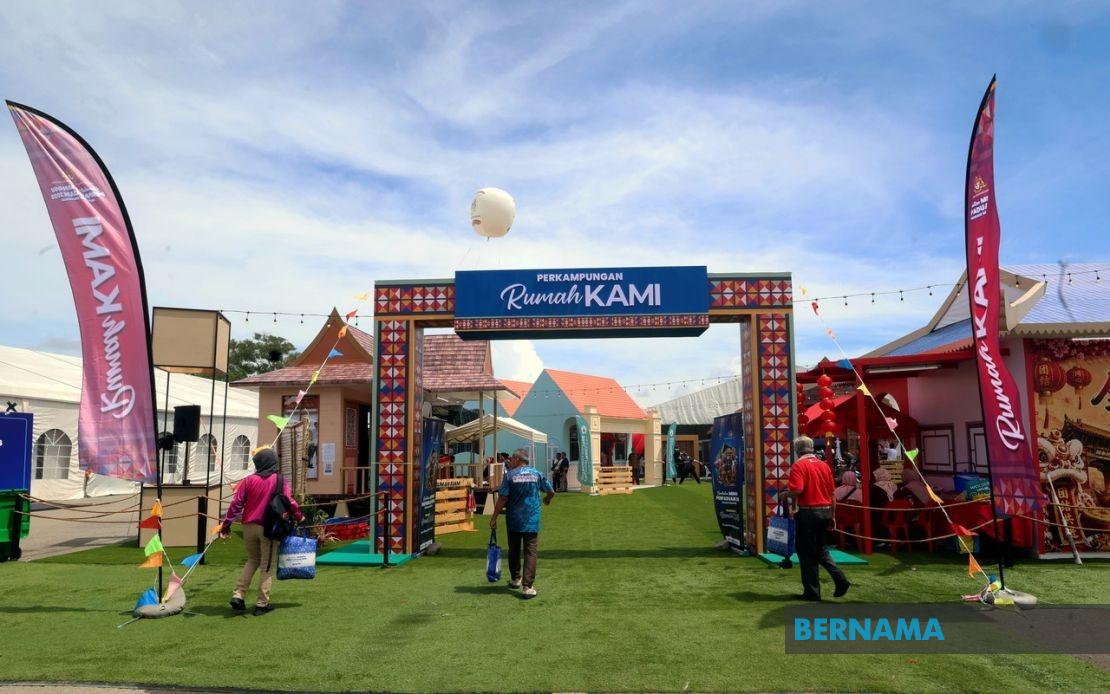
Malaysia's National Unity Week 2026 concluded in Kota Kinabalu on June 14 with unprecedented attendance figures, drawing 284,448 visitors across the four-day celebration. The turnout represents the strongest public participation since the Ministry of National Unity launched the programme in 2023, signalling increasing interest among Malaysians in understanding and celebrating the nation's multicultural foundations. National Unity Minister Datuk Aaron Ago Dagang attributed the surge to growing recognition of how cultural diversity and shared heritage strengthen the country's fabric and resilience.
The Ethnic Village emerged as the most popular attraction, providing visitors with immersive glimpses into the everyday lives and traditions of Malaysia's principal communities. This hands-on approach to cultural engagement proved particularly effective in drawing crowds seeking authentic engagement beyond passive observation. Complementing this offering, the Ethnic Houses exhibition highlighted the distinct architectural styles, customs and material heritage of communities including the Bajau, Melanau, Banjar, Kedayan and Portuguese populations—groups whose contributions often remain underrepresented in mainstream national narratives. By giving specific focus to these communities, the event addressed a historical gap in how Malaysia's full diversity is publicly acknowledged and celebrated.
Young people showed especially strong interest in the Negara Bangsa and Raja Kita Exhibition, which contextualised Malaysia's constitutional evolution, institutional development and leadership heritage. This intergenerational appeal carries significant implications for national cohesion, as younger demographics increasingly engage with foundational narratives about nationhood. The ministry's observation that youth engagement peaked around historical content suggests effective programming that connects abstract concepts of unity to concrete historical moments and figures. This pedagogical approach may offer lessons for how schools and other institutions present national history to students.
Datak Aaron Ago Dagang emphasised that sustaining national unity extends beyond episodic cultural festivals or celebratory events. He stressed the necessity of continuous, institutionalised platforms that facilitate sustained interaction between communities across generations. This perspective reflects a maturing understanding within Malaysia's policy circles that social cohesion cannot be manufactured through occasional spectacles but requires embedded, regular opportunities for cross-cultural engagement at grassroots levels. The commitment to repeat the event annually signals institutional confidence in the model's effectiveness and willingness to invest long-term resources.
The ministry's vision aligns with the MADANI Government's broader agenda of constructing a united nation founded on shared values transcending ethnic, religious and geographic boundaries. This framing reorients national unity discourse away from the sometimes exclusionary frameworks that have dominated Malaysian politics, positioning diversity as generative rather than divisive. For Malaysia's plural society—comprising Malay-Muslims, Chinese, Indians, indigenous communities and countless others—such inclusive messaging carries practical weight in daily coexistence and institutional trust.
Datak Aaron Ago Dagang outlined plans for expanded programming in subsequent years, indicating that the Ministry of National Unity intends to scale the initiative beyond its current footprint in Kota Kinabalu. Potential expansion to other states could democratise access and allow communities beyond Sabah to participate directly. Such geographic diversification would also provide opportunities to showcase regional variations in Malaysia's multicultural expression, as cultural practices and heritage sites differ substantially between Peninsular Malaysia, Sabah and Sarawak.
The private sector and civil society organisations feature prominently in the ministry's stated strategy for advancing unity initiatives. Rather than concentrating responsibility solely within government structures, this approach leverages diverse institutional capacities and community networks. Private sector involvement brings logistical expertise, funding and audience reach, while civil society organisations provide grassroots credibility and connection to specific communities. Such public-private-civil society collaboration models have proven effective in other Southeast Asian contexts addressing social cohesion challenges.
Visitor feedback mechanisms—explicitly mentioned as informing the ministry's understanding of which attractions resonated most strongly—represent an underappreciated but crucial component of evidence-based policy design. By systematically gathering data on which cultural narratives and interactive formats capture public imagination, the ministry can refine future programming based on demonstrated preferences rather than assumptions. This data-driven approach distinguishes the National Unity Week from traditions of top-down cultural programming that sometimes miscalculate public interest.
The timing of this record attendance during June, a month without major Malaysian festivals, suggests the event successfully carved out dedicated cultural space within the national calendar. Unlike Unity Day celebrations tied to specific historical dates or religious festivals, National Unity Week operates as a standalone cultural occasion. This positioning may enhance its accessibility to Malaysians of varying backgrounds who might otherwise feel peripheral to heritage celebrations anchored to particular communities' traditions.
For Malaysia's complex ethnic and religious landscape, the demonstrated public appetite for cultural engagement offers encouragement amid periodic anxieties about social fragmentation. The 284,448 figure suggests that ordinary Malaysians actively seek opportunities to understand neighbours' cultures and histories. This grassroots appetite for intercultural knowledge may ultimately prove more durable than elite-level unity discourse, as it reflects voluntary participation rather than mandated engagement. Policymakers across Southeast Asia, where similar multicultural challenges persist, may find Malaysia's National Unity Week model instructive as evidence that structured cultural festivals can meaningfully advance social cohesion when designed with genuine attention to community interests and authentic representation.