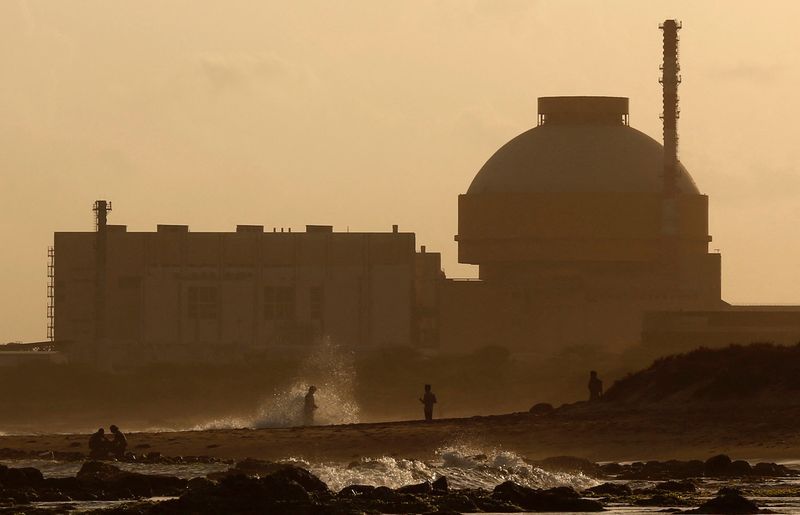
A major cybersecurity incident has exposed sensitive operational and design documents from the Kudankulam Nuclear Power Plant, India's largest atomic energy facility, when an international ransomware gang called World Leaks posted a cache of files online this month. The leaked materials, which the group claims originated from Reliance Group—a primary contractor involved in the plant's expansion—include purported facility blueprints, supplier information, equipment specifications, and internal correspondence spanning nearly a decade. The disclosure underscores escalating vulnerabilities in India's critical infrastructure protection protocols and raises alarm bells for a nation aggressively pursuing nuclear energy expansion under Prime Minister Narendra Modi's development agenda.
Located in Tamil Nadu state, Kudankulam represents the centrepiece of India's strategy to boost its atomic power generation capacity amid rising energy demands across South Asia. The facility currently serves as the nation's most substantial nuclear complex among seven operational plants nationwide. This latest breach coincides with an extended construction project for Units 3 and 4, which Reliance Infrastructure was contracted to develop in 2018 and are anticipated to commence operations by 2027, collectively delivering 2,000 megawatts of electricity. The timing and scope of the exposure create particular concern given the advanced stage of these expansions.
Reliance Group responded to media inquiries by confirming a partial data compromise occurred on a server maintained by third-party Indian data centre operator Yotta. The conglomerate disclosed that India's government has been notified but declined to specify the extent or nature of the compromised materials. This reticence contrasts sharply with the detailed nature of materials that World Leaks subsequently publicised, suggesting the company's initial assessment may have underestimated the breach's magnitude. Yotta independently stated that suspicious server activity was detected on May 29, which it claims to have immediately contained, though Reliance only reported external threat claims at the conclusion of June—a significant temporal gap that raises questions about incident response protocols.
SecurityExperts warn that the leaked documents pose genuine operational hazards to the facility's continued safe functioning. Nickolas Roth, a senior analyst at the Nuclear Threat Initiative which consults with governments on atomic security matters, characterises the breach as potentially "serious" for plant safety. The exposed materials apparently encompass ventilation and cooling system designs for both new reactor units, complete architectural diagrams of the shared operations centre, vendor contact information, and comprehensive supplier documentation. While the actual reactor cores—supplied by Russian state enterprise Rosatom—appear to have escaped direct exposure, the peripheral infrastructure blueprints nevertheless enable sophisticated actors to comprehend auxiliary system vulnerabilities and map the facility's broader security architecture.
The ransomware group World Leaks has established a reputation for targeting major multinational and Indian corporations, previously releasing stolen data from athletic manufacturer Nike and the Tata Group conglomerate. The gang typically publicises purloined information after victim organisations refuse ransom demands, creating a public record of corporate vulnerability. In a prior incident involving Tata Group, World Leaks claimed to have sought $1.5 million compensation for files containing confidential component designs belonging to Apple and Tesla, subsequently releasing the materials when the target refused negotiation. The organisation operates exclusively through encrypted dark web channels inaccessible to conventional internet users, complicating law enforcement responses.
India's Nuclear Power Corporation, which operates the nation's atomic energy infrastructure, is collaborating with Reliance to investigate the compromise. The government's principal cybersecurity authority—the Indian Computer Emergency Response Team known as CERT-In—has commenced formal investigation procedures according to persons familiar with the matter. However, both the Nuclear Power Corporation's leadership and national government officials have declined substantive comment on the incident, maintaining strategic silence about the investigation's progress or findings. The Nuclear Power Corporation chairman, Rajesh Veeraraghavan, the prime minister's office, and the Department of Atomic Energy all refrained from responding to detailed media inquiries regarding the breach.
The geographical significance of this incident extends beyond Indian borders into broader Southeast Asian security considerations. As several regional nations pursue nuclear energy programmes, vulnerabilities within one country's infrastructure command attention from policymakers across the region. Malaysia, Singapore, and other Association of Southeast Asian Nations members maintaining strategic partnerships with India inevitably concern themselves with threats to Indian critical infrastructure stability. A compromised major energy facility could theoretically trigger broader supply chain disruptions or demonstrate exploitable security gaps that technologically sophisticated adversaries might target elsewhere in Asia.
India's cybersecurity landscape presents structural vulnerabilities that extend well beyond this singular incident. According to cybersecurity corporation Surfshark, India ranks third globally in countries experiencing the most significant data compromises, with 28.9 million individual accounts breached annually—second only to the United States and France. A comprehensive assessment conducted jointly by India's Data Security Council and cybersecurity firm Seqrite surveyed 204 organisations nationwide and discovered that 73 percent remained unaware whether they had previously experienced cyberattacks, whilst 57 percent failed to implement fundamental cyber hygiene protocols. These statistics illustrate systemic inadequacies in corporate security awareness and infrastructure protection capacities that plague the entire economy.
The Kudankulam facility carries additional historical resonance regarding cybersecurity incidents within India's nuclear sector. In 2019, malware connected to North Korean hacking operations infiltrated the plant's administrative network systems. At that time, authorities asserted that immediate investigation prevented actual system compromise and that reactor operations remained unaffected. The recurrence of security breaches targeting the same facility within six years suggests either institutional learning has proven insufficient or sophisticated adversaries prioritise this strategic target repeatedly. Each incident incrementally expands the adversarial information landscape regarding the facility's structural and operational characteristics.
The specific documents released encompass materials substantially more sensitive than typical industrial espionage targets. Beyond architectural specifications, the leaked files apparently comprise internal meeting transcripts documenting 2024 joint inspections between Nuclear Power Corporation and Reliance representatives, complete with equipment photographs. Insurance documentation emerged revealing that Reliance Infrastructure and the Nuclear Power Corporation jointly obtained coverage worth $112 million against terrorism-related damage to either Unit 3 or Unit 4—a disclosure itself possessing strategic value. Such materials collectively permit sophisticated reconstruction of facility vulnerabilities, staffing patterns, and security gaps that malicious actors might systematically exploit.
Analysts emphasise that perpetrators now possess sufficient information to comprehensively map the facility's support infrastructure networks, identify critical personnel and suppliers, and pinpoint systemic weaknesses throughout the security supply chain. Nuclear Threat Initiative researcher Roth observes that compromised documentation fundamentally transforms threat calculations by revealing "not just who has access to the project but which systems that access reaches." This granular visibility into access privileges and system architecture substantially enhances an adversary's targeting precision. For a nation already struggling with endemic corporate cyber preparedness deficiencies, the exposure of atomic facility documentation represents a qualitatively different vulnerability category than conventional industrial data breaches.
Government responses have proven characteristically opaque thus far. India's Department of Atomic Energy explicitly declined commentary, whilst Prime Minister Modi's office ignored media inquiries entirely. This silence arguably reflects the sensitivity surrounding nuclear infrastructure disclosures and potential strategic considerations regarding public information management. Nevertheless, the absence of transparent official communication creates informational vacuums that underscore concerns about institutional preparedness and crisis communication capabilities. As India continues expanding its nuclear energy portfolio, transparent cybersecurity accountability mechanisms and demonstrable infrastructure protection protocols will likely attract increasing international scrutiny, particularly from neighbouring Southeast Asian governments assessing India's technical competence as a strategic partner in regional energy security initiatives.

