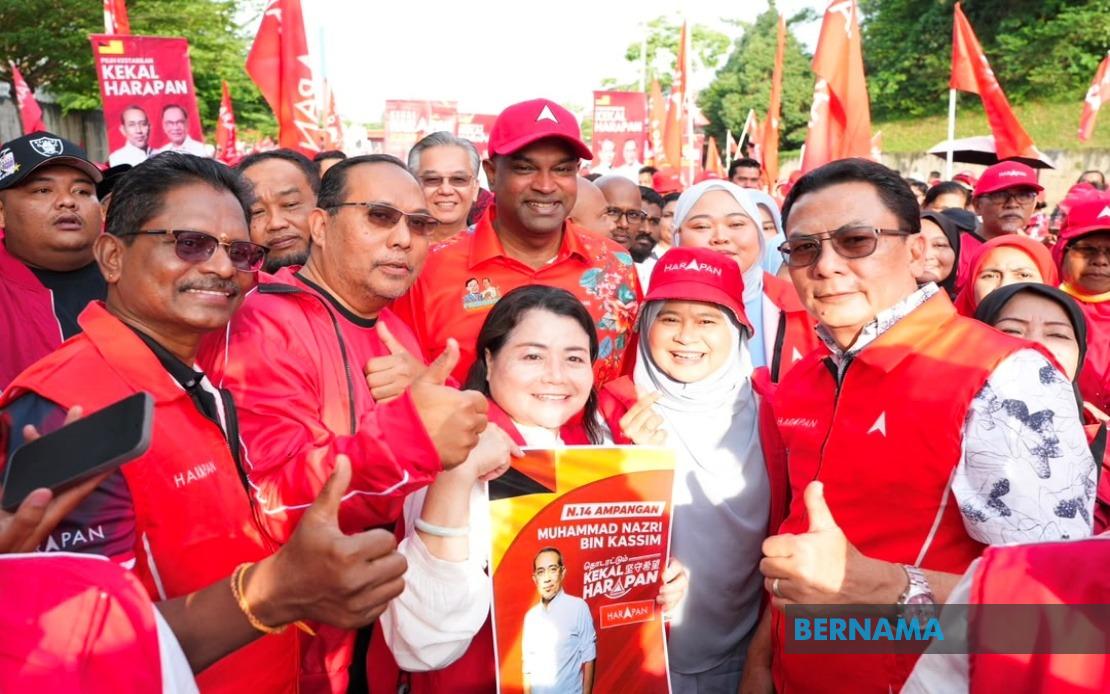
Senior leaders from Pakatan Harapan made a coordinated show of support at the nomination centre in Seremban on July 18, signalling the coalition's determination to retain control in Negeri Sembilan ahead of the state election on August 1. The appearance of PKR vice-president and Sungai Buloh MP Datuk Seri R. Ramanan, alongside DAP deputy secretary-general Steven Sim and other senior figures, underscored the coalition's strategy of presenting a unified front as the campaign season formally commenced following the completion of nominations.
The gathering at the Seremban City Council Building served as a platform for backing six Pakatan Harapan candidates positioned across different constituencies. These nominees—Nor Azman Mohamad in Sikamat, Datuk Muhammad Nazri Kassim in Ampangan, Zarinna Abu Zarin in Lenggeng, Chew Seh Yong in Lobak, J. Arul Kumar in Nilai, and Ho Weng Wah in Temiang—represent the coalition's attempt to consolidate support across the state's diverse electoral landscape. The presence of multiple party leaders at each candidate's nomination filing represented deliberate messaging to party members and grassroots supporters about the strategic importance attributed to these contests.
Ramanan's remarks highlighted the significance of mobilising party machinery and demonstrating visible enthusiasm during the critical early stages of campaigning. His emphasis on the turnout of supporters at the nomination centre suggested that coalition leaders view the visibility and scale of party organisation as a barometer for electoral momentum. The statement that the coalition intends to engage continuously with voters throughout the campaign period reflects recognition that Negeri Sembilan, with 36 state legislative assembly seats, represents crucial terrain for Pakatan Harapan's broader political standing in Malaysia.
The formal campaign period began immediately after nominations closed, providing the coalition and its rivals roughly two weeks to influence voter preferences before early voting on July 28 and the general poll on August 1. This compressed timeline means that the opening days of campaigning carry disproportionate weight in shaping narrative and mobilising voter interest. The prominent deployment of federal-level leaders like Ramanan and Sim indicates that Pakatan Harapan views Negeri Sembilan as sufficiently competitive or strategically significant to warrant senior attention, rather than trusting entirely to state-level machinery.
The state assembly's dissolution on June 5 triggered the electoral process, with the Election Commission subsequently announcing the election schedule. The decision to hold the election during the school holidays and just before the onset of the Islamic month of Ramadan required careful planning from all contending parties. For Pakatan Harapan, maintaining continuity in governance and accelerating development projects in the weeks preceding dissolution appeared designed to provide incumbent candidates with tangible achievements to present to voters.
Ramanan's statement about ensuring "stability and the continuity of development in Negeri Sembilan" attempted to position the coalition as the custodian of progress and orderly administration. This messaging strategy implicitly contrasts Pakatan Harapan's track record with potential alternatives, framing the election as a choice between proven governance and unproven alternatives. Whether such appeals resonate with voters depends partly on perceptions of how effectively the state government has delivered public services and managed the state economy during its tenure.
The involvement of the DAP through Steven Sim's presence reflects the multiethnic composition that Pakatan Harapan has sought to maintain, particularly in states with significant non-Malay constituencies. DAP's deployment of senior figures in support of candidates across different seats underscores the coalition's recognition that electoral success in Negeri Sembilan requires maintaining support among diverse demographic groups. The geographic spread of the six backed candidates suggests an effort to secure representation across both urban and rural constituencies.
For Malaysian observers monitoring coalition dynamics, the visible unity displayed at these nominations carries significance beyond the immediate state election. Pakatan Harapan has faced internal tensions and defections in various state and federal contexts, making public displays of solidarity among component parties particularly important. The coordinated presence of PKR and DAP leaders sends a signal to wavering party members and potential swing voters that the coalition remains cohesive and confident.
Regionally, the Negeri Sembilan election occurs within a broader pattern of state-level contests that have tested coalition cohesion and voter preferences across Malaysia. The outcomes in these intermediate elections often foreshadow shifts in broader political dynamics before major federal elections. For Southeast Asian political analysts, Malaysian state elections serve as barometers of ruling coalition health and opposition capability, with implications that extend beyond the particular state in question.
The campaign period extending until July 31 provides candidates with a final push to convert undecided voters and consolidate their support bases. Coalition leaders' deployment during the nomination phase suggests they intend to maintain visible presence and momentum throughout this window. Whether the strong party machinery on display at Wisma MBS translates into electoral gains will depend on how effectively candidates communicate their messages and address voter concerns in individual constituencies.

