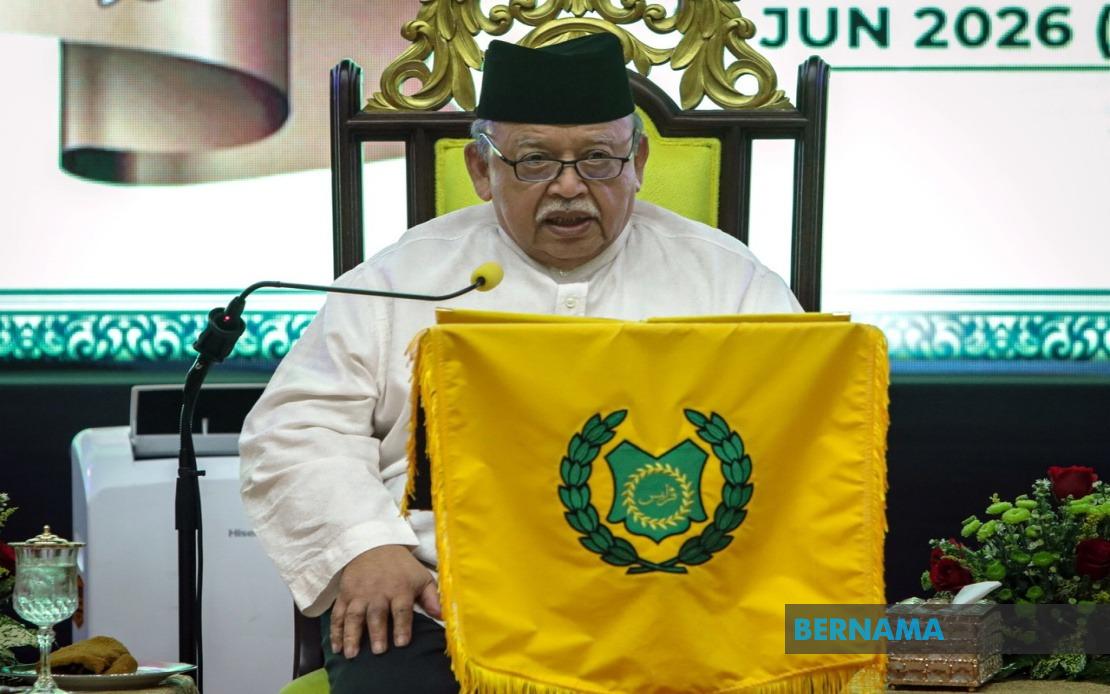
At the state-level Maal Hijrah 1448H/2026M celebration in Kangar, the Raja of Perlis, Tuanku Syed Sirajuddin Jamalullail, delivered a stirring message calling upon Malaysians to prioritize ethical conduct and moral fortitude in their daily endeavours. The Ruler emphasized that fulfilling one's duties with sincere intention, viewing work as a form of spiritual devotion and steadfastly resisting all manifestations of corruption are essential pillars for constructing a prosperous and forward-thinking community.
The Raja's address articulated a vision of progress that transcends conventional metrics of development. According to Tuanku Syed Sirajuddin, a truly successful state emerges only when its populace demonstrates intellectual capability, upholds personal integrity, maintains standards of civility and maintains cohesion across all segments of society. This perspective offers a counternarrative to purely materialistic assessments of national advancement, suggesting that sustainable prosperity requires simultaneous development across multiple dimensions of human and institutional life.
Central to the Ruler's message was a reframing of what constitutes genuine MADANI progress. Rather than measuring advancement exclusively through infrastructure projects, construction of facilities or accumulation of economic indicators, Tuanku Syed Sirajuddin argued that authentic national progress encompasses the expansion of knowledge, the cultivation of moral character, the strengthening of cultural foundations, the development of mature and sophisticated thinking, and the preservation of integrity within societal structures. This holistic approach resonates particularly in Southeast Asia, where rapid modernization has sometimes come at the expense of traditional values and social cohesion.
The Ruler outlined a practical framework for achieving this integrated vision, urging Malaysians to internalize civilized values within their personal and professional conduct, strengthen bonds of national unity, pursue continuous learning and skill development, maintain respectful and courteous behaviour, and discharge their responsibilities with full accountability. These recommendations extend beyond mere ethical guidelines to constitute a comprehensive social contract in which individual conduct directly influences collective wellbeing.
Furthermore, Tuanku Syed Sirajuddin stressed the imperative of deepening authentic Islamic understanding grounded in Quranic principles and the teachings of Prophet Muhammad. Simultaneously, he emphasized the necessity of nurturing a mature and responsible political culture, one that transcends factionalism and short-term electoral considerations to serve broader national interests. Such an approach seeks to balance religious authenticity with sophisticated governance practices.
The Ruler identified empowerment of citizens as another critical component of national development strategy. By fostering greater self-reliance and competitiveness among Malaysians across all sectors and demographics, the state can reduce dependency relationships and unlock latent potential within its population. The development of the ummah must encompass religious instruction, political participation, economic opportunity and social welfare simultaneously, with particular emphasis on instilling courage, intellectual acuity and independence among Perlis residents as foundational characteristics.
Recognizing that the contemporary environment presents unprecedented challenges, Tuanku Syed Sirajuddin counselled vigilance regarding technological disruption, rapid advancement in artificial intelligence, societal transformations and fluctuations in the global economic system. Rather than adopting a passive or reactive posture toward these forces, the Ruler exhorted Malaysians to position themselves as active architects of change, generating innovative ideas, leading transformative initiatives and contributing substantively to societal advancement. This aspirational framing implicitly critiques a tendency toward fatalism or victim mentality in the face of global disruption.
The participation of the Raja Muda of Perlis, Tuanku Syed Faizuddin Putra Jamalullail, and the Raja Puan Muda of Perlis, Tuanku Dr Hajah Lailatul Shahreen Akashah Khalil, underscored the collective nature of this message across the royal institution. By presenting the Perlis Tokoh Maal Hijrah award to Yayasan Tuanku Syed Putra board member Datuk Izham Mahmud, the occasion also recognized individuals demonstrating exemplary contributions to societal advancement through institutional channels.
For Malaysian policymakers and citizens alike, the Raja's address at Kangar provides important perspective on how contemporary nation-building can integrate material progress with moral and intellectual development. In an era when corruption remains a persistent challenge across Southeast Asia, and when rapid technological change threatens social stability, the emphasis on integrity as foundational to prosperity offers both moral clarity and pragmatic wisdom. The message suggests that true competitive advantage for Malaysia lies not merely in infrastructure or manufacturing capacity but in the intellectual rigour, ethical standards and social cohesion of its population.
The Maal Hijrah commemoration, marking the Islamic calendar milestone, provided an appropriate platform for such reflection on renewal and reform. The Raja's invocation of religious principle alongside secular governance demonstrates how traditional monarchical institutions in Malaysia continue articulating visions of national purpose that bridge secular and religious domains. Such bridging proves particularly valuable in a multicultural society where different communities must negotiate shared frameworks of national identity and collective aspiration.
As Malaysia navigates complex transitions in technology, global economic positioning and social dynamics, the call for integrity and rejection of corruption takes on heightened significance. The Raja's emphasis that these are not merely individual moral matters but essential to collective prosperity positions ethical conduct as central to national competitiveness and security rather than peripheral to economic development.

%22%2F%3E%3C%2Fpattern%3E%3C%2Fdefs%3E%3Crect%20width%3D%22100%25%22%20height%3D%22100%25%22%20fill%3D%22url(%23ph1354vg)%22%2F%3E%3Crect%20width%3D%22100%25%22%20height%3D%22100%25%22%20fill%3D%22url(%23ph1354vp)%22%2F%3E%3Ctext%20x%3D%2250%25%22%20y%3D%2250%25%22%20text-anchor%3D%22middle%22%20dominant-baseline%3D%22central%22%20fill%3D%22rgba(255%2C255%2C255%2C0.95)%22%20font-family%3D%22Georgia%2C%20'Times%20New%20Roman'%2C%20serif%22%20font-weight%3D%22700%22%20font-size%3D%22320%22%20letter-spacing%3D%22-0.02em%22%3EGRS%3C%2Ftext%3E%3C%2Fsvg%3E)