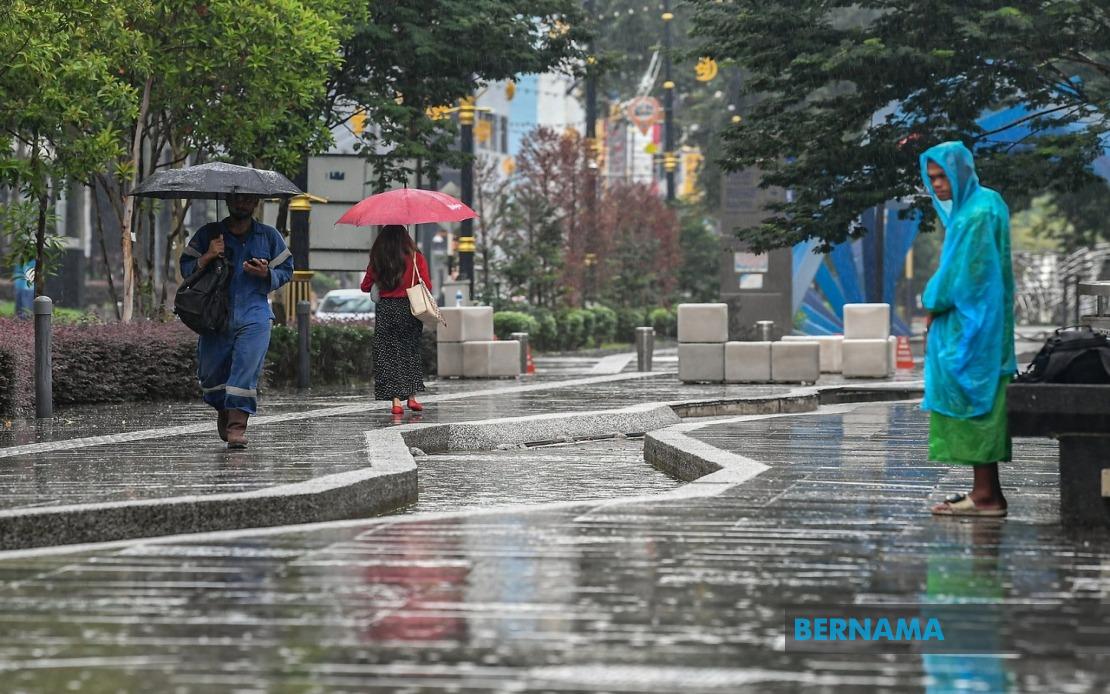
Johor residents preparing for the state election's nomination process face unsettled weather conditions that could complicate campaign preparations, with rain expected to blanket seven of the state's ten districts when prospective candidates file their nomination papers tomorrow morning. According to Azlai Ta'at, the Johor director of the Malaysian Meteorological Department, the wet conditions will primarily affect the more densely populated areas including Johor Bahru, Muar, Batu Pahat, Kota Tinggi, Pontian, Tangkak and Kulai. The weather disruption arrives at a critical juncture, as the nomination window operates within a compressed two-hour window from 9 am to 10 am at 56 nomination centres across the state, after which the official candidate list will be announced and the formal campaign period commences immediately.
The three districts that will escape the rain—Segamat, Kluang and Mersing—should enjoy clearer skies during the morning nomination session, though this geographical divide underscores the complexity of weather patterns across Johor's vast territory. Temperature readings across the state are anticipated to hover between 24 and 25 degrees Celsius in the mornings, climbing to a range of 31 to 34 degrees Celsius by afternoon, with Segamat expected to experience the highest temperatures. Azlai Ta'at emphasised that the public, particularly the campaign volunteers and supporters of candidates, should remain vigilant regarding weather developments, a cautionary note that reflects the unpredictability of tropical systems during this season.
The weather outlook deteriorates further as the afternoon progresses into the crucial opening phase of campaigning. MetMalaysia has issued forecasts for thunderstorms in Johor Bahru, Segamat, Kluang, Kota Tinggi, Pontian, Mersing and Kulai, while Batu Pahat and Tangkak are expected to encounter rain showers. Muar, meanwhile, faces an intensely hot afternoon without significant precipitation. These afternoon thunderstorms assume particular significance because they will occur precisely when campaign activities are scheduled to gain momentum, potentially curtailing outdoor rallies, walkabouts and grassroots engagement activities that form the backbone of state-level electoral strategies in Malaysia.
The nomination day weather challenges arrive amid a notably crowded electoral contest that reflects the fractionalisation of Malaysia's political landscape. Pakatan Harapan is presenting candidates across all 56 seats, with the coalition deploying 20 PKR representatives, 19 from Amanah and 17 from DAP. Barisan Nasional similarly fields candidates in every constituency, mobilising 36 UMNO candidates alongside 16 MCA members and four from MIC. This two-coalition structure, however, masks a significantly more complex ballot environment underneath.
Perikatan Nasional has emerged as a substantial third force, allocating 11 seats to PAS, 16 to Bersatu, five to the Malaysian Indian People's Party and one to Pejuang. Beyond these established coalitions, several smaller entities are contesting independently or through alternative groupings. The Malaysian United Democratic Alliance will contest four seats, while Parti Sosialis Malaysia fields a single candidate. Most notably, Parti Bersama Malaysia is making its electoral debut by contesting 15 seats, representing the most significant new entrant to Johor state politics in recent memory. This proliferation of contesting parties means that nomination processes will involve substantially more administrative coordination and crowd management across the 56 nomination centres.
The scale of electoral participation underscores why weather disruptions carry genuine practical implications. The Election Commission reports that 2,727,926 registered voters are enrolled across Johor, comprising 2,703,175 ordinary voters alongside 12,041 military personnel and their spouses and 12,710 police personnel and their spouses. This electorate represents a substantial democratic exercise at the state level, and the nomination day represents voters' first formal engagement with the electoral process. Logistically, rain across seven districts could impede voter movement to nomination centres and complicate the operations of electoral staff managing the filing procedures.
The abbreviated nomination window of merely 120 minutes creates additional constraints that inclement weather can exacerbate. Candidates and their supporters must converge on designated centres within this narrow timeframe to submit required documentation, with returning officers then proceeding to verify eligibility and make official announcements. Rain forcing candidates to navigate waterlogged routes or creating vehicular congestion could theoretically result in late arrivals, though the Election Commission's establishment of multiple centres across each district is intended to mitigate such logistical pressures. Nevertheless, the simultaneous occurrence of weather challenges and nomination deadlines creates potential friction points.
For campaign strategists, the forecast afternoon thunderstorms present more significant obstacles than the morning rain. The opening phase of any electoral campaign establishes momentum and captures media attention, and outdoor activities generate grassroots engagement that paid advertising cannot replicate. Thunderstorms that force the cancellation of evening rallies or walkabouts in seven districts could compress candidates' available time to establish their campaign narratives and connect with voters. In closely contested marginal seats, such lost campaign days during the crucial initial phase may accumulate into tangible electoral consequences. Political parties will likely need to pivot toward indoor venue-based activities or digital engagement strategies should the forecasts materialise.
The broader seasonal context reveals that this weather pattern reflects standard meteorological conditions for late June in Johor, a period that typically experiences increased convective activity as the southwest monsoon season transitions. However, the coincidence between this predictable seasonal phenomenon and the election schedule nonetheless creates genuine operational challenges. The Election Commission scheduled July 7 for early voting and July 11 as polling day, indicating that the entire campaign period will traverse through a seasonally active weather window. Candidates and voters should anticipate that the remainder of the campaign will likely include additional rainy episodes, requiring contingency planning across all political parties.
For Malaysian observers watching the Johor contest, the weather dynamics underscore broader themes about electoral administration and political adaptation. Malaysia's multi-party system, reflected in the diverse slate of contesting entities, has matured to a point where even weather-related complications can be absorbed within organisational frameworks. The deployment of 56 nomination centres reflects this administrative sophistication, allowing decentralised filing procedures that reduce weather-related bottlenecks compared to centralised systems. Simultaneously, the forecast serves as a practical reminder that democratic exercises occur within natural environmental constraints that politicians cannot entirely control, and that campaign strategy must incorporate meteorological realities alongside traditional political calculations as Johor voters prepare to determine the composition of their state government.

