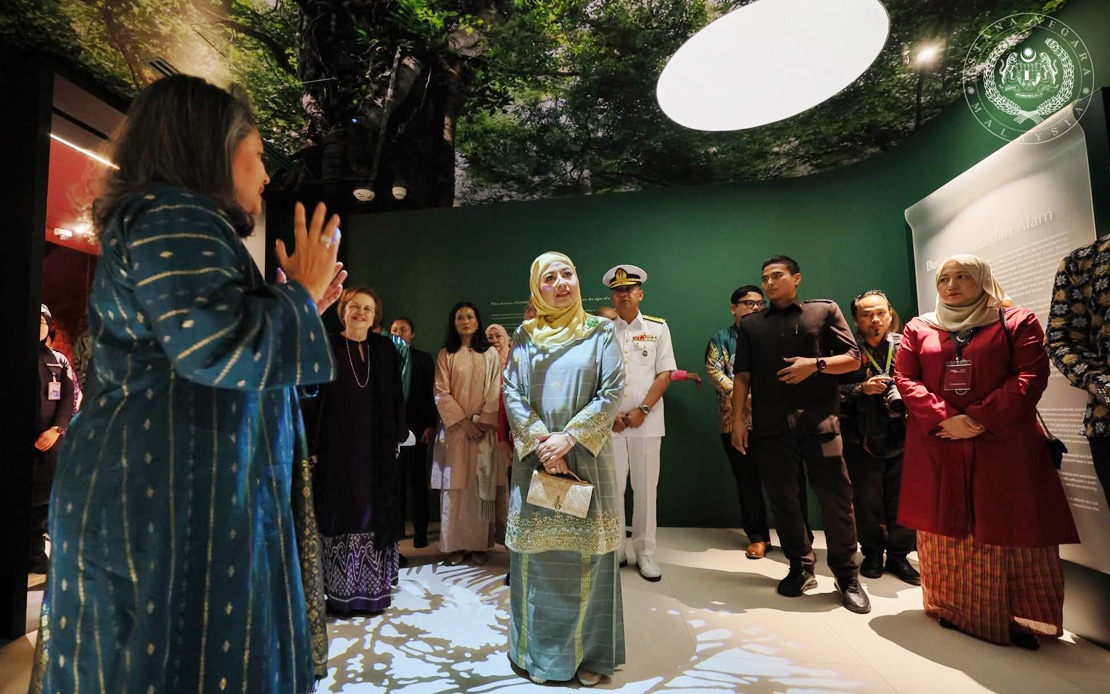
Her Majesty Raja Zarith Sofiah, Queen of Malaysia, officially inaugurated the Merdeka Textile Museum on August 21 at the Menara Merdeka Maybank compound in Kuala Lumpur, marking a significant milestone in the nation's commitment to safeguarding its cultural legacy. The establishment of this institution reflects growing recognition within Malaysia's cultural and business sectors that traditional textile arts require dedicated spaces for preservation, education, and public appreciation. By situating the museum within one of Kuala Lumpur's iconic commercial landmarks, organisers have positioned this cultural initiative at the intersection of commerce and heritage, potentially broadening its accessibility and relevance to contemporary audiences.
PNB Merdeka Ventures Sdn Bhd, operating as a wholly-owned subsidiary of the major Malaysian investment corporation Permodalan Nasional Berhad, spearheaded the museum's development. The involvement of PNB, one of the country's largest institutional investors with substantial influence over Malaysia's economic and cultural directions, signals that preserving textile heritage has gained traction among the nation's financial establishment. This institutional backing provides the museum with resources and operational stability that many smaller cultural projects struggle to achieve, suggesting a long-term commitment to the facility's viability and expansion.
During the official ceremony, the Queen articulated a vision of cultural stewardship that extends beyond mere preservation. Her Majesty emphasised that every nation possesses distinctive heritage requiring active appreciation, careful protection, and deliberate transmission to succeeding generations. This framing transforms textile conservation from a niche historical interest into a broader national responsibility, one that implicitly connects cultural maintenance with national identity and social continuity. The Queen's emphasis on heritage as foundational to societal identity resonates particularly in Malaysia, where negotiating multiple cultural traditions remains central to national cohesion and shared belonging.
Raja Zarith Sofiah further noted that cultural traditions function as mirrors reflecting the fundamental identity and values undergirding Malaysian society. By positioning textiles specifically within this broader cultural conversation, the Queen elevated the museum's significance beyond fashion or craftsmanship to the realm of identity formation and social meaning-making. This perspective aligns with international trends recognising intangible cultural heritage as essential to community wellbeing and continuity, particularly as globalisation and rapid modernisation threaten traditional knowledge systems across Asia.
The Queen articulated particular hopes that the Merdeka Textile Museum would emerge as a vital centre for education and intellectual exploration accessible to diverse Malaysian constituencies. Beyond serving as a repository of artefacts, she envisioned the institution as an inspirational space specifically engaging contemporary and future generations of Malaysian women. This gendered focus acknowledges women's historical roles as textile practitioners, knowledge-keepers, and cultural transmitters, while simultaneously positioning the museum as a resource for female empowerment and professional inspiration. The emphasis on young people's engagement reflects concerns among cultural policymakers that younger Malaysians often lack familiarity with traditional heritage, risking its gradual obsolescence absent deliberate interventions.
The museum's collection foundations rest on textiles assembled by Sharifah Azah Syed Mohammed Alsagoff, known as Azah Aziz, a figure of considerable social standing whose connections extended through Malaysia's highest institutional circles. As the widow of the distinguished scholar Ungku Abdul Aziz Abdul Hamid and mother of Tan Sri Dr Ungku Zeti Akhtar Aziz, former governor of Bank Negara Malaysia, Azah Aziz occupied a position permitting extensive collection of significant cultural artefacts. Her family's decision to donate these materials to a public institution demonstrates the potential for private collectors to contribute meaningfully to national cultural infrastructure, a model potentially encouraging other affluent Malaysians to support heritage initiatives.
The donated collection comprises 240 clothing pieces and 69 traditional jewellery items, encompassing iconic Malaysian textile forms including songket sarongs, Limar Baju Kurung garments, and Tekat Emas embroidered works. These specific textile categories represent centuries of Southeast Asian artistic development, incorporating techniques and aesthetic principles developed through generations of craftspeople. The concentration of such substantial holdings within a single collection suggests Azah Aziz possessed both resources and cultural knowledge enabling systematic acquisition of representative examples across different textile traditions and periods.
The museum's physical infrastructure reflects contemporary approaches to heritage presentation, incorporating eight distinct galleries alongside specialised facilities designed for advanced textile research and conservation. A dedicated study centre houses a conservation laboratory where textile restoration specialists can undertake detailed analysis and preservation work, addressing the technical demands of maintaining aged fabrics subject to environmental degradation. The inclusion of a fabric library and textile knowledge centre establishes the museum as a research institution, not merely a display space, potentially attracting scholars, designers, and practitioners seeking detailed understanding of traditional techniques and material properties.
The inauguration drew attendance from prominent figures within Malaysia's governmental and corporate hierarchies, including Hannah Yeoh, Minister in the Prime Minister's Department responsible for Federal Territories. The presence of Tan Sri Shamsul Azri Abu Bakar, the Chief Secretary to the Government, underscored the museum's significance within national cultural policy frameworks. Raja Tan Sri Arshad Raja Tun Uda, chairing the PNB group, represented the institutional investor backing the initiative, symbolising alignment between Malaysia's corporate sector and cultural preservation objectives.
For Malaysian audiences and Southeast Asian observers, the Merdeka Textile Museum represents a meaningful institutional commitment to recognising and valorising traditional crafts within contemporary national contexts. The museum addresses a critical challenge facing many post-colonial Asian nations: maintaining cultural distinctiveness whilst navigating modernisation's pressures and integrating into global economies. By situating textile heritage within a major financial institution's subsidiary, Malaysia has positioned cultural preservation as compatible with commercial success, potentially offering alternative models to developing nations contemplating their own heritage strategies. The emphasis on accessibility, education, and gender inclusion suggests aspirations extending beyond elite cultural consumption toward broader public engagement with national traditions.

