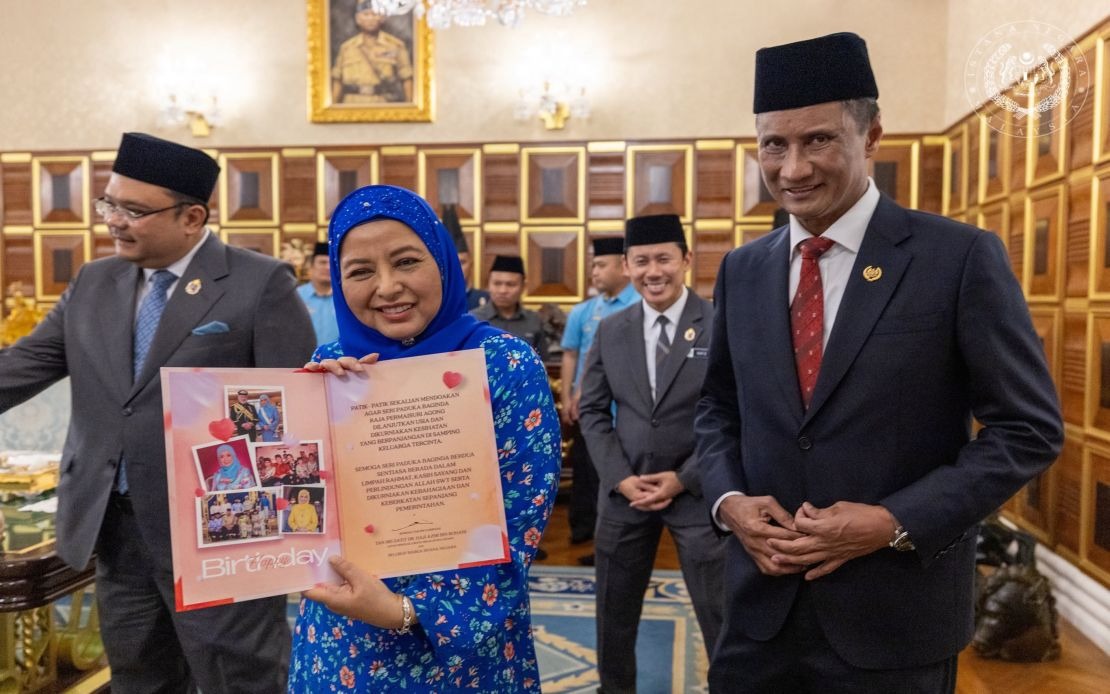
Queen Raja Zarith Sofiah marked her birthday with a formal visit from senior officials of the Royal Household, underscoring the ceremonial traditions that form part of Malaysia's constitutional monarchy. The meeting, which took place at Istana Bukit Serene in Johor, saw Her Majesty receive Tan Sri Dr Azmi Rohani, Comptroller of the Royal Household, and Datuk Azuan Effendy Zairakithnaini, who holds the position of Datuk Paduka Maharaja Lela or Grand Chamberlain, according to an announcement shared on Sultan Ibrahim Sultan Iskandar's official Facebook account.
These courtesy visits represent an important element of palace protocol, demonstrating the respect and deference shown to the Queen within Malaysia's formal state apparatus. The Comptroller and Grand Chamberlain are among the most senior administrative figures within Istana Negara, responsible for overseeing the day-to-day operations of the Royal Household and maintaining the protocols that govern royal functions and engagements. Their presence at such occasions signals both the significance accorded to the Queen and the institutional importance placed upon honouring milestone dates within the royal family.
Accompanying the two senior officials was Puan Sri Dr Noor Azizah Abdul Latif, the wife of Azmi, whose presence highlighted the family-oriented nature of the gathering. This detail, though seemingly minor, reflects how palace ceremonies often blend formal protocol with personal warmth, creating occasions that maintain tradition while acknowledging the human connections that underpin state institutions.
The presentation of gifts formed a central element of the day's proceedings. Her Majesty graciously received a specially prepared cake and yellow glutinous rice, offerings provided jointly by the senior management and entire staff complement of Istana Negara. The choice of yellow glutinous rice carries cultural significance within Malaysian tradition, often associated with auspicious occasions and celebrations, making it a particularly appropriate selection for marking a royal birthday.
These gifts were not merely symbolic tokens but represented a collective gesture from hundreds of palace staff members, each of whom had contributed to or endorsed the birthday tribute. In this way, the occasion served to reinforce the bonds between the monarchy and the broader palace organisation, demonstrating that loyalty and respect for the Queen extended throughout the entire institutional hierarchy rather than being confined to senior figures alone.
Beyond the presentation of material gifts, the officials conveyed verbal sentiments that encapsulated well-wishes for Her Majesty's future. Tan Sri Dr Azmi Rohani, speaking on behalf of the entire management and workforce of Istana Negara, extended prayers and heartfelt wishes for Raja Zarith Sofiah's continued good health, well-being, and happiness. Such expressions carry particular weight when delivered by the most senior civilian official overseeing palace operations, serving as an official pronouncement of institutional goodwill.
The setting of Istana Bukit Serene, the royal residence in Johor, holds its own significance within Malaysia's constitutional arrangements. As one of the principal palaces used by the Yang di-Pertuan Agong and the Queen, the choice to host this courtesy call at the Johor residence suggests that Her Majesty was spending her birthday at this particular royal seat, which has been a longstanding focal point for state functions and royal activities in the southern peninsula.
Birthday celebrations within royal households worldwide typically blend public ceremonial elements with private family moments, and the Malaysian arrangement appears to follow this established pattern. The formal courtesy call, whilst an official occasion marked by protocol and hierarchy, simultaneously provides an opportunity for palace staff to demonstrate their affection and respect for the Queen in a context that permits greater informality than might be possible during state ceremonies or formal receptions.
For observers of Malaysia's constitutional arrangements, such occasions offer insight into how the monarchy maintains relevance and connection to the broader state apparatus. Rather than remaining distant figures removed from institutional life, the King and Queen regularly engage with palace officials through ceremonies and formal visits that acknowledge their role as symbols of national unity. These interactions reinforce the symbolic functions that constitutional monarchies perform within Westminster-derived systems of government.
The public documentation of this birthday visit through official social media channels reflects contemporary practice in royal communication. By sharing details of the occasion, the palace maintains transparency about royal activities whilst preserving the dignity associated with formal state positions. This approach allows Malaysians to develop a sense of connection to their constitutional leaders without breaching the boundaries of propriety that traditionally govern royal life.
As Malaysia's monarchy continues to evolve within a rapidly changing social and political environment, such traditions serve as anchors that maintain continuity with the past. Whether marked through formal courtesy calls or smaller family gatherings, the celebration of royal birthdays remains a fixture in the constitutional calendar, affirming the enduring role that the institution plays within the nation's political framework and cultural identity.

