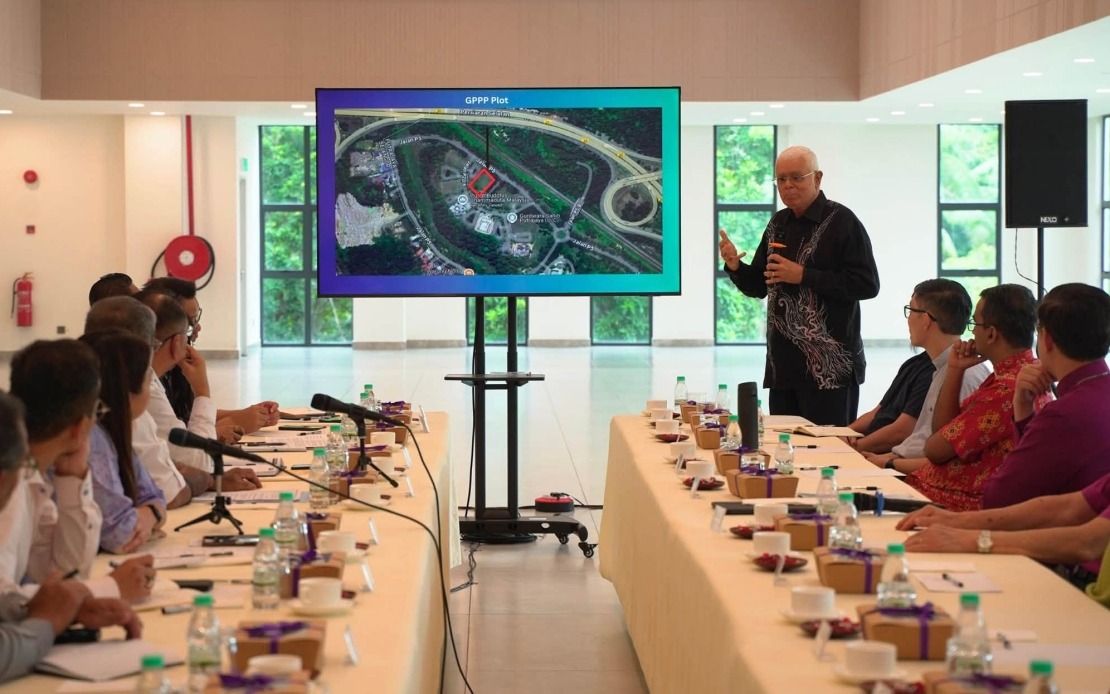
The federal government has long recognised the importance of providing dedicated spaces for Malaysia's religious minorities, with plans for Precinct 20 in Putrajaya to host multiple places of worship now coming to fruition. National Unity Minister Datuk Aaron Ago Dagang underscored this commitment on August 26, revealing that the allocation of sites for non-Muslim religious institutions in this administrative capital precinct dates back to 2013, reflecting a deliberate and forward-thinking approach to urban development that accommodates the nation's diverse faith communities.
The initiative represents far more than simple land allocation; it embodies a comprehensive vision for inclusive urban planning that acknowledges the social fabric of modern Malaysia. According to Aaron, the designation of these worship spaces aligns with broader policy objectives aimed at creating neighbourhoods where people of different backgrounds can coexist peacefully. This systematic planning ensures that religious minorities have legitimate, well-integrated spaces to practise their faiths without tension or marginalisation, a particularly important consideration in a capital city that serves as a symbol of national governance and values.
Precinct 20's development directly supports Policy 17 of the Putrajaya Structure Plan 2050, formally titled "Putrajaya Towards an Inclusive Compassionate Community." This strategic framework emphasises the necessity of building communities characterised by mutual respect and religious harmony, establishing clear guidelines that development decisions must account for the needs of all citizens regardless of faith background. The policy framework reflects recognition that inclusive planning produces stronger, more cohesive urban environments where diverse populations feel valued and accommodated.
The government's approach also dovetails with the Harmoni MADANI initiative, a newer programme introduced by the National Unity Ministry in 2024 designed to reinforce the principles of "Understand, Respect, Accept and Celebrate" across Malaysia's multireligious society. This initiative moves beyond passive tolerance towards active engagement with religious diversity, encouraging citizens to deepen their knowledge of other faiths and celebrate the richness that pluralism brings to the nation. For Malaysian readers, this signals a deliberate shift in official policy towards more proactive promotion of interfaith harmony at a time when religious tensions occasionally emerge in other parts of the region.
During a recent visit to Precinct 20, National Unity Minister Aaron and Minister in the Prime Minister's Department (Federal Territories) Hannah Yeoh met with representatives from Prince of Peace Church, a recently established congregation now occupying one of these designated sites. This high-level engagement demonstrates that religious diversity is not merely tolerated but actively supported by federal leadership, sending an important message to both majority and minority communities about government priorities.
The Prince of Peace Church represents just one component of Precinct 20's emerging interfaith landscape. The Dhammaduta Malaysia Buddhist Centre has already been operational since 2023, providing worship facilities for the Buddhist community. Simultaneously, construction or development is progressing on several other significant institutions, including Gurdwara Sahib Putrajaya for the Sikh community, Dewi Sri Lalithaambigai Alayam for the Hindu community, and San Qing Taoist Temple. Additionally, the government has reserved a separate site for the eventual construction of a Roman Catholic church, ensuring that Christian communities beyond the Prince of Peace congregation will also have dedicated facilities.
This concentration of diverse places of worship within a single precinct offers unique opportunities for interfaith dialogue and cooperation that extend far beyond simple coexistence. Precinct 20 possesses genuine potential to become what Aaron described as an interfaith hub—a physical and social space where members of different religious communities naturally encounter one another, participate in joint activities, and build genuine relationships across faith boundaries. Such hubs have demonstrated effectiveness globally in reducing religious misunderstandings and building social cohesion.
For Malaysia specifically, the Precinct 20 model holds broader significance as Southeast Asia navigates complex questions about religious pluralism in rapidly modernising societies. The region has experienced occasional friction between majority Muslim populations and religious minorities, making deliberate, well-planned approaches to religious coexistence increasingly important. By embedding interfaith dialogue opportunities directly into urban design rather than treating them as afterthoughts, Malaysia's federal authorities are essentially institutionalising harmony rather than leaving it to chance.
The long timeline of this planning—stretching from 2013 to the present—also illustrates the patience and persistence required to implement genuinely inclusive development. Rather than rushing through construction, planners ensured that adequate space and resources were allocated for multiple faiths, suggesting a thoughtful approach that considers the needs of all communities rather than accommodating minorities as an afterthought to primarily Muslim-focused development.
As Southeast Asia grapples with economic development and social integration, the Putrajaya Precinct 20 model offers a template worth examining. It demonstrates that religious diversity need not be viewed as a problem requiring management but rather as an asset that, when properly accommodated through planning and policy, can strengthen communities. The Malaysian government's investment in deliberately creating spaces where interfaith engagement becomes natural and routine potentially addresses one of the region's most persistent challenges: maintaining religious harmony amid rapid social change.

